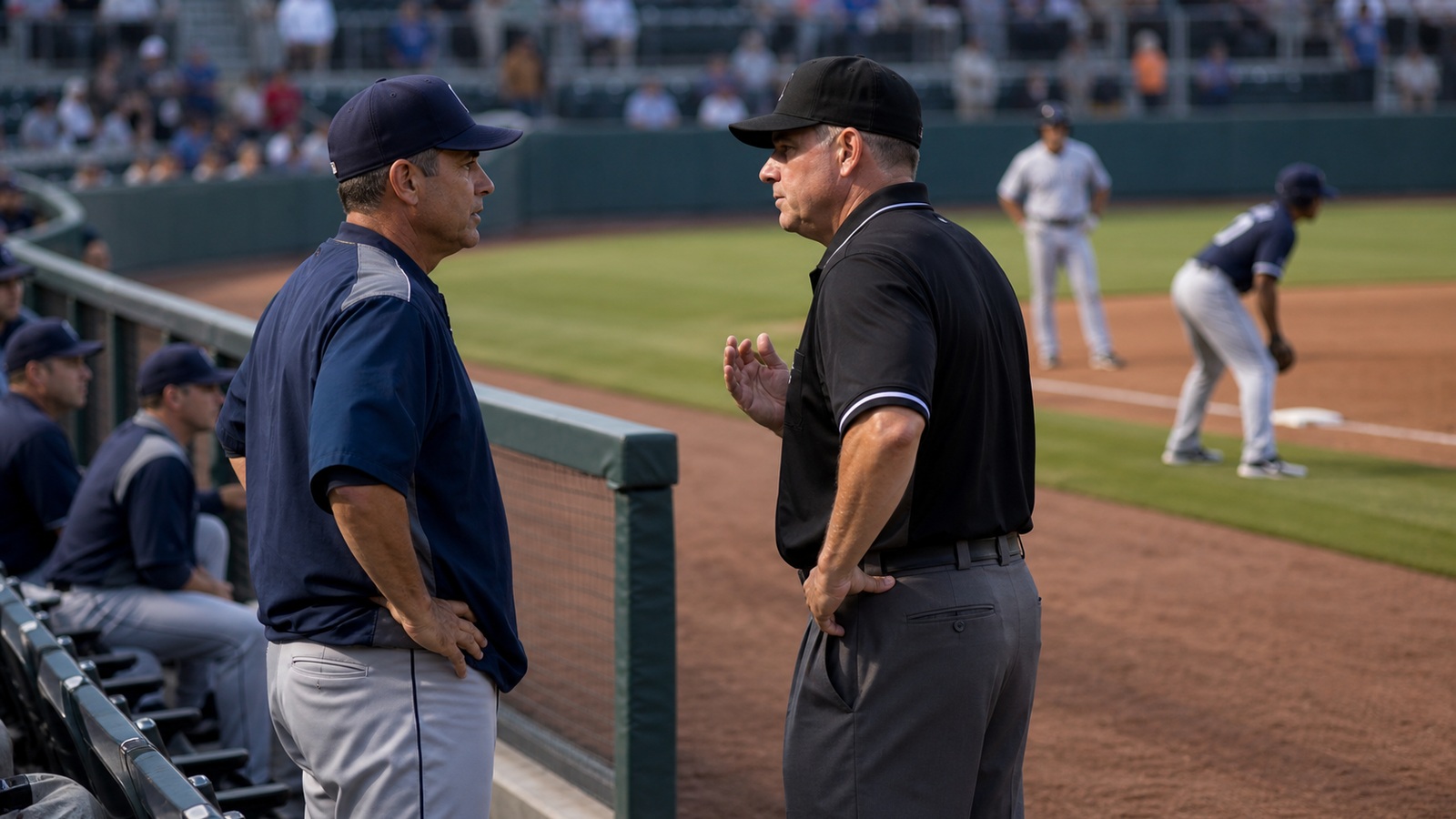
Baseball replay review rules help correct certain missed calls while preserving the flow and judgment of the game. Managers, umpires, replay officials, and review limits all shape when video can change an on-field ruling.
Why This Baseball Topic Matters
Baseball Replay Review Rules Explained matters because baseball rewards people who can see more than the obvious moment. A throw, swing, rivalry, rule, ballpark, or historic play looks simple when it is reduced to one highlight. It becomes more useful when the reader understands the setup, the pressure, the evidence, and the choices that shaped the result.
The central lens for this article is explaining what replay can review, what it cannot review, and why the original call still matters. That lens gives the page a clear job. Instead of treating the subject as a loose collection of baseball memories, it helps fans, players, coaches, collectors, and newer readers understand what to notice and why it matters.
MLB fans, new viewers, youth coaches, rules learners, broadcasters, and anyone confused when a manager points toward the dugout after a close play all come to the topic with different questions. A fan may want the story, a player may want a repeatable lesson, a coach may want language that can be used in practice, and a history reader may want the context behind the moment. A strong page can serve those readers without flattening the subject.
The Core Baseball Idea
Replay review is designed for specific reviewable plays, not every disagreement. Tag plays, force plays, boundary calls, catch or no-catch rulings in many situations, fair or foul calls in the outfield, and home-run questions may be reviewable, while many judgment calls remain outside replay.
Baseball is a game of sequence. One pitch changes a count. One step changes a throwing angle. One rule changes a runner’s decision. One rivalry game carries decades of memory into a single inning. That is why the best explanation starts before the dramatic finish and shows how the result became possible.
For instructional topics, that means connecting the visible movement to preparation, timing, footwork, vision, and decision-making. For history topics, it means connecting the famous play to the season, opponent, stadium, player condition, score, and cultural memory around the game.
What The Evidence Shows
The evidence comes from official replay regulations, the crew-chief announcement, camera angles, whether there is clear evidence to overturn the original call, and the final outcome: confirmed, stands, or overturned.
Evidence in baseball can be statistical, visual, historical, mechanical, or documentary. A rules page needs the current rule language and game situations. A rivalry page needs dates, postseason stakes, trades, ballparks, and fan memory. A training page needs movement patterns that can be repeated under pressure.
The evidence should also keep the page honest. Baseball legends are fun, but they can become fuzzy when retold too quickly. A careful article separates what happened, what people remember, what the record supports, and what lesson the reader can take from the story today.
What Beginners Often Miss
Beginners often think replay means the video room chooses the most likely answer. In practice, the standard matters. If the replay does not clearly show enough to change the call, the original ruling can stand.
Newer readers often focus on the loudest part of the topic. They notice the final throw, the home run, the famous name, the rule dispute, or the crowd reaction. Those things matter, but they are rarely the whole story. The quieter details explain why the moment carried weight.
In baseball rules, the missed detail is often the game state: count, outs, force play, fair or foul status, runner position, or whether the ball is live. In skill work, the missed detail is often what happened before the ball arrived. In rivalry and history, the missed detail is usually the larger season or era that made the moment feel bigger.
How It Works In A Real Game
On a close tag at second base, a manager may challenge whether the runner reached the bag before the tag. If the video clearly shows the glove on the runner before contact with the base, the call can be overturned.
That kind of example is useful because it shows how baseball knowledge becomes practical. The reader is not just memorizing a fact. The reader is learning how to sort a play, object, rule, or story into its moving parts. Once those parts are visible, the game becomes easier to follow and more interesting to revisit.
A real game also adds pressure. Players are not solving a clean diagram. They are reacting to spin, speed, crowd noise, runner movement, score, fatigue, and the clock of the play itself. A historical moment is remembered because the pressure made the ordinary baseball action feel extraordinary.
Skills And Decisions Behind The Story
The useful viewing skills include identifying whether a play is reviewable, knowing who initiated the review, watching the angle that shows possession or touch, and understanding why a call can stand even when fans dislike it.
For players and coaches, the useful question is what can be practiced. A defensive topic leads to better prep steps, cleaner angles, steadier glove presentation, and more accurate throws. A rules topic helps readers anticipate what the umpire is watching. A history topic explains why one play still lives in baseball memory.
Good baseball habits are usually built from small choices. A fielder moves before the hop. A hitter prepares before the pitch. A runner reads the ball before reacting. A fan who knows the rule sees the tension earlier than someone waiting for the announcer to explain it. The skill is noticing the right clue soon enough for it to matter.
How Context Changes The Meaning
Replay changed how fans watch close plays, but it did not remove umpire judgment from baseball. Balls and strikes, check swings, some obstruction judgment, and other subjective calls are still treated differently from clear boundary or tag evidence.
Context is especially important in baseball because the sport carries so much history. Yankee Stadium, Fenway Park, Dodger Stadium, postseason pressure, divisional rivals, iconic calls, and rule changes all shape how fans interpret a moment. The same play in April can feel different in October.
Context also protects the article from overstatement. Not every dramatic play changed the sport. Not every famous item is equally valuable. Not every drill belongs at every age. Not every rule confusion is complicated once the situation is defined. The page is stronger when it gives the reader enough context to make those distinctions.
How Coaches, Fans, And Players Use It
The topic becomes more valuable when it can be used by more than one kind of baseball person. A coach can turn it into a teaching point, a player can turn it into a practice goal, and a fan can use it to understand why a broadcast keeps returning to the same detail. That range keeps the page from becoming only trivia or only instruction.
For a player, the useful takeaway is usually a repeatable cue. Get the feet ready earlier. Know the force play before the pitch. Watch the runner’s route. Understand why a rivalry inning feels tense. For a fan, the useful takeaway is often a better question: what changed because of this moment, and what would have happened if the play had gone the other way?
That shared usefulness matters because baseball is passed along through explanation. Parents explain rules in the stands. Coaches explain drills after practice. Fans explain old postseason moments to younger fans. Clear writing makes that passing-along easier.
Why The Details Hold Up Over Time
Baseball changes, but the best details keep their value. Pitch clocks, replay review, defensive positioning, training technology, bat design, media coverage, and data analysis can shift how the game is played and discussed. The underlying need for timing, proof, awareness, and sound judgment remains.
That is why a page about an old World Series swing can still teach modern readers about preparation and pressure. It is also why a page about beginner rules can help someone watch a current game with less confusion. The details hold up when they explain baseball behavior, not just baseball nostalgia.
Good baseball writing should be able to survive a reader asking, “What can I do with this?” The answer might be watch smarter, practice better, buy more carefully, remember history more accurately, or understand the next argument with a little more patience.
Common Mistakes And Better Reads
The common mistake is assuming slow motion always creates certainty. Camera angle, blocked views, timing, glove contact, base contact, and ball possession can still leave a play unresolved.
A better read asks what actually created the result. Was it preparation, athleticism, rule knowledge, scouting, leverage, weather, ballpark shape, player health, or one perfect swing? The answer is often a combination. Baseball is rich because small inputs can produce huge outcomes.
That is also why rankings and legendary moments need criteria. A play can be unbelievable because of difficulty, timing, historical effect, championship stakes, rarity, or emotional force. A rivalry can be great because of geography, repeated contention, famous players, postseason meetings, and the way fans inherit the story.
How To Judge Quality
A quality replay explanation names the rule category, review standard, original call, available evidence, and final ruling. That keeps the process clearer than simply saying the umpires got it right or wrong.
Quality is not only polish. It is usefulness. The reader leaves with a clearer way to watch, practice, compare, or remember baseball. If the topic is training, the reader gains one skill to work on. If it is rules, the reader understands a situation more clearly. If it is history, the reader knows why the event still earns attention.
Good baseball writing names the limits too. A single drill will not fix every player. A single rule summary will not cover every edge case. A single rivalry essay cannot hold every game. A famous moment can deserve awe while still needing careful explanation.
What To Watch Next
During a review, watch the runner’s hand or foot, the fielder’s glove, when the ball is controlled, whether the base is touched, and whether any angle actually shows the decisive moment.
The next time this subject appears in a game, the reader can slow down and watch for the setup. Look at the count, the defensive alignment, the runner, the fielder’s first move, the ballpark space, the game situation, and the consequence if the play fails. The best baseball understanding begins before the result is obvious.
That habit makes the sport more enjoyable. It turns a highlight into a sequence and a famous story into a set of decisions. It also helps younger players and newer fans feel less lost, because they are learning what experienced baseball people have been watching all along.
One Practical Takeaway
The simplest next step is to connect the topic to one visible baseball action. A player can take one cue into practice, a coach can build one drill around the idea, and a fan can watch one inning with a sharper question in mind.
That small approach keeps the lesson usable. Baseball improvement rarely comes from trying to fix everything at once. It comes from noticing one pattern, testing one adjustment, and seeing whether the next play becomes clearer.
Bottom Line
Baseball replay review is useful because it can fix clear misses, but it is limited by rules, standards, and camera evidence. The system works best when fans understand both what video can prove and what it cannot.
The value of the topic is that it gives readers a sharper baseball eye. It connects memory with mechanics, emotion with evidence, and excitement with practical understanding. That balance keeps the article useful long after the first read.
Baseball has room for romance, argument, and precise detail at the same time. The best pages do not drain the fun out of the game. They make the fun sturdier by showing why the play, rule, rivalry, or skill deserves attention in the first place.