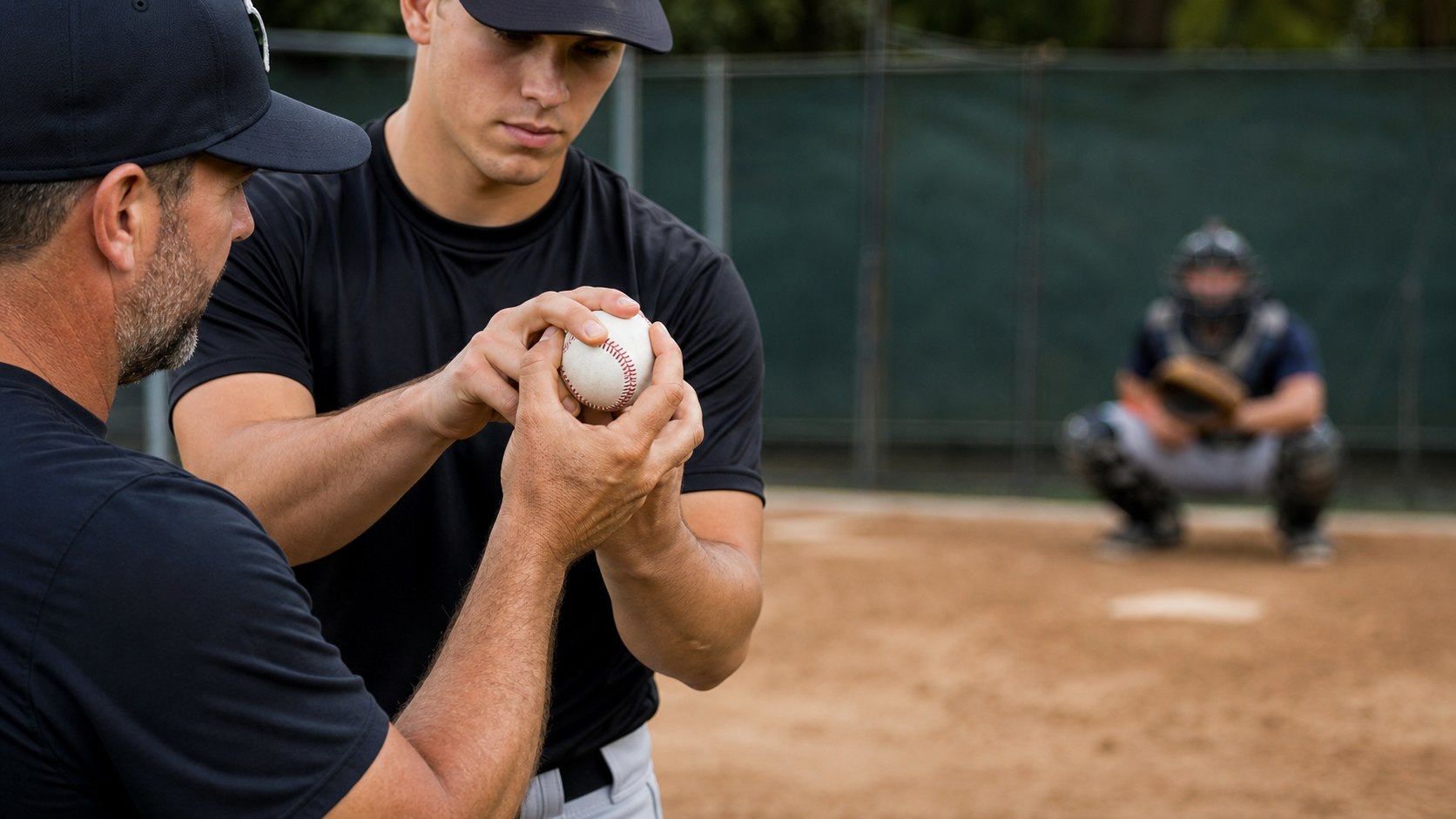
Why Grips Matter More Than Most People Think
Before a pitch ever breaks, runs, sinks, or “jumps,” it starts as a decision made by fingers. A pitcher can have elite strength, a smooth delivery, and great velocity, but if the grip is inconsistent, the pitch won’t repeat. That’s why pitching coaches talk about grips the way chefs talk about knife skills. It’s not the whole craft, but it’s the part that turns intention into results. For fans, grips explain why two pitches thrown at the same speed can behave completely differently. For players, grips unlock a practical roadmap for development. Once you understand what a grip is trying to do to the ball—create clean backspin, add sidespin, kill spin, tilt the axis—you start seeing pitches as shapes you can build, not mysteries you can only admire. This guide covers the major pitch families and the most common grip approaches. It doesn’t assume every pitcher grips the ball exactly the same, because they don’t. Hands are different, arm slots are different, and what feels “right” varies wildly. But the goals are consistent, and the grip usually tells you the goal.
A: No, grips vary by hand size, comfort, and desired movement.
A: Efficient backspin can make a pitch stay on plane longer.
A: It’s a fastball variant with subtle glove-side movement and higher velocity.
A: They look like fastballs but arrive slower with fade and sink.
A: They can be, because the grip requires finger strength and feel.
A: Topspin and spin axis create downward movement.
A: They hide the ball in the glove and keep a consistent set position.
A: Yes, pressure affects release and spin quality.
A: Usually they build fastball command first, then add pitches gradually.
A: Start simple, repeat often, and prioritize comfort and command.
The Two Rules Every Good Grip Follows
Almost every effective grip in baseball follows two simple rules. The first is repeatability. A grip must be something you can find quickly, hide naturally, and reproduce under pressure. If a grip requires a complicated finger puzzle, it might work in the bullpen but fall apart in games.
The second rule is a clean release. A grip should allow the ball to come off the fingertips in a predictable way. If the ball drags across the palm or slips early, the spin becomes messy and the pitch loses both movement and command. Great pitchers often look effortless because their grips allow the ball to leave the hand the same way over and over.
A third factor sits underneath both rules: comfort. Pitchers don’t choose grips only for physics. They choose grips they trust. A pitcher who trusts the grip will throw it with fastball arm speed, and that’s where deception lives.
Four-Seam Fastball Grip: Clean Backspin and True Direction
The four-seam fastball is typically gripped with the index and middle finger across the horseshoe seam, with the fingertips riding on top rather than buried deep. The thumb rests underneath the ball, usually centered or slightly off-center depending on comfort. The goal is clean backspin with minimal side-to-side wobble, creating the fastball shape hitters experience as “ride” or carry.
Many pitchers find that a slightly looser grip improves life. When the ball comes off the fingers smoothly, the spin tends to stay efficient, and the pitch holds its line. A death-grip fastball often produces less consistent spin and poorer command because the hand fights the release. The fastest four-seamers are thrown hard, but the best four-seamers are thrown clean. Small changes can matter. Some pitchers move the fingers a hair closer together to feel more control. Others spread slightly for comfort. The main idea stays the same: across the seams, fingertips doing the work, and a release that looks identical to every other pitch.
Two-Seam Fastball Grip: Seam Orientation for Run
A common two-seam grip places the index and middle finger along the narrow seams, with fingers running more parallel to the seams than across them. The thumb usually supports the ball underneath, and the pitcher often feels the ball sit a little deeper in the hand than a four-seam, though not always. The objective is arm-side run and, for many pitchers, a bit of sink.
The two-seam grip invites movement because of seam orientation and slight changes in pressure at release. Many pitchers feel they “throw through” the ball, letting the seams and wrist angle create action. It’s not necessarily about twisting the wrist. Most effective two-seamers still come out with fastball intent, but the grip encourages the ball to move.
Command is the separator. A two-seam that starts on a good line and finishes on an edge can be maddening. A two-seam that leaks middle becomes a hittable fastball. The grip gives you the potential; the repeatable release gives you the results.
Sinker Grip: Heavy Action With a Similar Feel
Sinkers are often thrown with a two-seam style grip, but the intent and release can differ. Many pitchers use a two-seam grip and emphasize a slightly different wrist angle or finger pressure to increase downward movement. Others grip the ball slightly deeper to reduce clean backspin and create more drop.
The goal of the sinker is “heavy” action, which often means less straight carry and more downward movement late. That heaviness can come from how the pitcher pronates through release, how the seams cut through the air, and how the ball comes off the fingers. The grip is the starting point, but the sinker’s identity often comes from the pitcher’s natural arm slot and movement patterns. Sinkers are usually designed for contact management. If a pitcher can command a sinker at the bottom of the zone and on the edges, it becomes a ground-ball machine. The grip doesn’t have to be exotic. It has to be consistent.
Cutter Grip: A Fastball With Late Glove-Side Bite
The cutter is often described as a fastball grip with a subtle shift. Many pitchers start with a four-seam and move the fingers slightly off-center, often toward the glove-side of the ball. Some place pressure with the middle finger, others emphasize the index finger. The thumb may shift slightly as well. The goal is to create late glove-side movement while keeping fastball velocity and fastball intent.
A good cutter is not a “baby slider.” It’s a fastball that refuses to stay straight. The grip is meant to tilt the spin just enough that the pitch veers at the end, stealing space from the hitter’s barrel. The best cutters look straight until they aren’t, and that’s the point.
Cutters can be tricky because the margin for error is small. If it’s too slow, it becomes a softer pitch that doesn’t miss bats. If it doesn’t move, it’s just a straight fastball. The grip should feel simple, repeatable, and close to the fastball so the pitcher can throw it with confidence.
Slider Grip: Controlled Sidespin for Late Break
Sliders are commonly gripped with the index and middle fingers slightly off the horseshoe seam, often with the middle finger doing more of the work. Some pitchers tuck the index finger slightly or relax it to reduce interference. The thumb supports the ball underneath, and the pitch is typically thrown with a wrist angle that encourages sidespin rather than pure backspin or topspin.
The goal is late glove-side break at a firm velocity. A slider’s identity often comes from how “tight” the spin is, which influences whether it behaves like a hard, short-breaking slider or a bigger, sweeping version. The grip is the steering wheel, but the release is the engine. Pitchers often struggle early with sliders because they try to “make it break” by twisting the wrist. Most effective sliders are thrown hard with conviction, letting the grip and release angle create the movement. When a pitcher stops guiding the slider and starts throwing it, the pitch usually improves.
Sweeper Grip: Leaning Into Horizontal Movement
Sweepers often start from a slider family grip but emphasize a spin axis that creates more horizontal movement. Pitchers may shift finger placement, increase the feeling of getting around the ball, or adjust wrist angle to encourage sweeping action. The key is that the pitch is designed to move more across the plate than down.
A sweeper grip must still be comfortable enough to repeat. Many pitchers find sweepers by tinkering slightly with their slider grip until the movement shape changes. The grip is not always dramatically different, but the result is. The pitch moves laterally in a way that forces hitters to chase or miss the barrel.
Because sweepers can be thrown for chase, they often live just off the edge. That means command and intent matter. A sweeper left in the middle is a gift. A sweeper that starts on the plate and finishes off it is a nightmare.
Curveball Grip: Topspin and the “Pulling Down” Feel
Curveballs are often gripped with the middle finger along a seam, with the index finger either resting beside it or slightly off the ball. The thumb sits underneath to support the grip. Many pitchers feel like they’re pulling down on the front of the ball at release to create topspin, producing that classic downward break.
There are multiple curveball styles. A traditional overhand curveball emphasizes vertical drop. A power curveball is thrown harder and may have a tighter, later break. A knuckle curve replaces the index finger’s role by bending it like a knuckle, which can help some pitchers generate spin and feel the pitch better. The curveball grip is often about comfort in the fingertips. If the ball sits wrong, the pitcher can lose both spin and command. When it sits right, the curveball becomes a true shape-changer that forces hitters to respect the vertical lane.
Changeup Grip: Killing Speed While Keeping Arm Speed
Changeups come in many grips, but they share one mission: reduce velocity without changing arm speed. Common changeup grips include the circle change, where the thumb and index finger form a circle, and variations where the ball sits deeper in the hand with the fingers spread slightly. The middle and ring fingers often take on more control responsibilities than on a fastball.
A great changeup often has arm-side fade and some sink. That movement is influenced by grip, pronation through release, and the way the ball comes off the fingers. The hardest part for many pitchers is trust. If the pitcher slows the arm down, the pitch becomes readable and loses its advantage. The grip should allow the pitcher to throw it with full intent while letting the ball simply arrive slower.
Changeups are personal. What works for one pitcher may feel awful to another. The goal is not to copy a picture-perfect grip. The goal is to find a grip that delivers a consistent velocity gap, consistent movement, and consistent release.
Splitter Grip: Fingers Apart, Late Drop
The splitter is typically gripped with the index and middle finger split outside the seams, with the ball sitting deeper than a fastball. The thumb supports underneath. The objective is reduced spin and late downward tumble. When thrown well, the splitter looks like a fastball early, then drops sharply near the plate.
Splitters demand finger strength and comfort. If the hand can’t support the grip, the pitcher may lose command or feel stress. Many pitchers use the splitter as a finishing pitch because it can generate swings over the top. Others use it to induce ground balls when located at the bottom of the zone. The splitter grip is often one of the most sensitive. Small changes in finger spread or pressure can change the pitch dramatically. That’s why pitchers who master splitters often treat the grip like a signature.
Forkball Grip: A Bigger Split With a Slower Identity
Forkballs are related to splitters but often involve wider finger separation and a deeper ball placement. The pitch tends to be slower than a splitter and can have dramatic drop. Historically, forkballs were more common before modern pitch design tools refined other options, but the pitch remains a fascinating example of offspeed movement created by grip alone.
A forkball grip can be demanding, and not every hand can throw it comfortably. When it works, it produces an exaggerated tumble that can break timing and create weak contact. For some pitchers, the forkball becomes a specialty pitch used sparingly as a surprise weapon.
Whether a pitcher chooses splitter or forkball often depends on comfort and desired movement. The difference is not always a strict rule. It’s an outcome.
Knuckleball Grip: Minimal Spin, Maximum Chaos
Knuckleballs are gripped with the fingertips or knuckles pressing into the ball, with the goal of throwing it with as little spin as possible. The thumb supports underneath, and the pitcher focuses on pushing the ball forward rather than snapping the wrist. The result is an unpredictable flutter caused by airflow around the seams.
Knuckleballs are rare because they require a unique feel and a willingness to live with inconsistency. The grip must be stable enough to release cleanly without spinning. Even then, the pitch will move differently from throw to throw. That unpredictability is what makes it so hard to hit. For fans, the knuckleball is a reminder that pitching isn’t always about overpowering hitters. Sometimes it’s about letting physics do weird things and daring hitters to solve it.
The Hidden Grip Factor: Pressure, Not Just Placement
Two pitchers can hold the ball in the same place and still get different results because of pressure. Where you press matters. A cutter often relies on pressure bias. A changeup often relies on letting the ball sit deeper with a softer feel. A slider may rely on a firm middle-finger presence. These are subtle differences that don’t always show up in grip photos, but they show up in pitch movement.
Pressure also affects command. Too tight and the ball slips late. Too loose and the ball slips early. Great pitchers learn their own pressure map, especially in different weather conditions. Cold nights, sweaty hands, and dry air all change how a grip feels.
This is why grip work is never finished. Pitchers constantly adjust micro-feel without changing the identity of the pitch. That maintenance is part of mastery.
How Pitchers Practice Grips Without Tipping Pitches
For players, the grip must be easy to find and easy to hide. Many pitchers grip the ball inside the glove and keep their hand position consistent so hitters can’t read the pitch. Some pitchers avoid dramatic finger movement or avoid holding the ball too long before the delivery. Practice often happens away from the mound. Pitchers will sit with a ball and cycle grips until they can find each one without looking. That sounds simple, but it’s huge. If you can find a grip automatically, you can focus on executing the pitch instead of searching for it. Tipping often happens when pitchers change glove position, slow down while finding a grip, or show different wrist angles early. A great grip is one you can keep secret.
Putting It All Together: Grips Create Shapes, Shapes Create Strategy
The real goal of learning grips is not to collect pitches like trading cards. It’s to build a set of shapes that work together. A four-seam up and a curveball down can create vertical separation. A sinker in and a sweeper away can create horizontal stress. A cutter can bridge the gap between fastball and slider and keep hitters guessing.
When a pitcher understands grips, they can adjust intelligently. If the slider isn’t breaking, they can explore finger pressure. If the changeup floats, they can adjust depth and feel. If the cutter isn’t cutting, they can shift off-center slightly. This is pitching as craft, not magic. For fans, grips reveal that pitching is a series of choices, not just throws. For players, grips provide the foundation for real improvement. The ball may be small, but the fingertips tell a big story.