Why How Stolen Base Rules Work in Baseball Matters During a Real Game
How Stolen Base Rules Work in Baseball can turn an ordinary inning into a debate because baseball packs so much meaning into small movements. A foot on a bag, a ball crossing a line, a pitcher pausing too long, or a runner choosing the wrong lane can change the scoreboard and the mood of the game. This guide explains the rule in plain language, but it also explains why the rule exists, what players should do, and how fans can follow the call without needing a rulebook in their lap.
A: Start with the game situation, then connect how stolen base rules work in baseball to ball status, player responsibility, and umpire timing.
A: The main idea is usually stable, but youth, high school, college, professional, and local leagues may adjust details.
A: The decisive action often happens before the most dramatic part of the play, so the crowd may react late.
A: Keep playing until the umpire clearly stops action or the rule requires a specific next step.
A: Coaches may ask for clarification, but judgment calls and appealable rule situations are handled differently.
A: Yes. Many rule interpretations protect runners, fielders, catchers, batters, or game control.
A: Attach how stolen base rules work in baseball to one vivid field example instead of memorizing abstract rulebook wording.
A: Outs, base occupancy, score, inning, count, and player speed can all change the smartest decision.
A: No. Even complicated rules become beginner-friendly when explained through the actual play sequence.
A: How Stolen Base Rules Work in Baseball is easier to understand when you watch timing, responsibility, and the umpire's signal together.
The Plain-English Rule Idea Behind How Stolen Base Rules Work in Baseball
The useful question is not only what the rule says, but what problem it is trying to solve for players, umpires, and fans. In How Stolen Base Rules Work in Baseball, the heart of the topic is runner responsibility, fielder positioning, base paths, timing, and safe advancement. The angle here is beginner-friendly rule literacy, so the rule is explained through the decisions people actually make on the field. Think of a summer night at a small ballpark, where the same play might draw three explanations from three nearby fans. Once the pattern is clear, the rule becomes less like trivia and more like a map of the inning.
A close call can look chaotic from the seats, yet the official usually works through a sequence of responsibilities and timing points. In How Stolen Base Rules Work in Baseball, the heart of the topic is runner responsibility, fielder positioning, base paths, timing, and safe advancement. The angle here is beginner-friendly rule literacy, so the rule is explained through the decisions people actually make on the field. The clearest example often happens on an ordinary ground ball, fly ball, missed pitch, or tag attempt rather than on a highlight play. That is why this rule belongs in a player’s everyday baseball vocabulary.
What the Umpire Watches on How Stolen Base Rules Work in Baseball
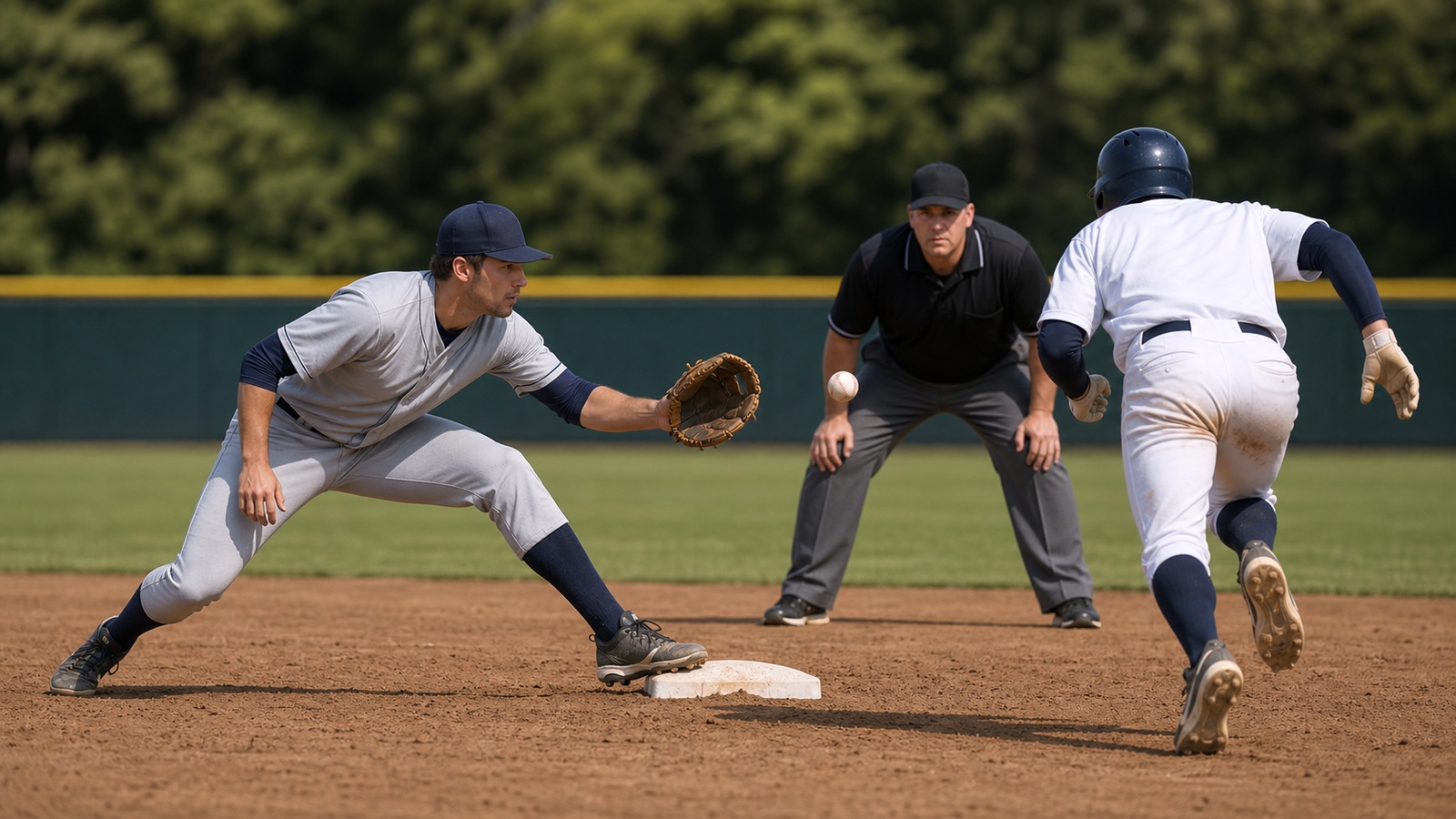
When players understand the rule before the pitch, they react faster and avoid turning a manageable play into a costly mistake. In How Stolen Base Rules Work in Baseball, the heart of the topic is runner responsibility, fielder positioning, base paths, timing, and safe advancement. The angle here is beginner-friendly rule literacy, so the rule is explained through the decisions people actually make on the field. Picture a runner breaking from first, a fielder moving across the bag, and a coach trying to decide whether to challenge the next throw. Once the pattern is clear, the rule becomes less like trivia and more like a map of the inning.
For newer fans, the best shortcut is to watch the ball, the base, the runner, and the umpire’s signal as one connected story. In How Stolen Base Rules Work in Baseball, the heart of the topic is runner responsibility, fielder positioning, base paths, timing, and safe advancement. The angle here is beginner-friendly rule literacy, so the rule is explained through the decisions people actually make on the field. Think of a summer night at a small ballpark, where the same play might draw three explanations from three nearby fans. That is why this rule belongs in a player’s everyday baseball vocabulary.
How Players Should React to How Stolen Base Rules Work in Baseball
Different leagues may adjust details, but the core idea usually protects fairness, safety, pace, or the integrity of the competition. In How Stolen Base Rules Work in Baseball, the heart of the topic is runner responsibility, fielder positioning, base paths, timing, and safe advancement. The angle here is beginner-friendly rule literacy, so the rule is explained through the decisions people actually make on the field. The clearest example often happens on an ordinary ground ball, fly ball, missed pitch, or tag attempt rather than on a highlight play. Once the pattern is clear, the rule becomes less like trivia and more like a map of the inning.
Baseball rules are easiest to learn when they are connected to a real inning instead of memorized as isolated language. In How Stolen Base Rules Work in Baseball, the heart of the topic is runner responsibility, fielder positioning, base paths, timing, and safe advancement. The angle here is beginner-friendly rule literacy, so the rule is explained through the decisions people actually make on the field. Picture a runner breaking from first, a fielder moving across the bag, and a coach trying to decide whether to challenge the next throw. That is why this rule belongs in a player’s everyday baseball vocabulary.
Where Fans Misread How Stolen Base Rules Work in Baseball
The useful question is not only what the rule says, but what problem it is trying to solve for players, umpires, and fans. In How Stolen Base Rules Work in Baseball, the heart of the topic is runner responsibility, fielder positioning, base paths, timing, and safe advancement. The angle here is beginner-friendly rule literacy, so the rule is explained through the decisions people actually make on the field. Think of a summer night at a small ballpark, where the same play might draw three explanations from three nearby fans. Once the pattern is clear, the rule becomes less like trivia and more like a map of the inning.
A close call can look chaotic from the seats, yet the official usually works through a sequence of responsibilities and timing points. In How Stolen Base Rules Work in Baseball, the heart of the topic is runner responsibility, fielder positioning, base paths, timing, and safe advancement. The angle here is beginner-friendly rule literacy, so the rule is explained through the decisions people actually make on the field. The clearest example often happens on an ordinary ground ball, fly ball, missed pitch, or tag attempt rather than on a highlight play. That is why this rule belongs in a player’s everyday baseball vocabulary.
When players understand the rule before the pitch, they react faster and avoid turning a manageable play into a costly mistake. In How Stolen Base Rules Work in Baseball, the heart of the topic is runner responsibility, fielder positioning, base paths, timing, and safe advancement. The angle here is beginner-friendly rule literacy, so the rule is explained through the decisions people actually make on the field. Picture a runner breaking from first, a fielder moving across the bag, and a coach trying to decide whether to challenge the next throw. Once the pattern is clear, the rule becomes less like trivia and more like a map of the inning.
A Youth Baseball Version of How Stolen Base Rules Work in Baseball
For newer fans, the best shortcut is to watch the ball, the base, the runner, and the umpire’s signal as one connected story. In How Stolen Base Rules Work in Baseball, the heart of the topic is runner responsibility, fielder positioning, base paths, timing, and safe advancement. The angle here is beginner-friendly rule literacy, so the rule is explained through the decisions people actually make on the field. Think of a summer night at a small ballpark, where the same play might draw three explanations from three nearby fans. That is why this rule belongs in a player’s everyday baseball vocabulary.
Different leagues may adjust details, but the core idea usually protects fairness, safety, pace, or the integrity of the competition. In How Stolen Base Rules Work in Baseball, the heart of the topic is runner responsibility, fielder positioning, base paths, timing, and safe advancement. The angle here is beginner-friendly rule literacy, so the rule is explained through the decisions people actually make on the field. The clearest example often happens on an ordinary ground ball, fly ball, missed pitch, or tag attempt rather than on a highlight play. Once the pattern is clear, the rule becomes less like trivia and more like a map of the inning.
How How Stolen Base Rules Work in Baseball Changes Strategy
Baseball rules are easiest to learn when they are connected to a real inning instead of memorized as isolated language. In How Stolen Base Rules Work in Baseball, the heart of the topic is runner responsibility, fielder positioning, base paths, timing, and safe advancement. The angle here is beginner-friendly rule literacy, so the rule is explained through the decisions people actually make on the field. Picture a runner breaking from first, a fielder moving across the bag, and a coach trying to decide whether to challenge the next throw. That is why this rule belongs in a player’s everyday baseball vocabulary.
The useful question is not only what the rule says, but what problem it is trying to solve for players, umpires, and fans. In How Stolen Base Rules Work in Baseball, the heart of the topic is runner responsibility, fielder positioning, base paths, timing, and safe advancement. The angle here is beginner-friendly rule literacy, so the rule is explained through the decisions people actually make on the field. Think of a summer night at a small ballpark, where the same play might draw three explanations from three nearby fans. Once the pattern is clear, the rule becomes less like trivia and more like a map of the inning.
What Happens After a How Stolen Base Rules Work in Baseball Call
A close call can look chaotic from the seats, yet the official usually works through a sequence of responsibilities and timing points. In How Stolen Base Rules Work in Baseball, the heart of the topic is runner responsibility, fielder positioning, base paths, timing, and safe advancement. The angle here is beginner-friendly rule literacy, so the rule is explained through the decisions people actually make on the field. The clearest example often happens on an ordinary ground ball, fly ball, missed pitch, or tag attempt rather than on a highlight play. That is why this rule belongs in a player’s everyday baseball vocabulary.
When players understand the rule before the pitch, they react faster and avoid turning a manageable play into a costly mistake. In How Stolen Base Rules Work in Baseball, the heart of the topic is runner responsibility, fielder positioning, base paths, timing, and safe advancement. The angle here is beginner-friendly rule literacy, so the rule is explained through the decisions people actually make on the field. Picture a runner breaking from first, a fielder moving across the bag, and a coach trying to decide whether to challenge the next throw. Once the pattern is clear, the rule becomes less like trivia and more like a map of the inning.
Mistakes That Make How Stolen Base Rules Work in Baseball Worse
For newer fans, the best shortcut is to watch the ball, the base, the runner, and the umpire’s signal as one connected story. In How Stolen Base Rules Work in Baseball, the heart of the topic is runner responsibility, fielder positioning, base paths, timing, and safe advancement. The angle here is beginner-friendly rule literacy, so the rule is explained through the decisions people actually make on the field. Think of a summer night at a small ballpark, where the same play might draw three explanations from three nearby fans. That is why this rule belongs in a player’s everyday baseball vocabulary.
Different leagues may adjust details, but the core idea usually protects fairness, safety, pace, or the integrity of the competition. In How Stolen Base Rules Work in Baseball, the heart of the topic is runner responsibility, fielder positioning, base paths, timing, and safe advancement. The angle here is beginner-friendly rule literacy, so the rule is explained through the decisions people actually make on the field. The clearest example often happens on an ordinary ground ball, fly ball, missed pitch, or tag attempt rather than on a highlight play. Once the pattern is clear, the rule becomes less like trivia and more like a map of the inning.
Baseball rules are easiest to learn when they are connected to a real inning instead of memorized as isolated language. In How Stolen Base Rules Work in Baseball, the heart of the topic is runner responsibility, fielder positioning, base paths, timing, and safe advancement. The angle here is beginner-friendly rule literacy, so the rule is explained through the decisions people actually make on the field. Picture a runner breaking from first, a fielder moving across the bag, and a coach trying to decide whether to challenge the next throw. That is why this rule belongs in a player’s everyday baseball vocabulary.
The Smart Way to Remember How Stolen Base Rules Work in Baseball
The simplest takeaway is that How Stolen Base Rules Work in Baseball is not a random technicality. It is part of baseball’s attempt to keep a complicated game fair, readable, and playable. Learn the situation, watch the timing, and connect the call to what the rule is protecting.