Center Field Is Baseball’s Wide-Angle Position
Center field looks simple from a distance because the best players make it look quiet. They drift to the right spot, call off traffic, catch balls in stride, and keep runners from taking extra bases without turning every play into a highlight. The art is hidden in the first two seconds. Elite center fielders read swing path, ball flight, wind, park shape, hitter tendency, teammate positioning, and game situation before the ball has fully declared itself. They do not merely run fast. They run early, run correctly, and arrive under control. That combination makes center field one of the most demanding defensive positions on the field and one of the easiest to underrate until a lesser defender gives away outs in the gaps.
The First Step Separates the Position
The first step in center field is not just a speed test. It is a decision test. The fielder has to connect the hitter’s swing, pitch location, contact sound, and ball angle almost instantly. Waiting until the ball reaches its peak may feel safer, but it turns every deep ball into a footrace.
Elite center fielders do not guess wildly. They prepare before the pitch so the first read has context. A left-handed hitter late on an outer-half fastball may send a different ball than the same hitter turning on a mistake inside. A pitcher working down in the zone may create lower, slicing contact. Those clues help the center fielder move sooner without becoming reckless.
The best first step often looks boring. There is no stumble, no dramatic lean, and no wasted hop. The center fielder simply opens the correct direction and starts gaining ground. That small advantage compounds over forty or sixty feet.
Routes Are Range in Disguise
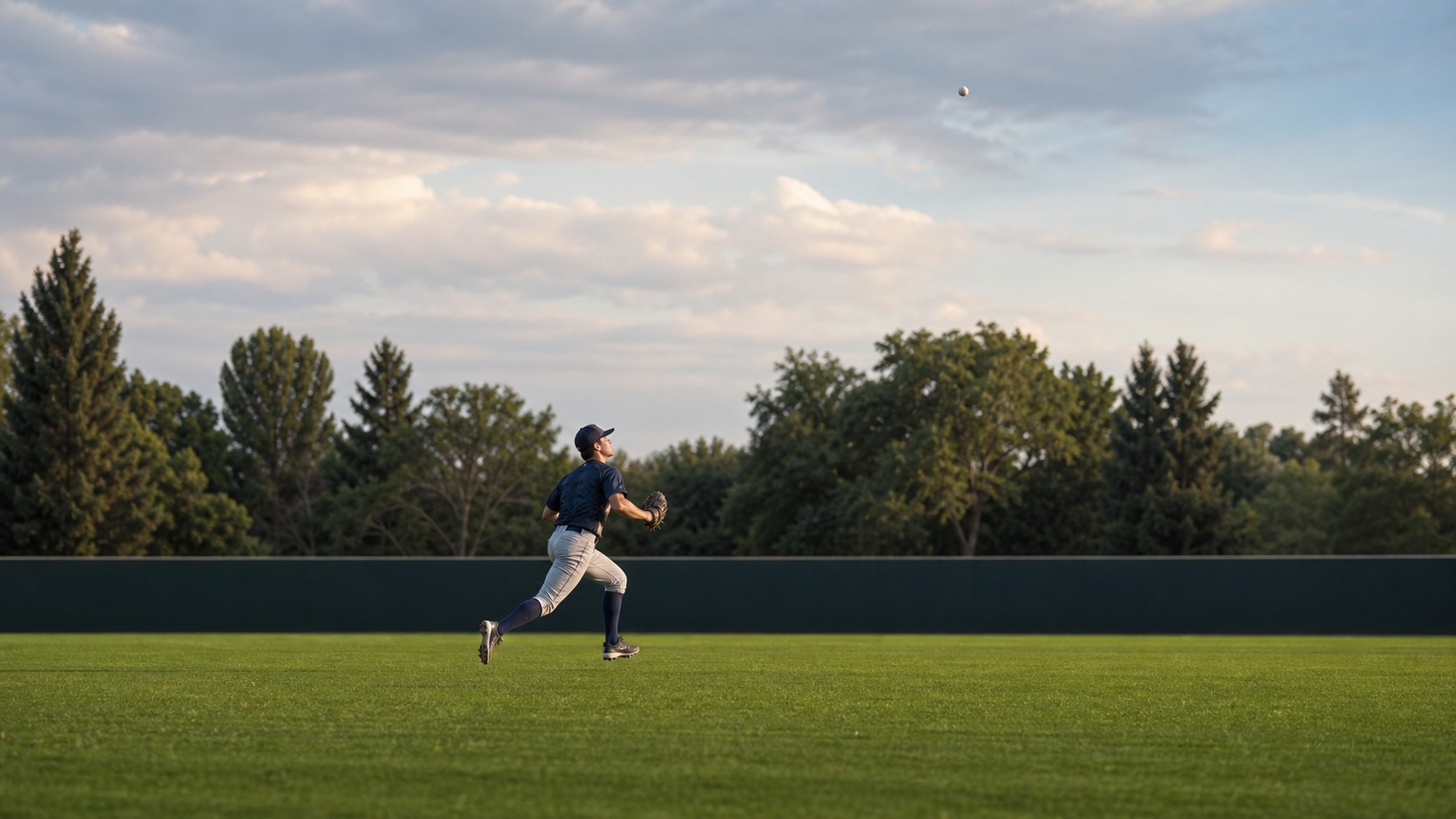
Fans usually notice foot speed, but route quality is what makes speed useful. A center fielder who takes a clean angle can cover more real ground than a faster player who bends toward the ball, corrects late, and reaches the catch point off balance.
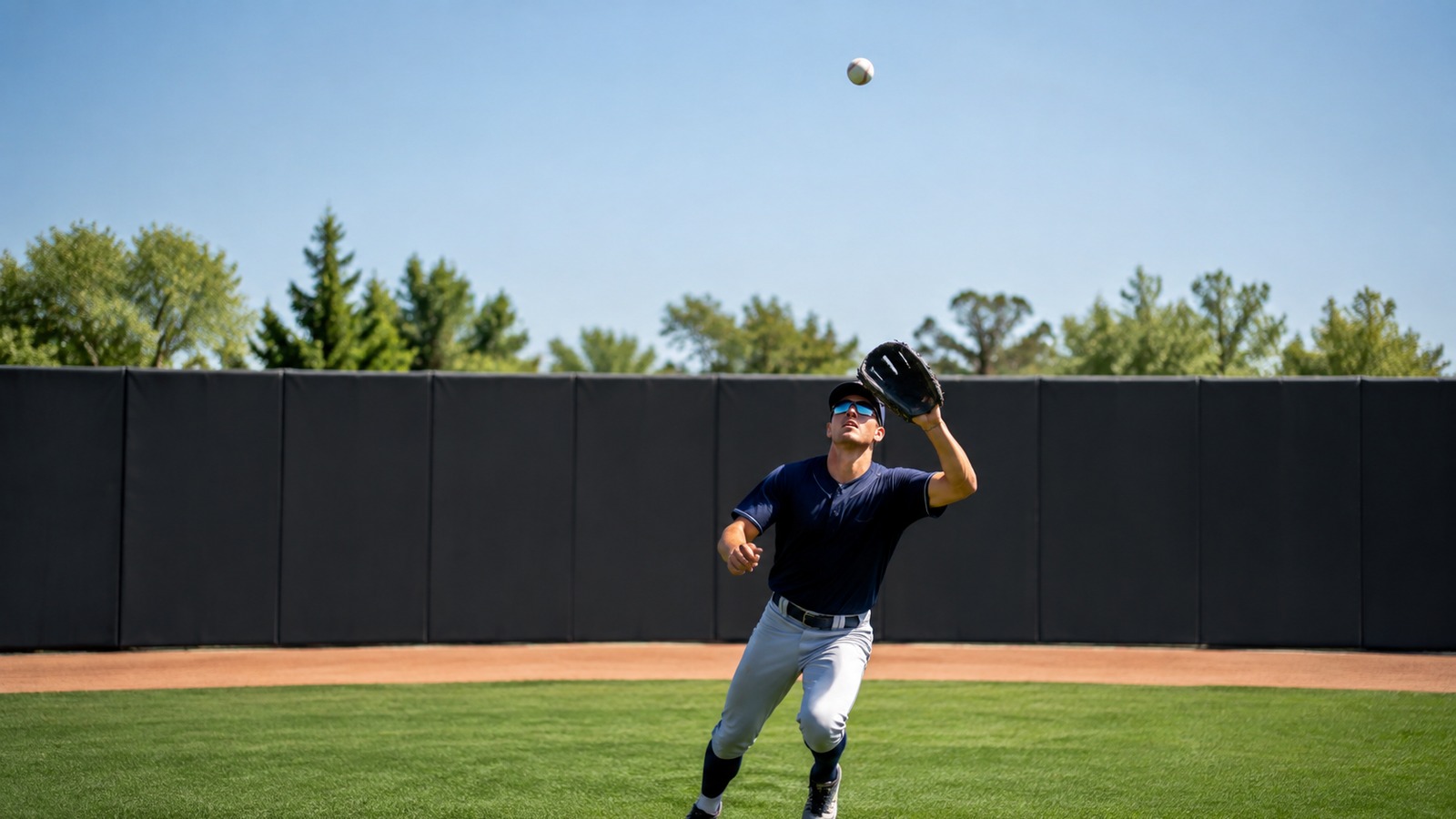
Good routes start with the hips. On balls over either shoulder, the fielder needs to open and run instead of backpedaling. Backpedaling feels comfortable for a moment, but it loses speed and ruins depth. Once the hips open, the center fielder can sprint to the future landing spot rather than chase the ball’s current line.
Route work also includes the finish. Elite center fielders arrive under control, which lets them secure the catch, prepare a throw, and avoid dangerous contact with walls or teammates. A spectacular slide may be necessary, but a routine-looking catch in stride often reflects a better route.
This is why coaches should grade center fielders on arrival, not drama. Did the defender beat the ball to the spot? Was the body balanced? Was the next throw available? Those answers reveal more than whether the play looked athletic.
Depth Positioning Changes the Whole Play
Center field depth is a strategic choice. Playing deep protects against extra-base damage but can create soft singles in front. Playing shallow steals flares and line drives but increases the risk of a ball sailing over the head. Elite center fielders understand why the chosen depth fits the hitter, pitcher, count, and score.
Depth also affects the first step. A deep defender may need to charge aggressively on sinking balls, while a shallow defender must respect hard contact over either shoulder. The best players do not simply accept a coach’s card; they understand how the alignment changes their next read.
Center Field Requires Command of Space
The center fielder is responsible for the largest visual map in the outfield. The gaps belong partly to everyone, but center field usually has the best angle to organize them. That means the position demands confidence, voice, and spatial awareness.
Communication should happen early. A late call creates hesitation, and hesitation creates collisions or dropped balls. On playable balls between fielders, the center fielder must call with enough authority that the corner outfielder can peel away without doubt. On balls where the corner has the easier angle, the center fielder must be just as willing to yield.
Center fielders also communicate through positioning. A small shade toward a power alley can tell the corner outfielder how much gap responsibility remains. A step shallower with two strikes may invite the corner to protect the line differently. The outfield works best when each defender understands the shared picture.
Space also changes with each park. Some center fields have deep alleys, odd walls, bright batter’s eyes, heavy grass, or wind that knocks balls down. An elite defender studies those details before they matter. The position is not played in generic grass; it is played in that exact park on that exact day.
Speed Helps Most When It Stays Controlled
Raw speed is still important. Center fielders need enough athleticism to close gaps, cut off balls in the alley, and recover when a read is imperfect. But uncontrolled speed can become its own problem. A player who outruns the catch point or arrives with the glove bouncing may waste the very tool that got him there.
The best center fielders change gears. They accelerate hard when the read is certain, then shorten the final steps as the ball descends. That late control keeps the eyes steady and the glove quiet. It also allows the fielder to catch the ball in a throwing position when runners are tagging.
Controlled speed matters on sinking liners too. A reckless dive can turn a single into a triple. A smart center fielder knows when to attack, when to play the short hop, and when keeping the ball in front is the winning defensive play.
Catch-and-Throw Rhythm Adds Hidden Value
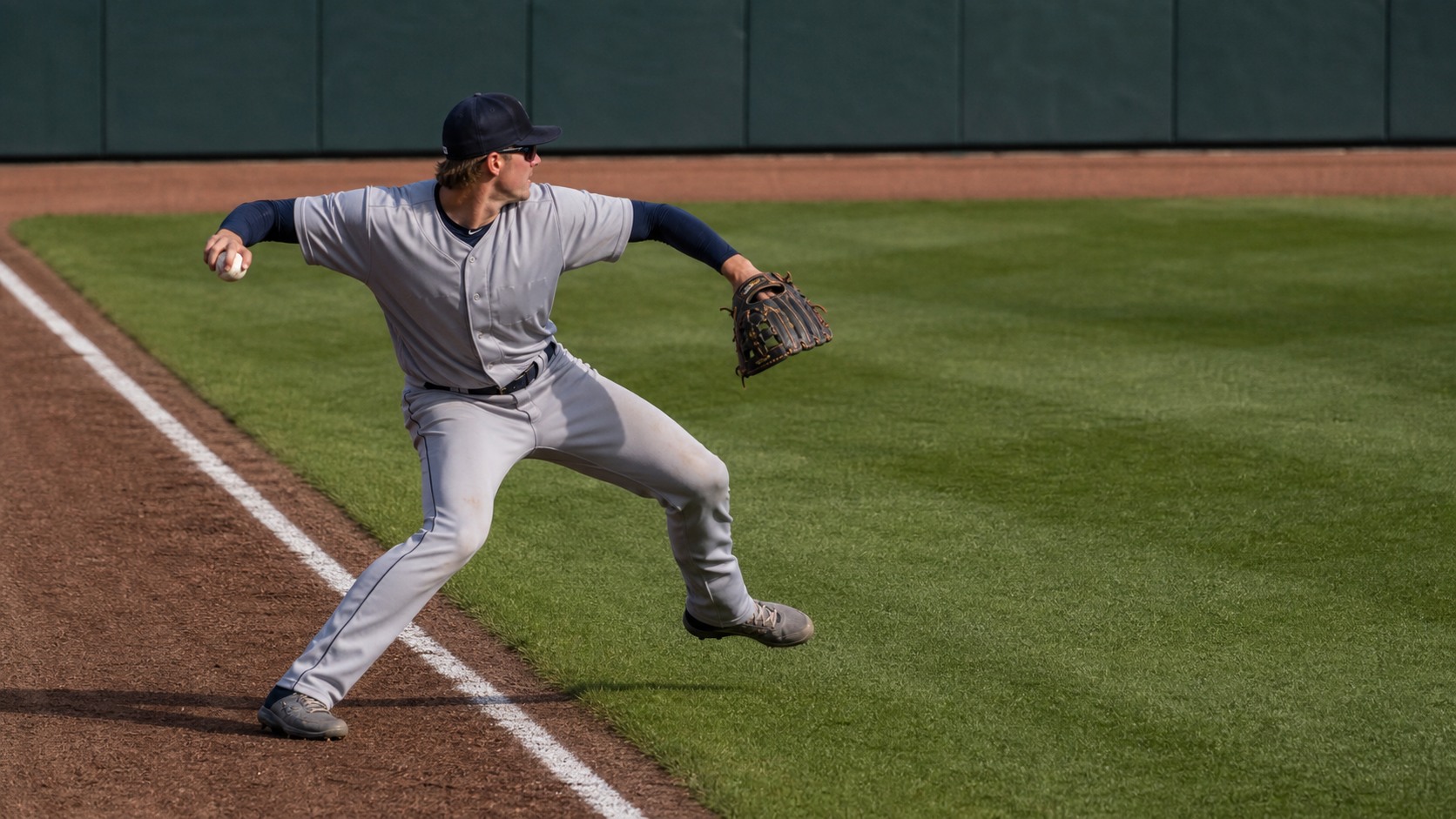
Some center field catches are not finished when the ball enters the glove. With runners tagging or advancing, the defender has to catch in a position that allows a useful throw. That means the route, final steps, glove side, and body direction all affect the next base.
Elite players often drift through the catch without drifting casually. They use momentum to line up the throw while still securing the ball. This is a small skill, but it turns fly balls into controlled defensive plays instead of separate catch-and-throw events.
Cutting Off the Gap Is a Center-Field Skill
Not every valuable center-field play ends with a catch. Sometimes the job is to turn a ball in the alley into a single, keep the runner from reaching third, or force the offense to stop at second. Those plays require pursuit angle, pickup technique, and a quick understanding of where the relay belongs.
The center fielder should avoid chasing the ball to the wall when a cutoff angle can meet it sooner. Taking the correct line across the grass may prevent the biggest inning even when the ball is already down. This kind of range is quieter than a diving catch, but pitchers feel it.
Gap control also depends on trust with the corner outfielders. If the center fielder takes the direct cutoff lane and the corner backs up or angles behind, the defense can cover more grass without two players chasing the same bounce. Communication before the pitch makes that teamwork possible.
The best gap defenders think about the runner before they pick up the ball. A slow runner may allow a calmer gather, while an aggressive runner demands a quick relay. The value is not only reaching the ball; it is reaching it with the next base already in mind.
Throwing Decisions Are Situational, Not Decorative
A center fielder’s arm is judged by more than velocity. The position often creates long throws with runners already moving, so decision-making matters. The correct throw may be a direct shot to third, a firm throw through the cutoff, or a quick return that prevents the batter from stretching a single.
Elite center fielders know runner speed before contact. They also know inning, score, outs, depth, and where the relay should be. Those details shape whether an aggressive throw is worth the risk. Throwing home from deep center with no chance can hand the offense another base. Hitting the cutoff can keep the inning playable.
The crow hop should be efficient rather than theatrical. A clean transfer, directional footwork, and accurate release are often better than a huge gather that lets the runner advance. Outfield assists are exciting, but preventing extra bases over a season is just as valuable.
Wall Play Turns Fear Into Information
Deep center field demands comfort near the wall. The defender must know warning-track texture, wall distance, padding shape, and any unusual angles. That knowledge lets the player chase full speed without feeling blind at the end of the route.
Good wall play begins before the game. Center fielders should walk the warning track, study caroms, and understand where the wall changes direction. During a play, they can use peripheral cues and track feel to measure distance. Looking away from the ball too early can cost the catch, but ignoring the wall completely can cost health.
On balls off the wall, the center fielder must become an infielder for a moment. Read the bounce, secure the ball, find the relay, and stop the damage. The clean recovery after a missed catch is often the difference between a double and a game-changing extra base.
Confidence near the wall also changes route commitment. A hesitant player may slow too early and let catchable balls fall. A reckless player may crash into danger. Elite wall play lives between those extremes: aggressive enough to make the play, informed enough to survive it.
Practice Center Field Like a Map, Not a Line
Center-field training should include more than straight sprints. Players need balls over both shoulders, shallow reads, gap balls, wall balls, communication reps, and throws after catches. The position is a map of decisions, so practice should make the defender move through that map.
Coaches can build rounds by zone. One round attacks shallow center, another works left-center, another works right-center, and another finishes at the wall. This gives the player repeated looks without pretending every ball is the same chase.
Review should focus on the read and route before the catch. If the defender arrived late, ask where the delay began. If the catch looked easy, ask whether the route made it easy. That is how practice starts to reveal the art hidden inside the position.
The Position Rewards Quiet Leadership
Center field leadership does not have to be loud between pitches. It shows in reminders, early calls, calm reactions, and the ability to steady the outfield after a mistake. Corner outfielders trust a center fielder who communicates clearly and takes responsibility for the shared space.
That leadership also includes preparation. An elite center fielder knows which hitters can split the gap, which runners challenge arms, and which pitchers create unusual contact. The player brings that information to every pitch without slowing the game down.
The leadership is especially visible after a misplay. The center fielder may need to direct the relay, calm a corner outfielder, or remind everyone of the next hitter’s tendency. Good defenders keep one mistake from becoming a larger defensive wobble.
When a young player wants to become a real center fielder, the goal should be bigger than catching fly balls. Learn contact clues. Train routes. Speak early. Throw with purpose. Respect the wall. The art of center field is turning a huge patch of grass into a controlled defensive territory.