Two Outs From One Continuous Play
A double play records two outs during one continuous sequence, but the two retirements do not have to look alike. The first may be a force at second and the next a throw that beats the batter-runner to first; a caught line drive may be followed by an appeal on a runner who left early; or a tag can begin a rundown that ends with another runner exposed. Understanding the play means tracking each out separately. Ask who is forced, where the ball is controlled, whether a tag is required, and whether the first retirement changes the rule governing the second. That last point explains many disputed turns: touching first before throwing to second can remove a force and require a tag. This guide covers the classic ground-ball double play, less common combinations, runner-interference limits, scoring notation, and the small decisions that let fielders trade raw arm speed for clean, reliable execution.
A: No. A double play can combine catches, tags, force plays, appeals, strikeouts, or other legal retirements during one continuous sequence.
A: The shortstop, scored as position 6, throws to the second baseman, position 4, who relays to the first baseman, position 3.
A: No. The fielder must touch the base with control for the force, then may move away to make the relay.
A: Yes in some non-force sequences if the run crosses before the third out, but not when the inning ends on a force or batter-runner out at first.
A: No. Location, speed, outs, runner pace, fielder positioning, and the quality of the feed determine whether two outs are realistic.
A: A legal slide may affect timing, but deliberate interference or a prohibited slide can lead to penalties and an additional out.
A: Retiring the lead forced runner preserves the force at first and usually creates a shorter, more efficient sequence.
A: The batter strikes out while the catcher throws out a runner attempting to steal, creating two outs on the pitch.
A: One fielder receives both putouts, such as catching a line drive and stepping on a base before the runner returns.
A: Yes. Each out has distinct timing and control elements, so review can change one retirement while leaving the other intact.
The Classic Ground-Ball Double Play
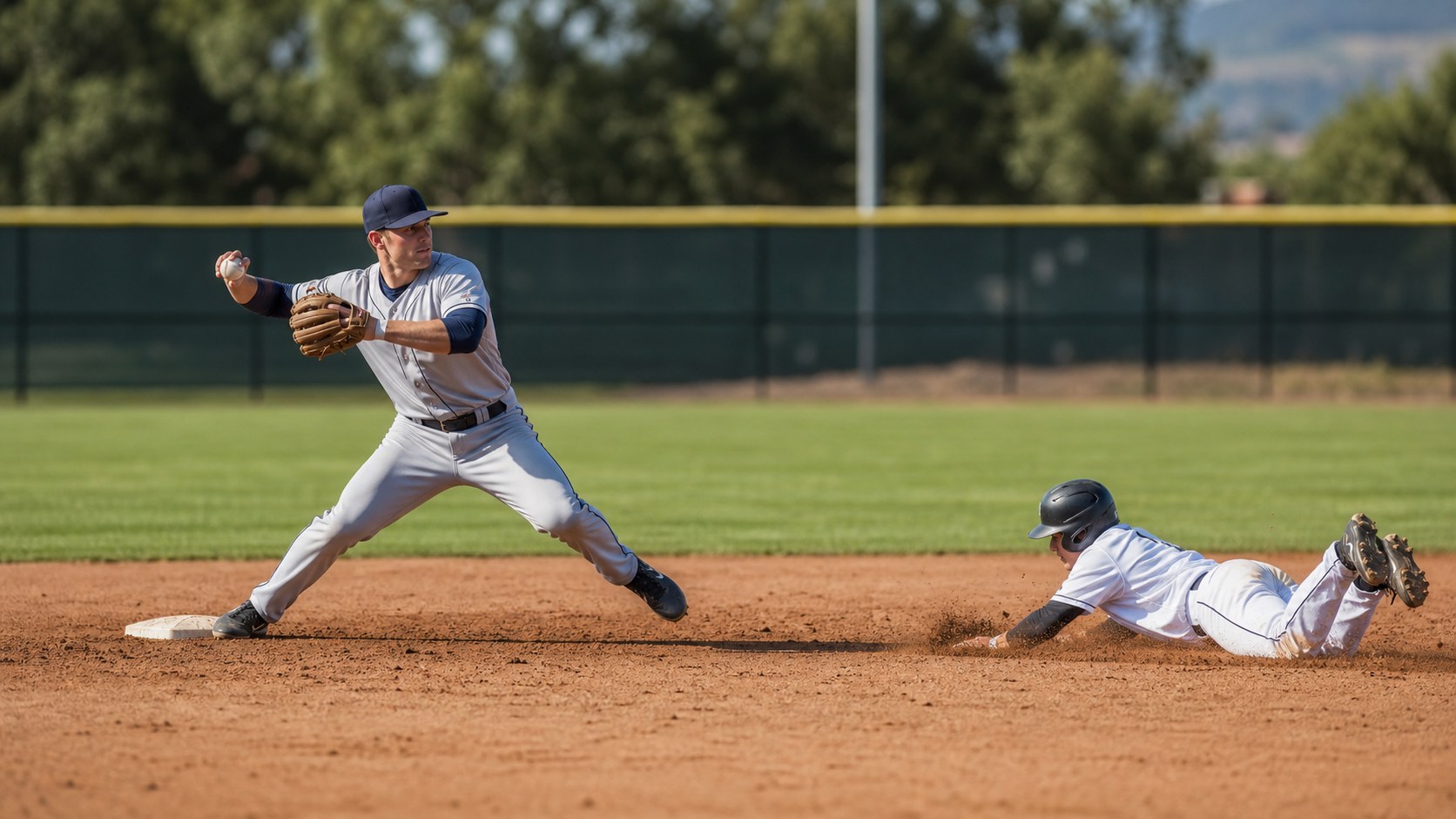
The familiar double play begins with a runner on first and fewer than two outs. A ground ball reaches a middle infielder, who gets the ball to second for the force and then relays it to first before the batter-runner arrives. Because the batter’s advance forces the runner off first, the defender covering second needs only secure possession while touching the bag. Completing that out preserves the batter-runner’s force at first and creates the cleanest route to two retirements.
Position numbers describe the path in the scorebook. A 6-4-3 double play travels from shortstop to second baseman to first baseman; a 4-6-3 starts with the second baseman. The pitcher begins a 1-6-3 or 1-4-3 turn, while the third baseman can start a 5-4-3. Those labels explain who handled the ball, not how difficult the play was or whether every throw followed a textbook line.
Why the Order of Outs Changes the Rules
The defense usually takes the lead runner first because the force at second is available only while the batter-runner remains active. Suppose the first baseman fields a grounder, steps on first, and then throws to second. The out at first removes the reason the runner had to leave first. At second, the defender must now tag the runner rather than merely touch the base. A team can still complete two outs, but the second retirement has become a tag play with different timing.
A caught fly changes obligations even more sharply. The batter is out immediately, and every runner must retouch the base occupied at the pitch before advancing. If a line drive is caught and the shortstop steps on second before the runner returns, the second out is properly understood as an appeal for failing to retouch. It resembles a force to the eye, yet the scoring and run-timing analysis arise from the catch and appeal sequence.
These distinctions determine whether a run counts on an inning-ending turn. No run scores when the third out is a force or when the batter-runner is retired before reaching first. On a tag play involving another runner, a run crossing home before the third out may count. The fastest way to settle the question is to identify precisely how the final out was recorded.
Building a Clean Feed at Second Base
The first fielder’s responsibility is to secure the baseball and choose a realistic out. On a routine grounder, that means approaching under control, fielding out front, and delivering a feed the pivot player can receive without searching. Short distance may call for an underhand toss; a longer route needs a compact overhand throw. The ideal feed arrives near the chest, slightly toward the receiver’s path to first. Velocity matters less than accuracy that allows the catch and transfer to become one connected action.
Footwork Through the Pivot
The defender covering second must arrive early enough to organize the feet but not so early that the base becomes a stationary target for the runner. Coverage depends on who fields the ball and where it travels. A second baseman receiving from the shortstop approaches from the first-base side, while a shortstop receiving from the second baseman works a different angle across the bag. Both need an unmistakable base touch, a protected throwing lane, and momentum that supports the relay.
Modern rules and replay make the actual touch important. Fielders cannot rely on the old assumption that being near the bag will be accepted. They can touch with a foot while receiving, step across after the catch, or adjust to a poor feed, but control and contact must overlap. Once that requirement is met, the fielder does not have to remain attached to second.
The exchange should match the feed. A perfect chest-high ball can be redirected quickly, while a low or wide throw demands a secure catch before anything else. Trying to preserve double-play speed after losing balance often turns a possible single out into no outs. Elite middle infielders look fast because their feet arrive in the correct order, not because they rush every hand movement.
The First Baseman Finishes the Turn
At first, the defender sets a target that helps the pivot player throw through an open lane. The stretch should follow the ball rather than begin so early that the body becomes locked. The first baseman must keep contact with the base until possessing the throw, unless leaving it to prevent injury or block a bad hop is the only sensible choice. A clean scoop can rescue a low relay, but expecting a spectacular pick is not a substitute for an accurate middle-infield throw.
The batter-runner may use the running lane during the final half of the route, and throws from second normally approach from the infield side. First basemen should avoid drifting into an avoidable collision path. On a throw that pulls them across the line, securing one out is more valuable than forcing a dangerous reach merely to preserve the idea of a double play.
Umpires at first judge possession, base contact, and the runner’s touch. A ball that beats the runner but is bobbled has not completed the out. The umpire may pause long enough to confirm control, which is why a slightly delayed signal can be better mechanics than an instant call based only on the sound of ball and foot.
On an errant relay, the first baseman must decide whether the second out remains attainable. Leaving the bag to catch a wide throw prevents extra bases even when it concedes the batter-runner. That choice can preserve the value of the first retirement and keep another runner from reaching scoring position. Double-play judgment includes knowing when the turn has ended.
Double Plays Without a Ground Ball
A line-drive double play develops when a runner leaves on contact and cannot return after the catch. The fielder can throw to the vacated base or, in an unassisted version, catch the ball and step on the bag. A deeper fly ball can also double off a runner who misreads the catch, though the longer throw gives the runner more recovery time. These plays reward awareness before arm strength.
The catcher produces another familiar combination when a batter strikes out as a runner attempts to steal. If the throw records the runner, the result is commonly called strike-’em-out, throw-’em-out. A catcher can also begin a double play by blocking a pitch, tagging a runner near home, and throwing behind another runner who advanced too aggressively.
Pitchers, Corners, and Nonstandard Starts
Pitchers start many difficult turns because a comebacker gives them little time to become a fielder. After finishing the delivery, the pitcher must regain balance, find the ball, and choose between a direct throw to second and the certain out at first. A ball near the mound may support a 1-6-3 or 1-4-3 sequence, but a slow tap toward a foul line often makes the lead throw unrealistic.
The third baseman faces a different geometry. With a runner on first, a ball near the line can produce the traditional 5-4-3 route. With runners on first and second, stepping on third before throwing to second or first may create two force outs. The fielder should know whether the base can be touched naturally during the fielding path; detouring for it may consume the time needed for any second retirement.
First basemen can begin a 3-6-3 double play by throwing to the shortstop and returning to cover first. The sequence demands communication because the pitcher may also move toward the bag. If the first baseman starts close enough to touch first before throwing, the force at second disappears and a tag becomes necessary. That small change is why teams rehearse both the order of throws and the language used to identify the desired play.
Catchers create double plays through quick recognition rather than a single standard route. A bunt can be fielded and thrown to second, a missed squeeze may expose a runner at third, and a blocked pitch can tempt another runner too far from a base. The catcher sees the entire diamond from behind the play, but still needs infielders to call the most vulnerable runner. Controlled decisions turn chaos into two outs.
Interference and the Legal Slide
A runner is allowed to compete for the base, and a legal slide can make the pivot more difficult. The runner is not allowed to change course or use a prohibited slide solely to hinder the fielder after being retired. Professional, college, high school, and youth codes describe the limits differently, but they share a safety and fairness principle: the runner should make a genuine effort toward the base rather than treat the defender as the objective.
When illegal interference prevents a probable second out, rules may authorize umpires to declare both the runner and the batter-runner out. That penalty prevents the offense from benefiting by trading one certain out for deliberate disruption. The judgment considers the slide’s reach, path, contact, and effect on the play. Ordinary incidental contact near a legally reached base is not automatically interference.
Defenders also carry responsibility. The pivot player should complete the touch and clear the area rather than remain exposed for dramatic effect. Coaches can teach feeds, bag approaches, and safe slide lanes together so that every participant understands where bodies are expected to travel.
Choosing Certainty Over a Forced Turn
Not every ground ball is a double-play ball. A slow roller, deep backhand, fast batter, or late feed may leave time for only one retirement. The fielder should know the inning, score, and runners before the pitch so the priority is already set. With a lead late in the game, the sure out can be more valuable than an off-balance attempt that opens a larger inning.
Reliable double plays are built from ordinary decisions executed in order: secure the ground ball, preserve the relevant force, give the receiver a usable feed, touch the base with control, and make a balanced relay. Each phase creates the next. When fans and players track those phases separately, the double play stops looking like one blur and becomes what it really is—two legally complete outs connected by disciplined teamwork.