Major League Umpiring Is a Long Professional Development Track
MLB umpires arrive in the Majors after years of rule study, field mechanics, live games, travel, evaluation, and increasingly difficult assignments. The pathway is selective from the beginning. Prospects can gain exposure through MLB umpire camps and professional training, then compete for entry-level positions in Minor League Baseball. Advancement is not based only on calling balls and strikes. Evaluators observe positioning, judgment, rule application, crew communication, situation management, consistency, fitness, professionalism, and the ability to accept feedback without losing authority. As umpires move through classifications, the game becomes faster and scrutiny increases. The strongest Triple-A officials may receive Spring Training and regular-season call-up opportunities before a full-time Major League opening exists. Promotion therefore reflects both demonstrated readiness and staffing need. Even after an umpire reaches MLB, supervisors, replay review, performance systems, rules education, and postseason selection continue to make development part of the job.
A: Playing experience can help with game familiarity, but professional instruction, rules knowledge, mechanics, judgment, fitness, and evaluation determine advancement.
A: No. Camps can provide instruction and opportunities, but professional umpires generally develop through years of Minor League assignments before Major League consideration.
A: Instruction covers rules, plate work, base mechanics, positioning, signals, crew communication, game situations, fitness, and professional conduct.
A: Field evaluators and development staff observe mechanics, accuracy, rule application, communication, management, improvement, and readiness for harder classifications.
A: Top upper-level Minor League umpires may receive Spring Training and regular-season call-up assignments before being considered for a full-time staff opening.
A: Not necessarily. Call-ups fill Major League assignments while continuing on the development path; full-time promotion occurs when MLB selects an umpire for an available position.
A: No. Replay covers certain reviewable plays. Plate work, non-reviewable judgment, rules, mechanics, communication, and game management require broader evaluation.
A: Supervisors train and evaluate umpires, provide feedback, support rules consistency, and help the development system assess assignments and advancement.
A: MLB considers sustained performance, experience, and assignment needs. Postseason crews represent another selective level rather than an automatic seniority reward.
A: Yes. Rules education, video review, supervisor feedback, fitness, technology, crew preparation, and offseason work continue throughout a Major League career.
Recruitment Begins by Showing What the Job Actually Requires
Many people encounter professional umpiring through clinics and MLB umpire camps. These events expose participants to instructors with Major and Minor League experience, demonstrate mechanics, and explain the career path. Camps are not a shortcut to a Major League field. They help aspiring officials determine whether professional expectations match their interest and ability.
Recruitment has to look beyond players who happened to know the game. Umpiring requires independent rule knowledge, movement, concentration, communication, and comfort making unpopular decisions. A former catcher may understand pitch movement but still need to rebuild timing and positioning. A person without advanced playing experience can succeed by learning those skills deliberately.
MLB’s camp program also supports outreach and can connect promising participants with scholarships or professional training opportunities. That broadens access to a path that demands both instruction and long-term commitment. Selection at any early stage represents permission to continue competing, not a promise of employment at the highest level.
Professional School Builds a Shared Technical Foundation
Formal umpire education compresses rules, mechanics, signals, positioning, and live situations into an intensive program. Students learn not only what the rule says but where an official must stand to judge its elements. A correct rule interpretation is of limited use if the umpire’s angle cannot show possession, a tag, or a foot touching the base.
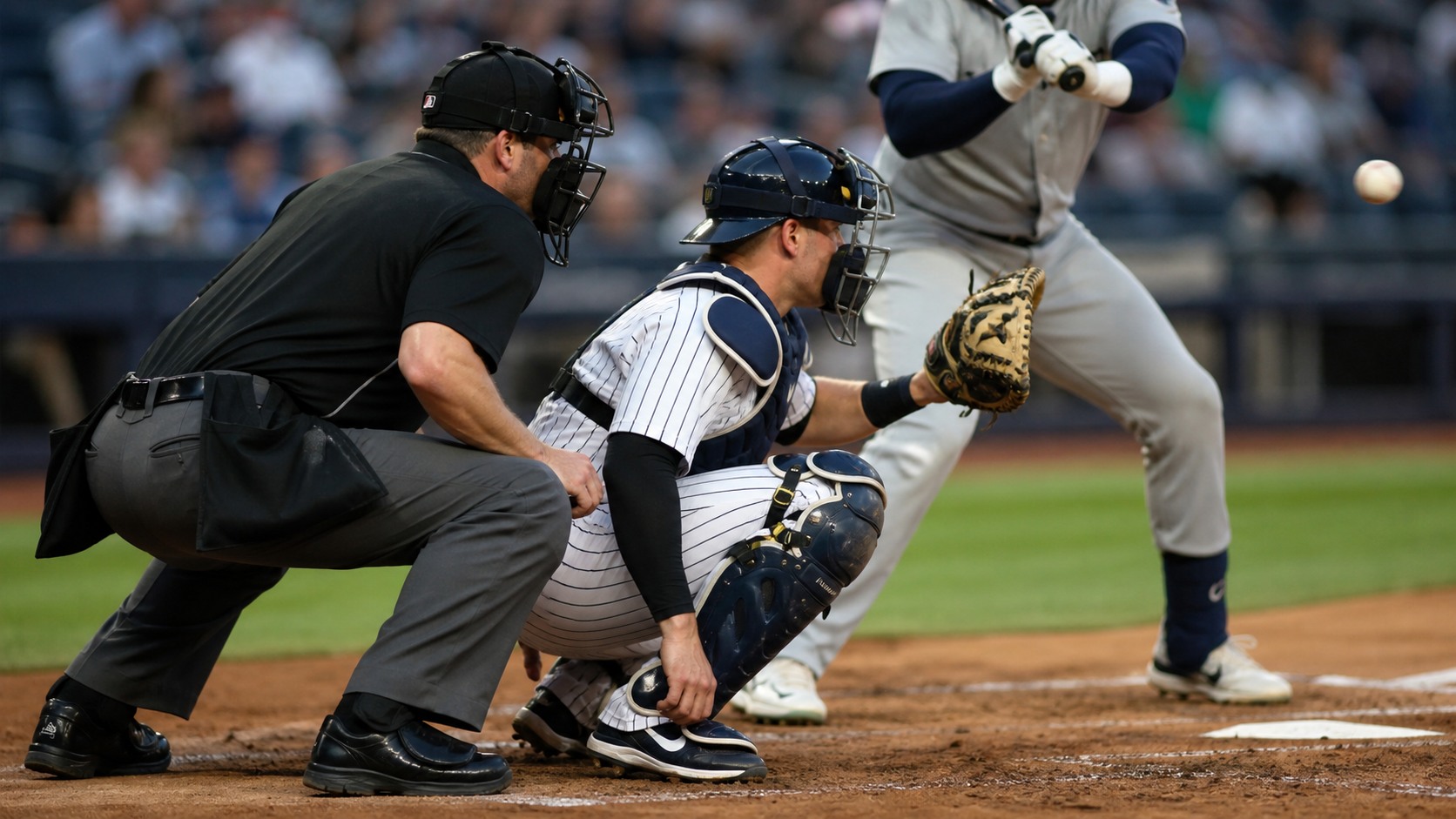
Plate work receives detailed attention. Stance and head height create a stable view; tracking keeps the eyes with the pitch; timing allows the pitch to finish before the decision is announced. Students repeat ball and strike calls, foul tips, checked swings, plays at home, lineup procedures, and the less visible responsibilities of the umpire-in-chief.
Base Mechanics Turn Four Umpires Into One Crew
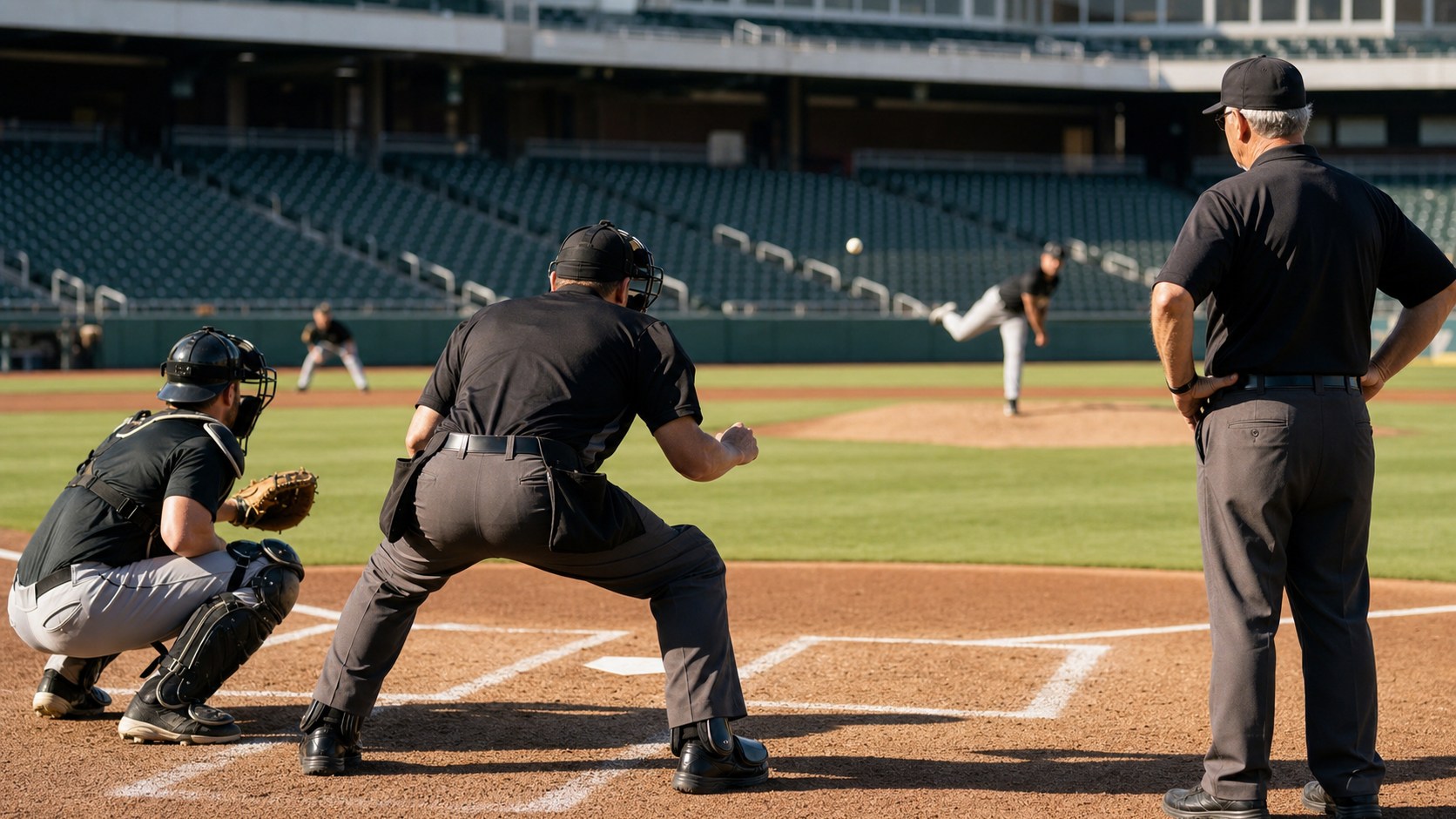
Base umpiring is organized around crew mechanics. Starting positions and rotations change with runners, outs, batted-ball direction, and the number of umpires assigned. Each official must know both the primary responsibility and the coverage created when a partner moves. The system prevents two umpires from watching one play while another base is left unobserved.
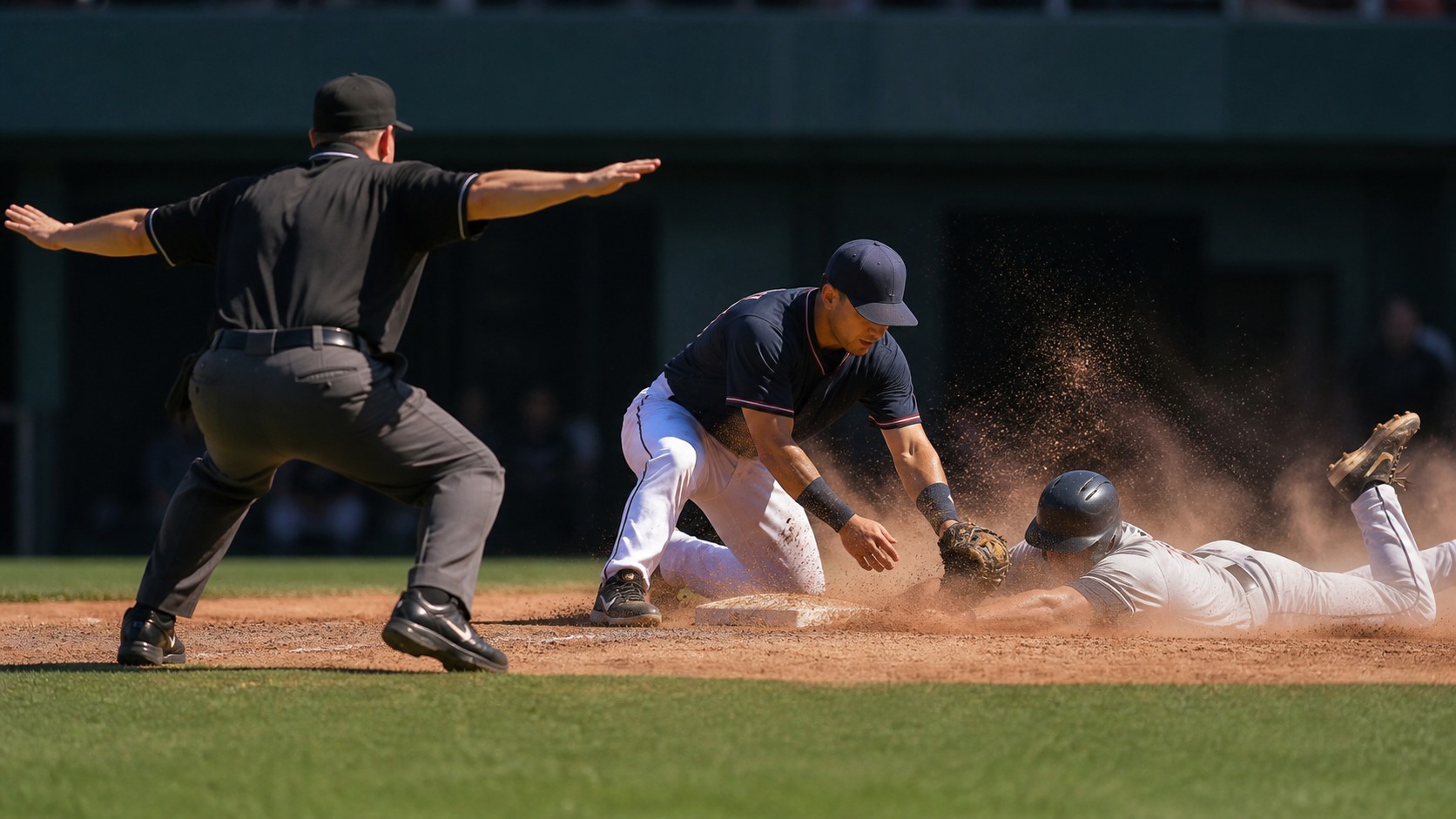
Angle usually matters more than closeness. A tag play viewed from five feet on the wrong side may hide the glove, while a wider angle can show ball, runner, and base together. Umpires learn to read the play, move efficiently, stop when possible, and let the action complete before signaling. Speed is useful only when it produces a credible view.
Some plays require an eye sequence. On a force play, the official may need to see the fielder’s foot and then confirm possession. On a catch near a boundary, the umpire must judge secure possession, voluntary release, and surrounding obstacles. Training creates repeatable visual priorities so surprise does not cause guessing.
Crew communication supports mechanics. Pregame meetings cover rotations, checked swings, catch-no-catch responsibility, fair-foul coverage, signals, and unusual park features. Quiet signals allow partners to adjust without drawing attention. When a play breaks down, officials use approved consultation procedures rather than protecting an individual call at the expense of getting the rule right.
Rule Knowledge Must Survive an Unusual Game
Professional umpires study the Official Baseball Rules and supporting interpretations because the rare play eventually occurs. Interference, obstruction, batting out of order, appeals, substitutions, pitching regulations, awards, and boundary situations can combine in ways that are not solved by instinct. Knowledge must be recalled while managers, players, and a crowd demand an immediate answer.
Training uses written tests, classroom discussion, video, and field simulations. The aim is not memorization alone. Officials practice identifying which facts matter, when the ball becomes dead, which penalties apply, and how to place runners. Clear explanations reduce conflict because teams can understand the ruling even when they dislike the result.
Entry-Level Assignments Test Professional Habits
Umpires selected for Minor League work begin at lower classifications and take on a demanding schedule. Games are only one part of the test. Travel, changing partners, weather, modest facilities, long series, and limited recovery reveal whether preparation remains dependable. The umpire must arrive ready regardless of yesterday’s difficult call.
Early evaluations emphasize teachability as well as present skill. A new official is expected to receive a note, understand its purpose, and show adjustment. Becoming defensive or changing everything at once slows progress. Coaches look for an umpire who can preserve authority on the field while remaining highly coachable away from it.
Professional appearance and conduct are functional standards. Proper equipment, clear signals, lineup accuracy, respectful communication, and punctual crew preparation build trust. An official who calls well but creates avoidable confusion may not be ready for faster baseball. Advancement requires the complete job.
Evaluation Covers More Than Accuracy
Accuracy is central, but evaluators also study how a call was created. Did the umpire move when the ball dictated movement? Was the official stopped with an open angle? Did timing allow all elements to finish? A correct call from poor position may not be repeatable, while a missed call from a strong view can be diagnosed as judgment rather than system failure.
Plate evaluation includes zone consistency, tracking, timing, catcher interference awareness, foul-ball responsibilities, pace, and situation management. Raw agreement with a pitch chart cannot describe every part of the assignment. The official must also handle substitutions, equipment, mound visits, timing rules, and plays developing around home.
Communication is observed across the crew and with participants. The best umpires are neither invisible in every situation nor eager to dominate. They answer legitimate questions, set limits when behavior becomes unacceptable, and avoid escalating ordinary disagreement. Tone, distance, body language, and rule clarity all affect whether the game can resume.
Fitness supports accuracy by helping an umpire reach repeated positions through a long season. It includes movement, endurance, recovery, vision care, and the ability to maintain posture. Fitness is not an appearance contest. It is the physical capacity to execute the assignment consistently in heat, travel, and extra innings.
Advancement Through the Minors Is Selective
As umpires move from lower levels toward Double-A and Triple-A, players become faster, pitches sharper, and consequences more visible. The mechanics remain recognizable, but reads must happen earlier and communication must be more efficient. Evaluators look for sustained performance across many games, not a short hot streak.
Promotion also depends on the development system’s available positions. An excellent umpire may need to wait for movement above while continuing to demonstrate readiness. Conversely, reaching a classification does not guarantee indefinite progress. The profession has limited slots, and evaluations can lead to advancement, retention, reassignment, or release.
Triple-A and Spring Training Open the MLB Door
Upper-level umpires who have demonstrated consistency can receive Major League Spring Training assignments. These games expose them to MLB players, managers, pace, technology, and stadium operations while supervisors observe how their work transfers. Spring performance is important, but it sits inside a longer record from the Minor Leagues.
Selected Triple-A umpires may then work regular-season MLB games as call-ups when full-time staff members are unavailable or scheduling requires coverage. Call-up work is not ceremonial. The official joins a Major League crew, handles the same game, and receives evaluation under the brightest conditions encountered so far.
The path can last many years. MLB’s 2026 full-time promotions, for example, included umpires who had begun their Minor League careers in 2015 and had already worked hundreds of Major League games as call-ups. That sequence illustrates how readiness is tested repeatedly before a permanent opening and selection align.
Call-ups still face the challenge of moving between environments. Travel and assignments can change quickly, and partners may be less familiar. Strong fundamentals and pregame communication create continuity. The ability to enter a crew without demanding special treatment is part of Major League readiness.
Full-Time Promotion Depends on Readiness and Openings
A full-time MLB position generally opens when the staff changes through retirement or another personnel move. League decision makers then select from qualified candidates who have built extensive professional records. Promotion recognizes performance, but timing also reflects the number of available seats.
New full-time umpires continue learning from experienced partners and crew chiefs. Major League status adds stability, not immunity from feedback. Every stadium, pitcher, catcher, and high-leverage situation tests consistency. Public attention also increases, requiring officials to recover from controversy without letting it alter the next game.
Crew chiefs carry additional leadership responsibilities. They coordinate preparation, support rules administration, help manage difficult situations, and maintain crew standards. Seniority and experience matter, but leadership requires judgment and communication beyond time served. Crew-chief appointments are another selective step within the Major League staff.
Replay Adds Evidence Without Replacing Umpiring
Replay review can confirm or overturn certain eligible calls, providing a visible accuracy signal. It also helps identify positioning or timing patterns when combined with video. However, many responsibilities are outside replay: most ball-strike decisions, pace enforcement, communication, crew rotations, non-reviewable judgment, and the administration of rules throughout the game.
An overturned call does not reveal the entire performance, and a confirmed call does not prove the mechanics were ideal. Supervisors can review where the umpire started, how the play was read, and whether a better angle was available. The goal is to make future decisions more repeatable rather than to reduce evaluation to a public tally.
Technology continues to change the profession. Tracking systems, replay operations, video libraries, and evaluation data can reveal patterns that memory misses. Umpires still need to manage human beings, apply rules with context, and maintain concentration between reviewable events. Technology expands feedback; it does not eliminate professional judgment.
Officials must also learn new procedures when rules or review standards change. Annual education and crew preparation keep implementation consistent across parks. A rule understood differently by each crew would undermine the league, so continuing instruction is part of competitive integrity.
Supervision and Training Continue in the Majors
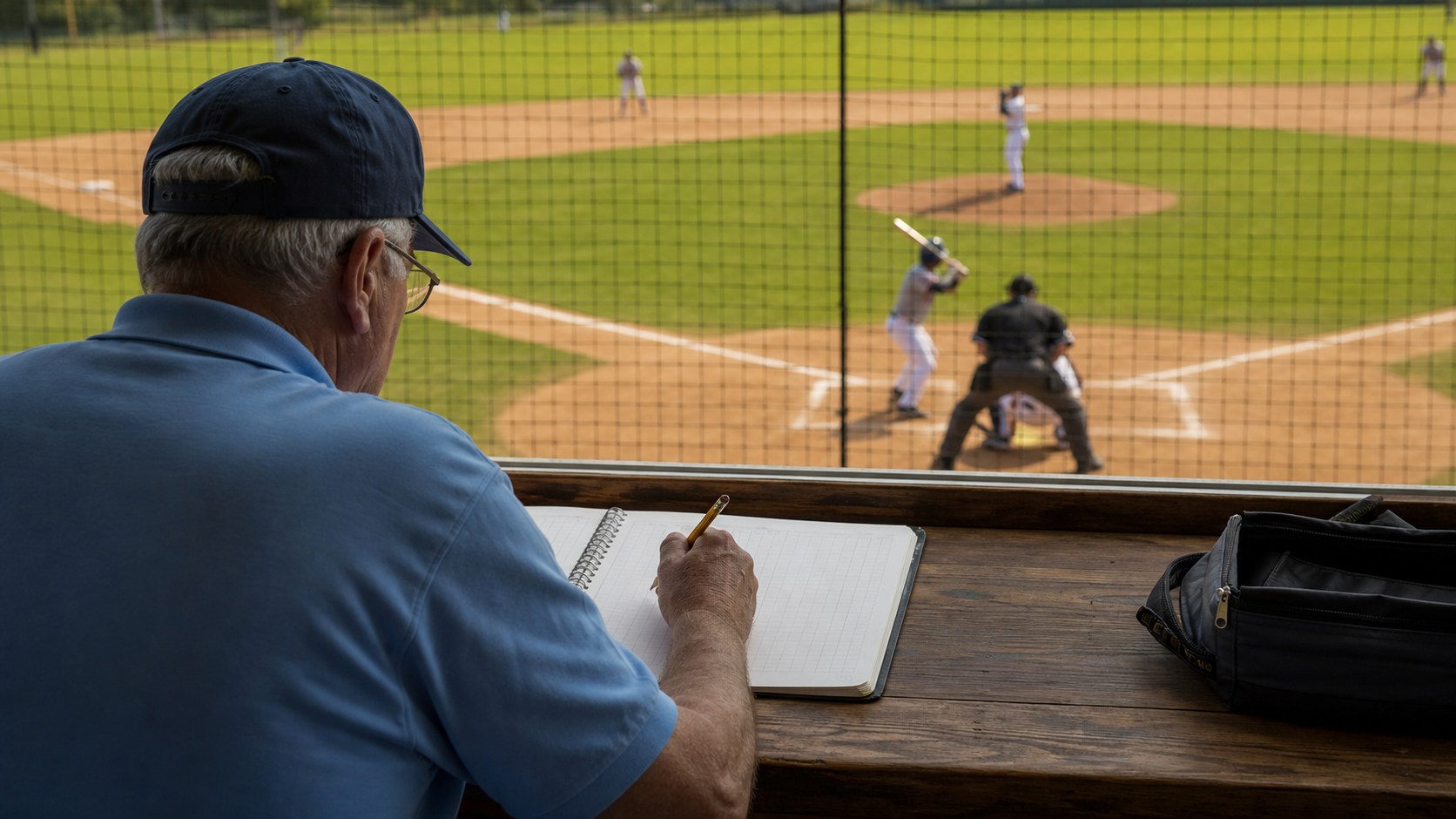
MLB employs umpire supervisors and operations staff who train and evaluate officials at Major and Minor League levels. Evaluation systems compile evidence for feedback, while instructors work on mechanics, interpretations, and professional expectations. Retired Major League umpires often contribute experience as supervisors or camp instructors.
Performance review should produce an actionable distinction. A judgment miss may require visual work or recognition training; a positioning miss requires a mechanical adjustment; a rule error requires study and crew alignment. Treating all mistakes as the same would make feedback less effective.
Postseason assignments represent another selective evaluation. Experience, sustained performance, crew needs, and leadership all contribute. An umpire does not stop competing for trust after reaching the Majors. The most visible games require officials who have shown consistency across the full season and over time.
The Career Is Built on Repeatable Credibility
Authority in umpiring comes from preparation and behavior, not volume. Players accept difficult decisions more readily when the official is in credible position, uses steady timing, applies rules consistently, and communicates without making the contest personal. No umpire will be correct on every judgment, so recovery becomes part of credibility.
The professional path trains that repeatability at increasing speed. Camps introduce expectations, school builds the foundation, the Minor Leagues test development, call-up work tests transfer, and MLB supervision continues refinement. Promotion is the result of thousands of ordinary pitches and plays handled well enough that the next level can trust the same standard.