A Waterfront Ballpark That Feels Instantly Iconic
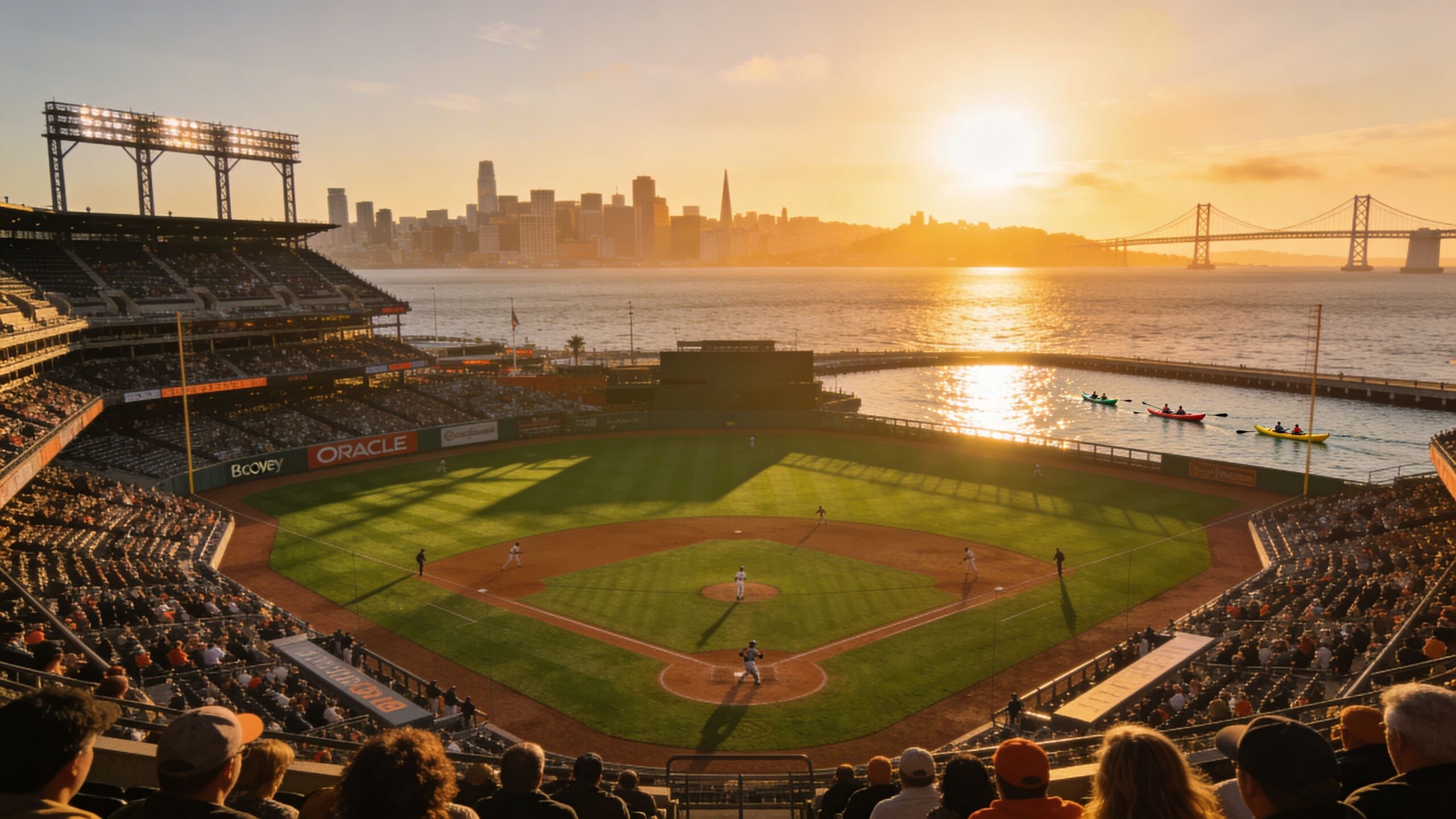
Oracle Park is one of those rare stadiums that feels unforgettable the moment it comes into view. Long before the first pitch is thrown, the ballpark announces itself with brick facades, sweeping bayfront scenery, and the unmistakable sense that this is not just a place where baseball is played, but a place where baseball belongs. Located along the San Francisco waterfront, the home of the Giants has become one of Major League Baseball’s most admired venues because it combines scenery, atmosphere, history, and design in a way few stadiums can match. It is a ballpark with personality, with edges shaped by the city around it, and with a rhythm that reflects San Francisco itself. Part of what makes Oracle Park so compelling is that it never feels generic. Some stadiums are functional, some are historic, and some are beautiful, but only a few manage to feel deeply tied to their setting. Oracle Park does exactly that. The cool air coming in off the bay, the splash of kayaks floating in McCovey Cove, the skyline rising in the background, and the giant glove and Coca-Cola bottle beyond the outfield all help create an experience that is both distinct and welcoming. Even fans who have visited dozens of stadiums often speak about Oracle Park with a different kind of admiration. It is not simply one of baseball’s best parks because it looks good in photos. It earns that reputation because the full experience is rich, layered, and memorable from inning to inning.
A: It sits on the San Francisco waterfront near the South Beach neighborhood.
A: It is the stretch of bay water beyond right field where home run balls can splash down.
A: Its scenery, design, baseball history, and fan experience make it one of MLB’s most celebrated parks.
A: Yes, it is one of the most accessible and memorable stadium experiences in baseball.
A: Yes, cool bay air and evening breezes can influence comfort and even ball flight.
A: Layers are a smart choice because San Francisco evenings can feel chilly.
A: Yes, the stadium includes attractions and spaces that work well for families.
A: It is a home run that lands in McCovey Cove on the fly.
A: Yes, it is regularly ranked near the top by fans and baseball travelers.
A: The waterfront setting, skyline views, baseball character, and Giants history all combine to make it special.
From Pacific Bell Park to a Modern Baseball Landmark
When the Giants opened this ballpark in 2000, the franchise entered a new chapter. For years, the team had played at Candlestick Park, a stadium remembered as much for its brutal winds and chilly conditions as for its baseball history. The Giants needed a home built specifically for baseball, a place that would bring fans closer to the field, create a better atmosphere, and anchor the team in a more intimate and visually compelling environment. The result was a downtown waterfront ballpark that quickly became a model for modern stadium design.
The park opened under a different name, but from the start, its identity was unmistakable. This was a stadium built to celebrate baseball as an urban experience. It embraced the bay instead of turning away from it. It welcomed the city into the ballpark through open views and layered architecture. It also arrived at a perfect moment for the franchise, giving the Giants a new home just as a new era of star power and long-term competitiveness began to emerge. Over the years, the ballpark’s name changed, but its place in the game only grew stronger. Championship runs, legendary players, and iconic home runs helped elevate it from a beautiful new venue into one of baseball’s true landmarks.
Architecture That Balances Classic Character and Modern Comfort
One of the reasons Oracle Park stands out is the way it borrows from baseball’s classic architectural language while still feeling modern and comfortable. Its brick exterior, steel framework, and asymmetrical field dimensions nod to older ballparks without trying to imitate them too closely. Instead of feeling like a nostalgic copy, the stadium feels like an evolution of the retro-modern movement that reshaped baseball architecture in the late twentieth century. It respects tradition while clearly belonging to its own era. Inside, the seating bowl and concourses are designed to keep fans connected to the game. Sightlines are excellent throughout the park, and the layout encourages movement without sacrificing the ability to follow the action. Fans can wander the concourse, pause at railings overlooking the field, and still feel immersed in the game. The design also embraces the waterfront setting, with right field opening visually toward the bay and creating one of the most distinctive outfield views in all of sports. This balance between old-school charm and modern fan comfort is central to why the park continues to rank so highly among baseball fans.
McCovey Cove and the Magic Beyond Right Field
If Oracle Park has a signature feature, it is McCovey Cove. The stretch of water beyond the right field wall has become one of baseball’s most famous landmarks, turning Giants home runs into splash-worthy events and transforming the bay itself into part of the ballpark experience. During games, kayakers gather in hopes of retrieving a home run ball, creating a floating audience just outside the stadium. It is one of the most visually distinctive scenes in Major League Baseball, and it gives Oracle Park an atmosphere that no inland stadium can replicate.
McCovey Cove is more than a novelty. It represents the park’s ability to blend baseball with place. Instead of building a closed structure, the designers created a stadium that interacts with the natural environment and city waterfront. That choice turned the bay into an active character in every game. It also gave the ballpark one of its defining myths: the splash hit. Few stadium traditions are as instantly recognizable as a Giants slugger sending a ball soaring into the cove. For fans, that possibility adds an extra layer of anticipation to every big swing to right field.
A Setting That Captures the Spirit of San Francisco
Oracle Park feels deeply rooted in San Francisco because it captures several sides of the city at once. It has the polished energy of a downtown destination, the dramatic natural beauty of a bayfront setting, and the relaxed charm of a place where people genuinely want to spend time. Fans can arrive by foot, train, ferry, or car, and the journey itself often becomes part of the experience. Approaching the park along the waterfront builds a sense of occasion that many stadiums simply cannot offer. The setting also changes beautifully throughout the day. Afternoon games can feel bright, open, and postcard-worthy, with the bay sparkling in the sunlight and the city appearing crisp in the background. Night games bring a different mood. The lights reflect off the water, the skyline grows more dramatic, and the cool marine air settles into the stadium. That shift in atmosphere gives the park an almost cinematic quality. It is one thing to watch baseball in a nice stadium. It is another to watch it in a place where every inning feels framed by one of America’s great urban landscapes.
The Giants’ Championship Era and the Park’s Expanding Legacy
A beautiful stadium can get attention, but winning fills it with meaning. Oracle Park’s legacy grew enormously during the Giants’ championship era, when the franchise captured multiple World Series titles and turned the ballpark into one of baseball’s loudest, proudest October stages. Postseason baseball on the San Francisco waterfront gave the stadium a deeper emotional identity. It was no longer just a stunning venue with great views. It became the setting for unforgettable moments, elite pitching performances, tension-filled pennant races, and celebrations that defined a generation of Giants fans.
Ballparks become legendary when architecture and memory fuse together, and Oracle Park has reached that level. Fans remember the atmosphere during playoff games, the roar after late-inning rallies, and the way the stadium seemed to tighten emotionally when the stakes rose. A park that is already visually striking becomes even more powerful when it is tied to meaningful baseball history. That is one reason Oracle Park feels so complete. It has the scenery, but it also has the stories.
Fan Experience That Goes Beyond the Seat
Oracle Park consistently ranks highly because it understands that a great ballpark experience is not just about where fans sit. It is about how the entire environment feels from entry to exit. The concourses are open and engaging, the social spaces are lively, and the visual variety throughout the stadium keeps the experience fresh. Fans can settle into traditional seats, stand along the rails, wander the outfield areas, or spend time exploring different perspectives. That flexibility makes the ballpark feel alive. Food and drink also play a major role in the park’s identity. San Francisco is a city known for strong culinary culture, and the stadium reflects that with options that go beyond standard concession fare. Local flavors, ballpark staples, and regional favorites all contribute to an experience that feels more connected to the city than a generic menu ever could. The same is true of the atmosphere. Oracle Park can feel family-friendly, energetic, and scenic all at once. That range is part of its strength. It invites die-hard baseball fans, casual visitors, tourists, and families into the same space without losing its baseball soul.
Inside the Action: A Park With Real Baseball Personality
Oracle Park is not just beautiful around the edges. It also has real baseball personality between the foul lines. The field dimensions, weather conditions, and right field waterfront all contribute to a distinctive style of play. For years, the park gained a reputation as a challenging place for hitters, especially power hitters who saw fly balls die in the cool San Francisco air. While changes over time have made it somewhat more balanced, the ballpark still retains an identity shaped by its environment. Games here often feel different than games played in more offense-friendly parks.
That distinctive baseball character adds to the experience for serious fans. It reminds visitors that this stadium is not a replica built from a template. It has quirks, tendencies, and strategic implications. Outfielders must respect the geometry of the space. Pitchers can use the environment to their advantage. Right-handed sluggers dream of driving a ball into the cove, while pitchers dream of watching deep contact stall in the marine air. This relationship between place and play is one of the hallmarks of classic baseball parks, and Oracle Park preserves that feeling in a modern setting.
Ballpark Details That Fans Never Forget
Part of Oracle Park’s appeal lies in the details. The giant glove beyond left field, the oversized Coca-Cola bottle and slide, the brick walkways, the statues honoring Giants legends, and the views from different levels all create a sense of discovery. These are not random decorations. They help give the park personality and make it easier for fans to build memories around specific places within the stadium. Great ballparks are not just watched; they are explored. There is also a certain visual rhythm to the stadium that makes it rewarding to revisit. One day, a fan may remember the bay beyond right field. Another day, it may be the warm glow of the setting sun hitting the upper deck. Another time, it may be the sound of the crowd rising as a ball tails toward the arcade. The stadium is rich in visual cues and emotional touchpoints, which is why it lingers in the mind long after a visit ends. That ability to stay with people is a major reason it is often considered one of MLB’s best.
Why Oracle Park Continues to Set the Standard
In an era when many teams strive to create entertainment districts and multiuse sports environments, Oracle Park remains a benchmark because it never forgets that the game itself is the center of the experience. Everything around the park enhances baseball rather than distracting from it. The views support the mood of the game. The architecture amplifies the uniqueness of the setting. The amenities improve comfort without flattening the stadium’s character. It feels polished, but it never feels soulless.
That is a difficult balance to achieve. Too many modern venues become slick without becoming beloved. Oracle Park avoided that trap by building identity into the design from the beginning and allowing time, history, and fan culture to deepen that identity. It is a park where visitors can admire the skyline, watch kayaks drift beyond the wall, enjoy excellent food, and still feel that what matters most is the baseball diamond in front of them. That focus gives the park staying power.
More Than a Stadium, a San Francisco Experience
What ultimately makes Oracle Park special is that it offers something larger than a baseball game without ever feeling detached from baseball itself. It is a place where the waterfront, the city, the team, and the fan all seem to meet in the same moment. The best ballparks create atmosphere. The very best create belonging. Oracle Park does both. For Giants fans, it is home. For baseball travelers, it is a must-see destination. For first-time visitors, it often becomes the standard against which other parks are measured. Its beauty is obvious, but its greatness comes from something more lasting: the way it turns baseball into an experience shaped by place, memory, and emotion. That is why Oracle Park is not simply one of MLB’s best ballparks. It is one of the clearest examples of what a modern baseball paradise can be.