A Ballpark That Feels Bigger Than Baseball
Dodger Stadium is more than the home of the Los Angeles Dodgers. It is one of the most recognizable places in American sports, a stadium that has become deeply woven into the story of baseball, Southern California, and the city of Los Angeles itself. Resting high above Chavez Ravine, framed by palm trees, mountain views, and miles of blue sky, Dodger Stadium feels instantly familiar even to people who have never walked through its gates. For generations of fans, it has represented summer nights, pennant races, legendary players, and the kind of atmosphere that can only exist when a historic team plays in a truly iconic setting. What makes Dodger Stadium special is not just its age or its reputation. It is the way it combines visual beauty, architectural identity, and baseball tradition into a single experience that still feels alive. Some old stadiums survive mostly on nostalgia. Dodger Stadium offers something more impressive. It manages to honor its past while remaining one of the sport’s great modern stages. The ballpark feels classic without feeling outdated, massive without feeling cold, and glamorous without losing its baseball soul. In an era of constant reinvention across professional sports, Dodger Stadium continues to stand as a reminder that a well-designed ballpark can become timeless.
A: It is located in Chavez Ravine in Los Angeles, California.
A: The stadium opened in 1962.
A: Its history, design, crowd energy, and Los Angeles setting make it one of baseball’s most iconic parks.
A: Palm trees, hillside views, colorful seating, and classic mid-century architecture.
A: Yes, it is one of the most important and memorable parks to visit in MLB.
A: The Dodger Dog is the stadium’s most famous traditional food item.
A: Yes, upgrades have improved the fan experience while preserving its historic identity.
A: Cooler air, glowing lights, colorful skies, and an energized crowd create a classic atmosphere.
A: Yes, it has hosted decades of postseason games, stars, and championship memories.
A: The combination of tradition, scenery, history, and Dodgers energy is hard to match.
The Birth of a Los Angeles Landmark
When Dodger Stadium opened in 1962, it marked the beginning of a bold new chapter for baseball on the West Coast. The Dodgers had already transformed the sport simply by leaving Brooklyn and establishing themselves in Los Angeles, but they still needed a permanent home worthy of the franchise’s ambitions. What emerged from Chavez Ravine was a stadium unlike any other in Major League Baseball at the time. It was clean, modern, bright, and perfectly suited to Southern California.
Unlike many older parks that were squeezed into dense urban blocks, Dodger Stadium was built into the landscape. Its hillside setting gave it a dramatic sense of space, while its surrounding parking terraces reflected the automobile culture that defined Los Angeles in the mid-twentieth century. The result was not just a baseball field with seats attached. It was a full stadium environment, carefully planned and visually distinct. From the beginning, Dodger Stadium projected confidence. It looked like the home of a franchise that intended to be a major force in baseball for decades to come.
Mid-Century Design That Still Feels Fresh
One of Dodger Stadium’s most remarkable qualities is its architecture. It does not rely on brick nostalgia or retro imitation. Instead, it proudly reflects the modernist design language of the early 1960s, with clean lines, colorful seating levels, open-air views, and a sense of elegance that has aged beautifully. The stadium is a rare example of a ballpark that feels both historic and stylistically unique. It does not try to resemble older baseball cathedrals. It created its own identity. This is part of why the ballpark remains so beloved. Its symmetrical seating bowl, dramatic pavilions, and airy concourses give it a visual coherence that many newer stadiums lack. The famous pastel seat colors, the exposed structure, and the open views toward the hills all contribute to a look that is unmistakably Dodger Stadium. Even after renovations and updates, the venue has preserved its core personality. That commitment to visual continuity has helped the stadium remain iconic rather than merely old.
Chavez Ravine and the Setting Above the City
Location has always been central to Dodger Stadium’s identity. Perched in Chavez Ravine, the ballpark occupies a setting that feels removed from the city while still deeply connected to it. Driving up toward the stadium creates a sense of anticipation, as if the ballpark is rising out of the hills specifically for game night. Once inside, fans are treated to one of the most distinctive environments in baseball.
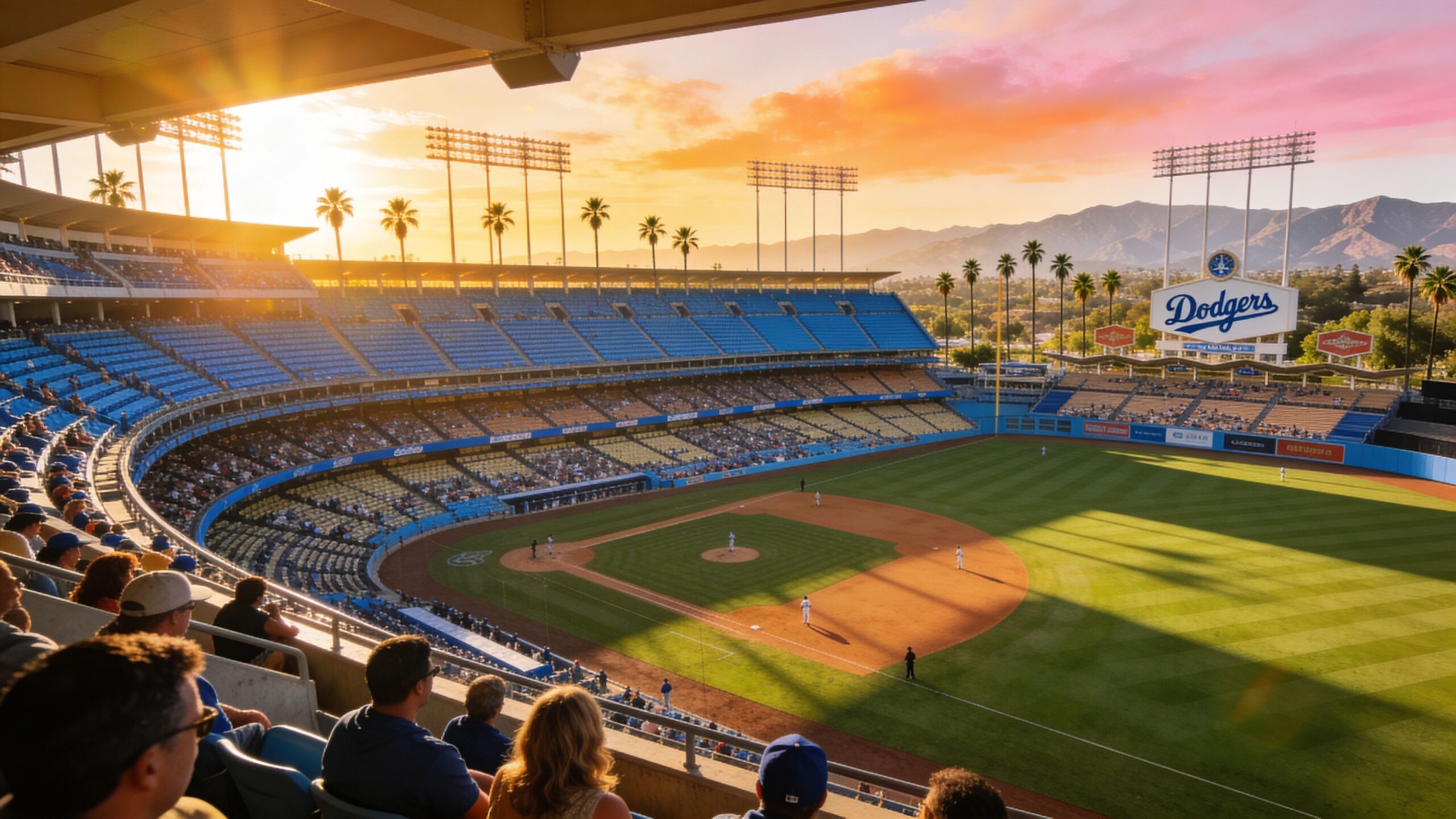
During day games, the sun washes over the field and seating bowl, turning the stadium into a bright, almost cinematic stage for baseball. By evening, the mood changes. The sky softens, the lights begin to glow, and the silhouettes of the surrounding hills help frame the game in a way that feels uniquely Los Angeles. On especially clear nights, the mountain backdrop gives the stadium an almost postcard-like beauty. Few parks in baseball can match the visual drama of Dodger Stadium at sunset.
The Crowd, the Sound, and the Energy of a Dodgers Game
A great stadium becomes legendary when the fans give it emotional force, and Dodger Stadium has that in abundance. Dodgers fans have long been known for turning the ballpark into one of the sport’s most intense and vibrant atmospheres. Whether it is a regular summer game, a rivalry matchup, or a postseason showdown, the energy in the stadium can be overwhelming in the best possible way. There is a particular sound to Dodger Stadium when the crowd locks in. It rises from tens of thousands of voices and feels amplified by the bowl-shaped design of the seating. Big moments arrive with a wave of noise that can make the stadium feel like it is pulsing. This intensity is part of what separates Dodger Stadium from simply being a beautiful historic venue. It is not a museum piece. It is a living, roaring baseball environment where the fan experience can swing from relaxed California charm to playoff-level electricity in a matter of seconds.
The Home of Legends and Historic Moments
Any complete guide to Dodger Stadium must recognize the role it has played in baseball history. Over the decades, the ballpark has hosted some of the sport’s greatest players, most memorable games, and defining championship moments. Hall of Famers have taken the field here. Pitchers have authored masterpieces here. Sluggers have sent unforgettable home runs soaring into the night here. Generations of Dodgers fans have built their baseball memories inside this stadium.
The park’s historic importance is not limited to one era. It has remained relevant across multiple generations, from the Sandy Koufax years to later championship teams and modern superstar eras. That continuity gives Dodger Stadium a rare feeling of depth. It is not just associated with one golden age. It has been an important stage for baseball over and over again. Fans entering the park today are not simply attending a game. They are stepping into a space where baseball history has accumulated layer by layer.
A Fan Experience That Blends Classic and Modern
Despite its age, Dodger Stadium has evolved to meet modern expectations while keeping its essential character intact. Renovations over the years have improved circulation, amenities, and gathering spaces, helping the ballpark feel more comfortable and accessible without erasing the design choices that made it famous. That balance matters. Too many historic stadiums feel trapped by the past, while too many renovated venues lose the very identity that made them worth preserving. Dodger Stadium has largely avoided both problems. For fans, this means the experience feels richer than ever. There are places to explore, new social areas to enjoy, and improved food and beverage options throughout the stadium. At the same time, the heart of the ballpark remains unmistakably the same. The seating bowl still feels grand. The views still feel classic. The game remains the center of attention. The updates support the experience rather than replacing it.
Ballpark Food, Dodger Dogs, and Local Flavor
No profile of Dodger Stadium would be complete without mentioning the food culture that has become part of its identity. For many fans, the ballpark experience begins with the flavors associated with a day or night at Chavez Ravine. The most famous example is the Dodger Dog, a stadium tradition that has long been tied to the park’s atmosphere and mythology. Even for visiting fans, trying one is often part of the ritual.
Beyond that signature item, the ballpark has expanded its offerings to reflect the culinary diversity of Los Angeles. Fans can now find a much broader range of food than the standard stadium menu of decades past. That evolution mirrors the city itself. Los Angeles is one of America’s great food capitals, and a stadium of this stature increasingly reflects that reality. While tradition still matters, the broader dining experience has grown into a meaningful part of what makes a visit more memorable.
Views, Palm Trees, and Southern California Atmosphere
There are stadiums with better skylines and stadiums with more dramatic water views, but few can match the pure regional atmosphere of Dodger Stadium. Palm trees line the scene. Warm weather dominates much of the season. The light at sunset feels unmistakably Southern California. All of it combines to create a baseball experience that feels inseparable from place. This matters because baseball is often at its best when the stadium reflects the region around it. Dodger Stadium does that beautifully. It does not feel generic or transplantable. It feels like Los Angeles. The architecture, the weather, the size of the crowd, and the visual openness all support that identity. Even television broadcasts capture it well, which is one reason the ballpark remains so recognizable nationally. The setting is not just attractive. It is part of the Dodgers brand and part of the emotional power of the place.
Inside the Game: How Dodger Stadium Plays
Beyond its aesthetics and history, Dodger Stadium also has a real baseball identity. The field has traditionally been known as a fair but often pitcher-friendly environment, especially under the lights when the marine air settles in and conditions can shift. Over the years, fans and analysts alike have paid attention to how the ballpark plays differently at various times of day and in different weather conditions.
That subtle baseball character gives the stadium added depth. It is not simply a scenic venue. It is a place where the environment can shape strategy, rhythm, and outcomes. Pitchers have often loved working here, while hitters have had to adapt to the park’s tendencies. Like all great baseball venues, Dodger Stadium has quirks that become part of its competitive personality. For serious fans, that only adds to its appeal.
Renovation Without Losing the Soul
One reason Dodger Stadium remains so highly regarded is that its caretakers have generally understood what not to change. In recent years, upgrades have modernized key areas of the park, adding new plazas, improving circulation, and creating more welcoming entry experiences. Yet the stadium still feels like Dodger Stadium rather than a stripped-down shell wearing a historic name. This is a major achievement. Preserving the soul of a stadium is harder than preserving its concrete. It requires understanding which visual cues, sightlines, and emotional touchpoints matter most to fans. At Dodger Stadium, those elements remain intact. The seating bowl still commands the experience. The outward views still create atmosphere. The connection between crowd and field still feels immediate and powerful. The park has evolved, but its identity has held firm.
Why Dodger Stadium Still Belongs Among MLB’s Best
Baseball fans love to debate the best ballparks in the league, and Dodger Stadium always belongs in that conversation. It may not have the newest technology or the quirkiest outfield dimensions, but greatness in a ballpark is not just about novelty. It is about identity, atmosphere, memory, and the ability to make a game feel larger than itself. Dodger Stadium excels in all of those areas.
Its case is unusually strong because it appeals to different kinds of fans for different reasons. Historians love it for its significance. Architects admire its preserved mid-century design. Travelers remember its views and setting. Dodgers fans cherish it for the unforgettable moments they have experienced there. Casual visitors often leave surprised by how alive and relevant it feels. That wide range of appeal is a sign of a truly great stadium.
More Than a Ballpark, a Los Angeles Institution
Ultimately, Dodger Stadium is not just an important baseball venue. It is one of Los Angeles’s most enduring institutions. It represents continuity in a city often defined by reinvention. It gives fans a place where the past and present meet under the same lights. It stands as a symbol of baseball’s ability to create tradition even in a modern, sprawling metropolis. For anyone building a list of must-visit baseball destinations, Dodger Stadium belongs near the very top. Its history is immense, its design is iconic, and its atmosphere remains powerful. A complete guide to the ballpark can describe its architecture, its food, its fan culture, and its famous views, but the full experience is still something that has to be felt in person. On a warm Los Angeles evening, with the crowd rising and the field glowing under the lights, Dodger Stadium reminds everyone why some ballparks become immortal.