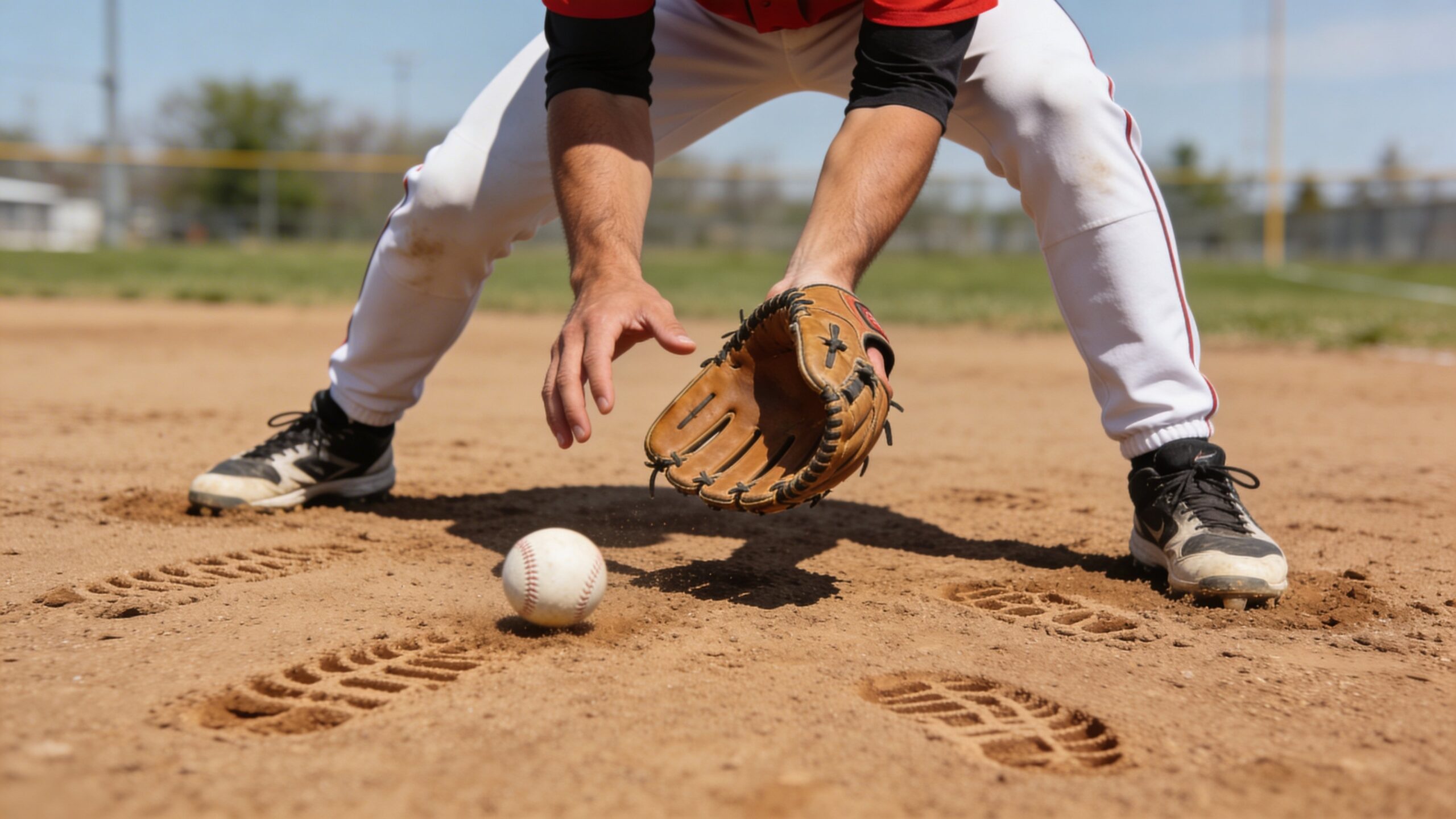
Understanding the Foundation of Fielding Mechanics
Fielding mechanics form the backbone of defensive play in baseball and softball, shaping how players move, react, and control the ball. At its core, proper fielding is not about flashy plays but about repeatable, efficient movements that reduce errors and create consistency. Beginners often underestimate how much of defense is built on positioning, timing, and body control rather than raw athletic ability. This guide focuses on building those foundational systems step by step. By understanding how the body aligns with the ball, how the glove works in harmony with footwork, and how each movement connects to the next, players develop a reliable defensive structure. The goal is not just to field the ball, but to do it with precision and control every time.
A: It improves balance and keeps the glove in the optimal position.
A: Two hands provide better control and quicker transitions.
A: Focus on controlled steps and consistent drills.
A: Poor positioning, timing, or lack of control.
A: Improve readiness and practice reaction drills.
A: It improves visibility and control.
A: It is critical for clean, consistent fielding.
A: Yes, with consistent practice and proper mechanics.
A: Footwork is the foundation of all fielding mechanics.
A: Focus on fundamentals and repeat proper movements.
The Athletic Starting Position
Every successful defensive play begins before the ball is even hit. The athletic position is the ready stance that prepares the body to move in any direction without hesitation. This position is characterized by slightly bent knees, weight balanced on the balls of the feet, and a forward-leaning posture that keeps the body engaged and responsive.
A strong starting position minimizes reaction time and allows for smoother transitions into movement. Players who stand too upright or sit too low often struggle to adjust quickly. The ideal stance is dynamic, not static, allowing the body to flow naturally into the next phase of the play.
Reading the Ball Off the Bat
Fielding mechanics are heavily influenced by how well a player reads the ball at contact. The initial reaction begins the moment the bat meets the ball, and early recognition determines the quality of the approach. Factors such as ball speed, angle, and spin all influence how the fielder should move. Developing this skill requires consistent exposure and focus. Players learn to anticipate patterns, recognize trajectories, and adjust their positioning accordingly. This early read creates the foundation for proper footwork and ensures that the body is aligned with the ball before it arrives.
Footwork: The Engine of Fielding
Footwork is often the most overlooked aspect of fielding, yet it is the driving force behind every successful play. Proper footwork positions the body so that the glove can work efficiently and the throw can be executed smoothly. Without it, even strong hands and a good glove become ineffective.
Efficient footwork involves controlled, balanced steps that bring the player into alignment with the ball. Instead of reaching or lunging, players are taught to move their feet first, allowing their body to stay centered. This creates stability and reduces the likelihood of mishandling the ball.
Approaching the Ground Ball
The approach to a ground ball is where preparation meets execution. Players should move toward the ball under control, maintaining balance and keeping their eyes fixed on its path. The goal is to arrive at the ball in a position where the body is square and ready to field. Closing the distance is critical, but it must be done with control. Rushing leads to poor positioning, while hesitation can result in awkward fielding angles. A smooth, controlled approach ensures that the player can field the ball out in front, where visibility and control are maximized.
Glove Positioning and Hand Mechanics
The glove is not just a tool for catching the ball; it is an extension of the player’s body. Proper glove positioning requires the glove to be open, relaxed, and aligned with the path of the ball. It should meet the ball softly, absorbing its momentum rather than fighting against it.
Hand mechanics also include the role of the throwing hand, which works in coordination with the glove. This “two-hand” approach secures the ball quickly and prepares it for the next movement. Together, the glove and hands create a controlled receiving system that reduces errors.
Staying Low and Maintaining Body Control
A consistent principle in fielding mechanics is staying low to the ground. This position allows players to track the ball more effectively and keeps the glove in the optimal position for fielding. It also promotes balance, making it easier to adjust to unexpected bounces. Maintaining body control involves keeping the head steady and the movements smooth. Sudden, jerky motions often lead to mistakes. By staying low and controlled, players create a stable platform from which they can field the ball cleanly and transition efficiently.
Fielding the Ball Out in Front
One of the most important concepts in fielding is receiving the ball out in front of the body. This positioning allows the player to see the ball clearly into the glove and gives them more time to react. It also sets up a smoother transition into the throwing motion.
When the ball is fielded too close to the body, visibility decreases and the risk of mishandling increases. Extending the glove forward creates space and control, turning the act of fielding into a deliberate, repeatable movement rather than a reactive one.
The Transition: From Glove to Throw
The transition phase connects fielding with throwing, making it a critical component of overall mechanics. After securing the ball, the player must move it quickly and efficiently into a throwing position. This process should be seamless, with minimal wasted motion. A clean transition relies on proper hand positioning and body alignment. The throwing hand should meet the glove early, and the body should begin to rotate into the throwing stance as the ball is secured. This coordination ensures that the player can release the ball quickly and accurately.
Throwing Mechanics After the Field
Once the ball is secured, proper throwing mechanics take over. The feet should be aligned with the target, and the body should move into a balanced throwing position. This alignment ensures that the throw is both accurate and efficient.
The connection between fielding and throwing is often where beginners struggle. By focusing on smooth transitions and proper body positioning, players can eliminate unnecessary steps and create a fluid defensive motion that connects every part of the play.
Handling Different Types of Ground Balls
Not all ground balls are the same, and fielding mechanics must adapt to different situations. Slow rollers, hard-hit balls, and uneven hops each require slight adjustments in approach and positioning. Understanding these variations allows players to remain effective in a wide range of scenarios. The key is maintaining the same foundational principles while adjusting timing and angles. By staying balanced and controlled, players can adapt their mechanics without losing consistency, ensuring that they are prepared for any type of play.
Building Consistency Through Repetition
Consistency in fielding does not come from occasional success but from repeated, intentional practice. Each repetition reinforces the mechanics and builds muscle memory, allowing players to perform under pressure without overthinking.
Effective practice focuses on quality over quantity. Controlled drills that emphasize proper positioning, footwork, and glove work help players internalize the mechanics. Over time, these movements become automatic, forming the basis of reliable defensive play.
Common Beginner Mistakes and Corrections
Beginners often struggle with similar issues, such as standing too upright, fielding the ball too close to the body, or relying too much on their hands instead of their feet. These mistakes disrupt the flow of mechanics and lead to inconsistent results. Correcting these issues requires a focus on fundamentals. Emphasizing proper stance, controlled movement, and coordinated hand positioning helps players rebuild their mechanics. With consistent attention to these details, errors gradually decrease and confidence increases.
Developing Confidence in the Field
Confidence in fielding is built through preparation and repetition. When players trust their mechanics, they are more likely to stay composed and execute plays effectively. This confidence allows them to focus on the game rather than worrying about mistakes.
A strong mechanical foundation supports this mindset. By understanding how each part of the process works together, players develop a sense of control. This control translates into more consistent performance and a more reliable defensive presence.
The Role of Practice and Game Experience
Practice provides the structure for learning mechanics, while game experience tests those skills in real situations. Together, they create a complete development process that reinforces both technique and decision-making. As players gain experience, they begin to refine their mechanics and adapt them to different situations. This progression leads to a deeper understanding of the game and a more advanced level of defensive play, built on the same fundamental principles.
Building a Reliable Defensive System
Proper fielding mechanics are not a collection of isolated skills but a connected system that works together to produce consistent results. From the initial stance to the final throw, each movement plays a role in the overall process.
For beginners, the focus should be on mastering these fundamentals and building a strong foundation. With time, repetition, and attention to detail, these mechanics become second nature, transforming defense from a challenge into a reliable strength.