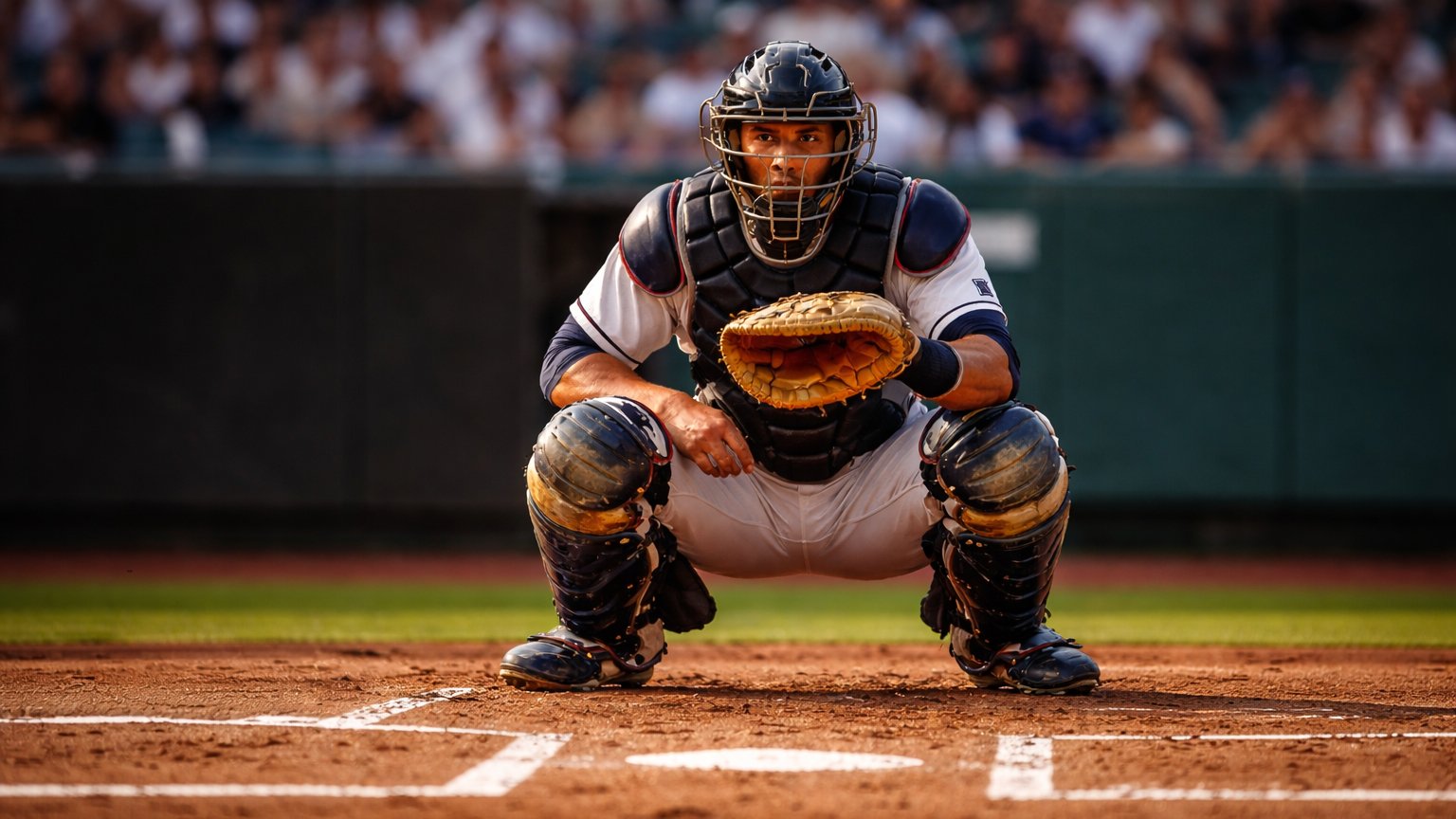
A Catcher Reads the Hitter Before the Sign Goes Down
Reading hitters is one of the catcher’s quietest but most valuable skills. The catcher sees the hitter’s stance, timing, posture, takes, foul balls, chase habits, frustration, confidence, and reaction to every pitch from the best seat on the field. A good read does not mean guessing the hitter’s mind or calling trick pitches for the sake of being clever. It means collecting evidence, comparing it with the pitcher’s strengths, and choosing a target that attacks the hitter’s current problem. Catchers should watch what the hitter is prepared to cover, what he gives away with his setup, how his swing changes by count, and which pitches create uncomfortable decisions. The best catchers read patiently, update quickly, and keep the pitcher committed to the plan.
A: Yes, but the read is evidence-based. Catchers observe setup, timing, swing reaction, takes, and adjustments rather than pretending to know the hitter's thoughts.
A: Start with stance, plate position, and timing. Those clues tell the catcher what parts of the zone the hitter appears ready to cover.
A: They matter as a starting point. The catcher still has to adjust when the current swing or count behavior contradicts the report.
A: Direction, timing, and quality of contact can show whether the hitter was early, late, fooled, defensive, or close to doing damage.
A: Sometimes. Repeating works when the hitter has not adjusted and the pitcher can execute the second location with conviction.
A: Counts change aggression and zone size. The same hitter may chase early, protect with two strikes, and hunt one pitch in a hitter's count.
A: The catcher should call the best executable version of the idea. A smart read is useless if the pitcher cannot commit to it.
A: They can chart swings, takes, foul direction, and count outcomes during games they are not catching.
A: Overreacting to one swing. A single ugly miss is information, but it should be weighed against the rest of the at-bat.
A: Between pitches only when the information is simple and useful. Long explanations usually belong between innings.
Start With the Hitter Before the Pitcher Starts
The catcher begins reading before the pitcher comes set. Plate position, stance width, hand height, bat angle, stride rhythm, and head stability all offer clues. None of those clues tells the whole story, but together they create the first question: what does this hitter look prepared to cover?
A hitter crowding the plate may be trying to control the outer half. A hitter standing far away may be daring the pitcher to throw outside strikes. A hitter deep in the box may want more time for velocity but may also change how the breaking ball finishes. The catcher should notice these details without turning them into automatic conclusions.
Pregame information helps only when it is treated as a starting point. If the scouting note says the hitter chases sliders but the first two sliders are easy takes, the catcher must believe the live evidence. The game is always updating the report.
Watch Timing More Than Appearance
Timing is often more useful than stance style. Some hitters look strange and still arrive on time. Others look smooth but are late to the fastball or early to the changeup. The catcher should ask whether the hitter is seeing the ball comfortably and whether the barrel is arriving with intent.
A late swing can invite another well-located fastball, but only if the pitcher can hit the lane. An early swing can make off-speed attractive, but the pitch still needs a target that avoids damage. Timing clues should shape risk rather than replace location.
Catchers should also read the body after a take. A hitter who flinches at a breaking ball may not be recognizing spin. A hitter who calmly tracks it into the mitt may have taken by choice. The reaction after the ball arrives often tells as much as the pitch result.
Good catchers compare each reaction with the previous pitch. If a hitter was late on velocity and then early on a changeup, the battery has created uncertainty. If the hitter adjusts immediately, the next call needs to move as well.
Use Foul Balls as Conversation Pieces
Foul balls are not empty events. They are contact reports. A ball fouled straight back can mean the hitter was close to timing the pitch, while a jammed foul may show the inner lane is working. A pulled rollover can suggest the hitter is early or reaching across the plate.
The catcher should think about how dangerous the foul was. A loud foul just outside the line may warn that the hitter is on the pitch. A defensive flick with two strikes may show survival rather than comfort. Those are different reads.
Foul-ball direction also helps sequencing. If the hitter keeps spoiling fastballs away, the catcher may need a different height, a pitch inside, or a speed change that starts in a similar lane. If the hitter cannot touch the elevated fastball, the battery can decide whether to repeat or show something below the zone.
Separate Chase From Weakness
A hitter who chases once is not automatically vulnerable forever. The chase may have come from surprise, count pressure, or a pitch that began in an excellent tunnel. If the catcher assumes the hitter will repeat the mistake, the next pitch may become predictable.
Chase reads work best when they identify why the hitter offered. Did the pitch look like a strike? Did it come after a pitch in the same lane? Was the hitter protecting with two strikes? The answer tells the catcher whether the chase can be repeated or whether it was a one-time gift.
The catcher also has to weigh base situation. A chase breaking ball in the dirt may be a fine idea with nobody on, but with a runner on third it can be a run if the catcher does not block it. Reading hitters never removes the game context.
Pitchers need to understand this distinction. The catcher is not calling a chase pitch because it is cute. The call should have a reason tied to what the hitter has shown and what the defense can handle.
Read Adjustments During the At-Bat
Hitters change. They move in the box, shorten the stride, widen the base, lower the hands, or become more selective. A catcher who reads only the first pitch misses the most important part of the at-bat: the hitter’s response.
A two-strike setup often looks different from an early-count setup. Some hitters shorten and protect. Others keep hunting damage. The catcher should notice whether the hitter is trying to survive, ambush, or force the pitcher back into the zone.
Body language is useful but dangerous if overvalued. Frustration can reveal pressure, but great hitters can look annoyed and still be dangerous. Calmness can show confidence or simply routine. The catcher should treat body language as supporting evidence, not proof.
Fit the Read to the Pitcher’s Weapons
The best hitter read still has to pass through the pitcher’s arsenal. If the hitter looks vulnerable to a changeup but the pitcher has no feel for it, the catcher needs another way to create the same problem. Maybe a fastball at a different height or a breaking ball for a strike is the better executable choice.
Catchers should know which pitch can be thrown for a strike, which pitch can expand, and which miss is safe that day. Those answers can change by inning. A slider that was sharp in the bullpen may flatten later, while a fastball lane may improve as the pitcher finds rhythm.
A mound visit should not turn into a scouting lecture. The catcher might say, “He is early on the fastball; finish the changeup below the zone,” or, “He took the slider well; let’s steal the outer fastball.” Simple language keeps the pitcher committed.
When the pitcher disagrees, the catcher should listen. The pitcher feels the ball leaving the hand. A shake-off can be valuable if it creates conviction. The final call should be something the pitcher can throw with belief.
Use the Umpire’s Zone as Part of the Read
The catcher is also reading the strike zone. If the umpire is giving the outer edge, a hitter who wants to extend his arms may have to defend a pitch he does not love. If the low pitch is not being called, the catcher should be careful about asking the pitcher to live below the zone early in counts.
This does not mean blaming the umpire or abandoning the plan. It means understanding the environment of the at-bat. A smart catcher connects hitter evidence, pitcher command, and the zone being called so the next pitch has a realistic chance to help.
Sequence the Read Across Multiple At-Bats
One at-bat gives clues; three at-bats give a conversation. A hitter who was beaten by velocity in the second inning may begin starting earlier in the fifth. A hitter who chased spin once may become more selective when he sees the same tunnel again. The catcher should remember how the hitter responded, not just what retired him.
Sequencing across at-bats also protects the pitcher from laziness. If the battery keeps returning to the same successful pitch, the hitter eventually gets a clearer picture. The catcher can use earlier evidence to show a familiar look, then finish with a different speed, height, or location.
Good catchers think in layers. The first at-bat may test plate coverage. The second may challenge timing. The third may force the hitter to prove whether he adjusted. That long-view reading is where a catcher starts to control more than one pitch at a time.
Keep the Defense in the Decision
Hitter reads should account for the defenders behind the pitcher. If the infield is shifted for a pull hitter, the catcher may call pitches that support that alignment. If the outfield is shallow, a mistake elevated over the plate carries a different risk. The pitch call is never separate from the defense.
Base runners matter too. A breaking ball in the dirt may be a strong chase idea, but with a runner on third it asks the catcher to block perfectly. A slow runner at first may allow a pitch that risks weak contact, while a fast runner can turn a bobble into pressure. The read is stronger when it includes the whole field.
The catcher should also know who wants the ball hit to them. A rangy shortstop, a third baseman with a strong arm, or an outfield aligned for a specific hitter can change which contact is acceptable. Pitch calling does not guarantee contact location, but it can increase the odds of the defense receiving a playable problem.
This is why the catcher has to see beyond the hitter’s swing. The job is to help the team get the next out. Sometimes that means attacking the hitter’s weakness. Sometimes it means choosing the pitch that creates the safest ball in play.
Build a Hitter-Reading Routine
Catchers can make hitter reading repeatable with a short routine. Before the at-bat, scan stance, box position, and likely plan. During the at-bat, track timing, take quality, foul direction, and adjustment. After the at-bat, remember what worked and what changed.
The routine should stay simple enough to use under pressure. A catcher who tries to track every possible detail may stop receiving well, block late, or lose the running game. A better approach is to choose the most useful clues for that hitter: timing, chase, plate coverage, or two-strike behavior.
Between innings, the catcher can review patterns with the pitcher and coach. Which hitters are late? Who is taking spin? Who is hunting first-pitch fastballs? This keeps the next inning from starting cold.
Young catchers can practice even from the dugout. Chart one hitter per inning and write down setup, pitch, swing or take, and result. Over time, the catcher learns to see the game as a chain of decisions rather than isolated pitches.
The routine becomes most valuable late in games because fatigue makes shortcuts tempting. A catcher with a repeatable process is less likely to call from habit when the lineup turns over for a third or fourth look.
Use the Read Without Showing It
A catcher should not make the hitter feel studied in an obvious way. Staring, pointing, or visibly reacting can give away the plan. The best catchers gather information quietly and use signs, targets, and mound conversations to apply it.
Subtlety also protects the pitcher. If the catcher becomes too animated after every swing, the pitcher may feel rushed or overloaded. The catcher should project calm, especially when the read is changing quickly.
There is also a trust element. Pitchers are more willing to follow a catcher who explains reads with calm, practical language. “He is cheating to get to the fastball” is easier to use than a long theory about mechanics. The catcher should translate observation into something the pitcher can execute immediately.
That calm presentation can frustrate hitters in a useful way. They feel the plan changing, but they cannot see the meeting that produced it. The catcher remains steady, the pitcher stays committed, and the hitter has to solve a moving puzzle.
After the inning, the catcher can share more detail with the pitcher or coach. During the pitch sequence, though, the information should stay short, useful, and hidden from the opponent.
The goal is not to win a guessing contest. The goal is to help the pitcher throw the next best pitch. When the catcher reads the hitter, respects the pitcher, and manages the situation, the battery becomes harder to solve as the game moves along.