When Sports History Becomes Priceless
The most valuable sports memorabilia ever sold is not just expensive because it is old, rare, or signed. It is valuable because it carries the emotional charge of a moment fans still talk about decades later. A jersey can become a time machine. A trading card can become a cultural artifact. A pair of sneakers can feel like evidence from a night when an athlete became immortal. At the highest end of the collectibles market, buyers are not simply purchasing objects. They are buying proximity to greatness. The right piece of sports memorabilia connects ownership, nostalgia, scarcity, and story in a way few other collectibles can match. That is why certain record-breaking items have sold for millions, transforming the hobby from a weekend passion into a global marketplace of history, investment, and obsession.
A: Babe Ruth’s “Called Shot” Yankees jersey, which sold for more than $24 million.
A: They were physically present during real games and can be tied to historic moments.
A: Yes, trading cards are one of the most important categories in sports collecting.
A: Player importance, rarity, condition, grade, set popularity, and collector demand.
A: It means unique item details match images or video from a specific game or event.
A: Not always; value depends on the athlete, authenticity, condition, and item type.
A: Most beginners should start smaller and learn authentication, grading, and market trends first.
A: It helps prove where an item came from and why buyers should trust it.
A: Yes, prices can change based on demand, condition, authenticity concerns, and market cycles.
A: Use trusted auction houses, reputable dealers, strong authentication, and complete documentation.
Babe Ruth’s “Called Shot” Jersey: The King of Sports Memorabilia
Few pieces of sports memorabilia carry a legend as powerful as Babe Ruth’s “Called Shot” jersey. The jersey is tied to Game 3 of the 1932 World Series, when Ruth allegedly gestured before launching one of the most famous home runs in baseball history. Whether the gesture was prediction, bravado, or myth, the story has become part of American sports folklore.
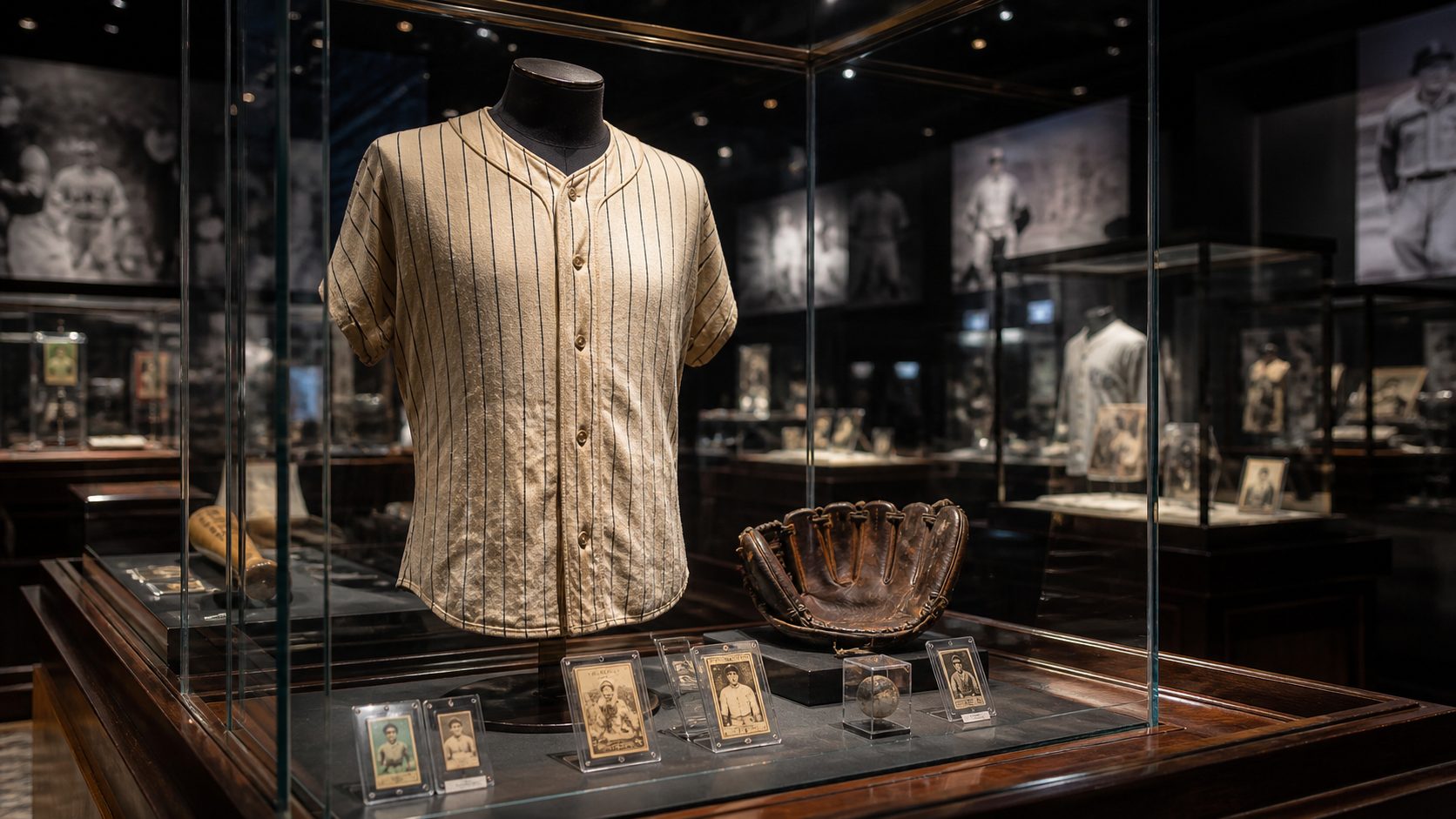
In 2024, Ruth’s game-worn New York Yankees jersey from that legendary moment sold for $24.12 million, setting a record for the most valuable piece of sports memorabilia ever sold. That result showed the staggering power of perfect provenance: a legendary athlete, a legendary team, a legendary moment, and an item photo-matched to one of the most discussed plays in baseball history.
The 1952 Topps Mickey Mantle Card: Cardboard Royalty
The 1952 Topps Mickey Mantle card is often called the crown jewel of postwar sports cards. It is not technically Mantle’s rookie card, but its design, scarcity in high grade, and connection to baseball’s golden age have made it one of the most desired collectibles in the world. For many collectors, it represents the dream card. In 2022, a 1952 Topps Mickey Mantle card graded SGC 9.5 sold for $12.6 million through Heritage Auctions, becoming one of the most important sales in sports collectibles history. The sale proved that elite trading cards can compete with game-worn jerseys, championship trophies, and museum-grade artifacts when condition and cultural significance align.
Michael Jordan’s 1998 NBA Finals Jersey: The Last Dance Effect
Michael Jordan memorabilia has always carried enormous demand, but his 1998 NBA Finals jersey reached another level because of its connection to “The Last Dance” season. Worn during Game 1 of the 1998 Finals, the jersey is tied to Jordan’s final championship run with the Chicago Bulls, one of the most mythologized endings in modern sports.
The jersey sold for $10.1 million at Sotheby’s in 2022, setting a record for a game-worn basketball jersey at the time. Its value comes from more than fabric and stitching. It represents Jordan at the height of his global power, closing the book on a dynasty that still defines basketball greatness.
Diego Maradona’s “Hand of God” Jersey: Soccer’s Most Famous Shirt
Diego Maradona’s 1986 World Cup quarterfinal jersey is one of the most emotionally charged sports artifacts ever sold. It was worn during Argentina’s match against England, a game that produced both the controversial “Hand of God” goal and Maradona’s breathtaking “Goal of the Century.” Few jerseys can claim a direct connection to two of the most famous moments in soccer history. The shirt sold for $9.3 million in 2022, briefly holding the record for the most expensive game-worn sports jersey before later sales surpassed it. Its value comes from drama, rivalry, genius, controversy, and national identity all wrapped into one artifact. For soccer collectors, it is nearly impossible to imagine a more historically loaded piece.
Kobe Bryant’s First NBA Jersey: The Beginning of a Legend
Kobe Bryant’s earliest NBA memorabilia has become especially powerful because it connects fans to the beginning of a career that shaped basketball for a generation. His first NBA jersey carries the energy of a teenager stepping into the league before becoming one of the most relentless competitors the sport has ever seen.
In 2025, Bryant’s first NBA jersey sold for about $7 million at Sotheby’s, setting a record for any piece of Kobe Bryant memorabilia. The jersey had added importance because it was associated with his early Lakers appearances, including preseason and media-day use. Collectors prize origin pieces because they capture greatness before the world fully understands what it is witnessing.
Honus Wagner and the Power of Scarcity
The T206 Honus Wagner card has long been one of the most famous sports cards in existence. Its rarity, mysterious production history, and early 20th-century appeal helped create the modern mythology of card collecting. For decades, it was the ultimate symbol of scarcity in the hobby. High-grade Wagner cards have sold for millions, and the card remains one of the benchmarks by which other sports card sales are measured. Its value is not tied to a single game or championship moment, but to the birth of sports card collecting itself. When collectors discuss legendary cards, Wagner still stands near the beginning of the conversation.
Why Game-Worn Items Command Massive Prices
Game-worn memorabilia has a special kind of power because it was physically present during competition. A jersey, pair of shoes, helmet, glove, or uniform can carry visible evidence of use, from stains and scuffs to repairs and wear patterns. These details make the item feel alive.
The best game-worn pieces are supported by strong authentication, photo-matching, and clear event history. A jersey worn during a championship game or historic performance will usually be more valuable than a similar item worn during an ordinary regular-season appearance. In record-breaking sales, the winning formula is almost always a famous athlete, a famous moment, and proof that the item was truly there.
The Rise of Photo-Matching in High-End Collectibles
Photo-matching has become one of the most important tools in modern sports memorabilia authentication. Experts compare an item’s unique details, such as stitching, stains, fabric folds, repairs, markings, or wear, against photographs or video from a specific event. When a match is strong, the item’s story becomes much more convincing. For record-breaking memorabilia, photo-matching can make the difference between a valuable piece and a historic one. Buyers spending millions want more than tradition or reputation. They want evidence. The rise of high-resolution photography, digital archives, and expert analysis has made the top end of the market more sophisticated and more demanding.
Why Trading Cards Still Break Records
Sports cards are different from game-used memorabilia because they are manufactured collectibles, yet the most valuable examples can still reach extraordinary prices. Their appeal comes from condition, scarcity, player significance, set importance, and cultural nostalgia. A card preserved in elite condition can become a tiny museum piece.
Cards also benefit from grading systems that give buyers a common language for quality. A card graded near-perfect can sell for dramatically more than a lower-grade version of the same card. That is why cards like the 1952 Topps Mickey Mantle continue to dominate headlines: they combine iconic athletes, legendary design, extreme scarcity, and condition rarity.
Autographs, Signatures, and the Human Connection
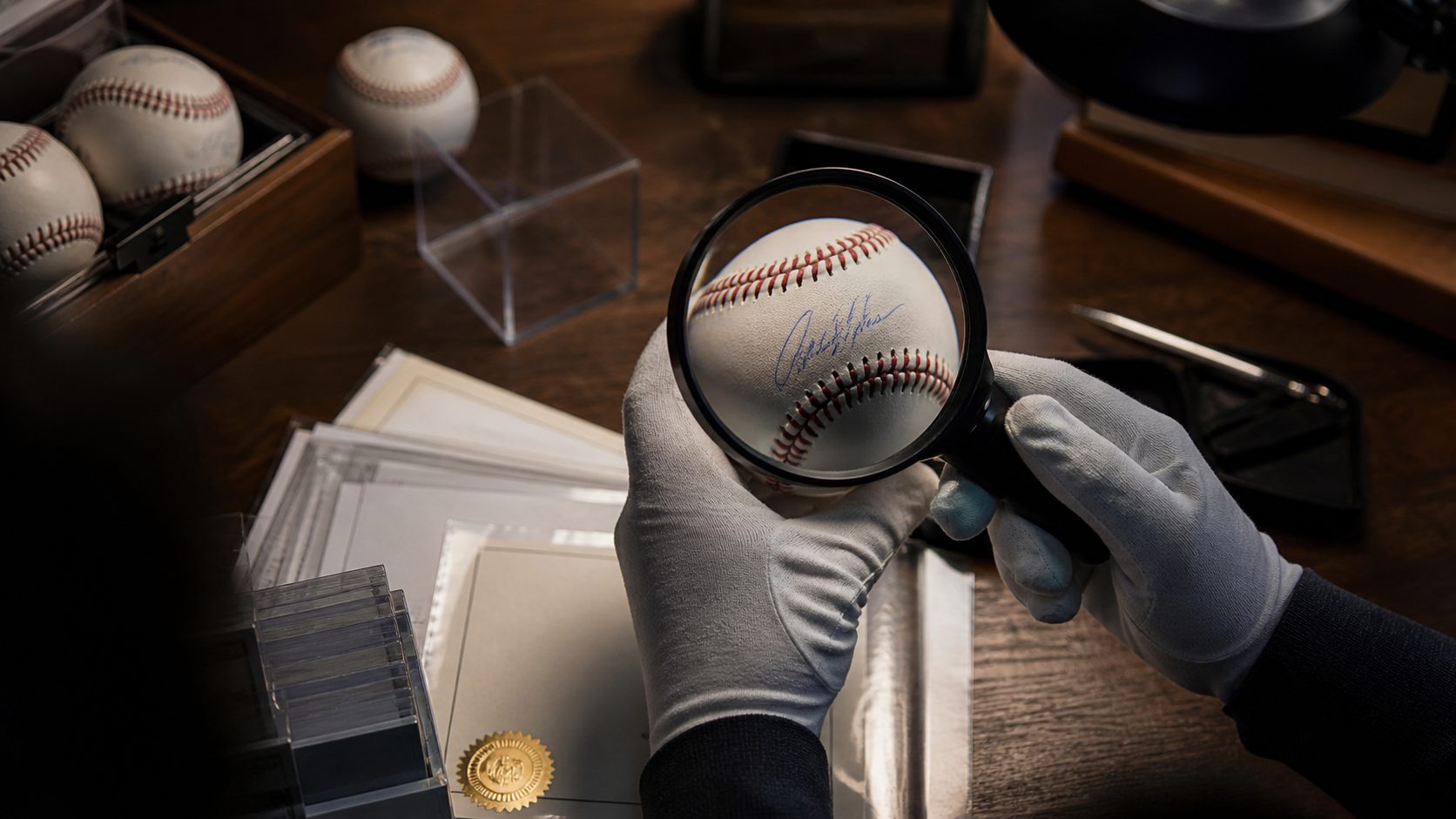
Autographed memorabilia adds a personal layer to collecting. A signature can make an item feel directly touched by greatness. But not all autographs are equal. A signed item tied to a major event, especially when authenticated by a trusted source, is usually far more desirable than a generic signed object. At the highest level, collectors care about placement, clarity, timing, and documentation. A signature obtained during an athlete’s peak career period may feel more meaningful than one signed decades later. When an autograph appears on a game-used or historically important item, it can create an even stronger connection between the athlete, the object, and the buyer.
The Emotional Premium Behind Record Sales
Record-breaking sports memorabilia prices often include what collectors call an emotional premium. This is the extra value created by memory, identity, and fan devotion. A buyer may not be purchasing only a jersey; they may be purchasing childhood, loyalty, inspiration, or a connection to a hero.
This emotional force explains why sports memorabilia can outperform expectations at auction. A single item may attract investors, lifelong fans, museums, celebrities, and private collectors all at once. When multiple motivated bidders see the same object as irreplaceable, prices can climb far beyond traditional estimates.
Baseball’s Long Shadow in the Memorabilia Market
Baseball has produced many of the most valuable sports collectibles ever sold because it has a long history, deep statistical culture, and strong nostalgia across generations. Babe Ruth, Mickey Mantle, Honus Wagner, Jackie Robinson, Lou Gehrig, and other legends occupy a space that blends athletics with Americana. Baseball memorabilia also benefits from a century-plus of physical artifacts: cards, bats, jerseys, gloves, programs, tickets, and signed balls. The sport’s slower historical rhythm makes objects feel especially collectible. A bat from a famous season or a jersey from a legendary game can become a symbol of the sport’s entire mythology.
Basketball Memorabilia Enters the Elite Tier
Basketball collectibles have exploded in recent years, fueled by global fandom, sneaker culture, documentary storytelling, and the worldwide influence of stars like Michael Jordan, Kobe Bryant, LeBron James, and Stephen Curry. Once dominated by baseball, the high-end sports memorabilia market now has basketball firmly in the spotlight.
Jordan’s $10.1 million Finals jersey and Bryant’s multimillion-dollar rookie-era jersey show that basketball artifacts can compete with the most prestigious items in any sport. The appeal is especially strong among younger collectors who grew up with televised highlights, signature sneakers, and athletes who became global brands.
Soccer’s Global Collecting Power
Soccer memorabilia has enormous international potential because the sport’s fan base is truly global. Items tied to World Cup history, legendary clubs, and transcendent players can attract bidders from multiple continents. Maradona’s 1986 jersey is a perfect example of how one object can carry worldwide emotional weight. As global auction platforms grow, soccer memorabilia may continue to challenge traditional American sports collectibles. Jerseys connected to Pelé, Maradona, Messi, Ronaldo, and major World Cup moments have the kind of universal recognition that can push prices higher in future sales.
What Makes a Record-Breaking Item Different?
A record-breaking piece usually has several traits working together. It belongs to a legendary athlete, connects to a defining moment, has strong documentation, survives in remarkable condition, and carries cultural significance beyond the sport itself. Rarity alone is not enough. The item must tell a story people already care about.
That is why an ordinary signed ball from a famous athlete may be valuable, but a game-used item from a championship moment can become extraordinary. The highest prices are paid for memorabilia that feels impossible to replace. Buyers are not chasing inventory. They are chasing icons.
Lessons for Beginner Collectors
Most collectors will never buy a $10 million jersey or a $12 million card, but record-breaking sales still offer useful lessons. Authenticity matters. Provenance matters. Condition matters. Story matters. Even at lower price points, the same principles determine whether a collectible is desirable or forgettable. Beginners should study major auction results not just for the prices, but for the reasons behind them. Look at how items are described, authenticated, graded, photographed, and connected to specific events. Understanding what drives value at the top of the market can help collectors make smarter decisions at every level.
The Future of Sports Memorabilia Values
The future of sports memorabilia will likely be shaped by better authentication, global bidders, athlete-driven brands, and younger collectors entering the market. Items tied to defining modern moments may become tomorrow’s record-breakers. A game-worn jersey from a championship performance today could become a multimillion-dollar artifact decades from now.
Digital documentation may also play a larger role, with blockchain records, athlete partnerships, and official team authentication helping establish clearer histories. But even as technology evolves, the heart of the market will remain the same. Collectors want real objects connected to real greatness.
Final Thoughts: Why These Items Still Captivate Us
The most valuable sports memorabilia ever sold reminds us that sports are more than scores and statistics. They are shared memories, emotional landmarks, and cultural stories passed from one generation to the next. A jersey, card, or pair of shoes can hold the roar of a stadium, the pressure of a championship, and the legend of an athlete who changed the game. Record-breaking collectibles are valuable because they make history tangible. They let collectors hold a piece of something that once felt larger than life. Whether it is Babe Ruth’s jersey, Mickey Mantle’s card, Michael Jordan’s Finals uniform, or Maradona’s World Cup shirt, each item proves that the right piece of sports history can become priceless.