Great Infield Practice Turns Ground Balls Into Decisions
The best fielding drills for infielders do more than make players look smooth during practice. They teach the body to arrive on time, the glove to work through the ball, the feet to create throwing lanes, and the mind to choose the right play before the hop reaches the grass line. Beginners need clean patterns and confidence, intermediate players need speed and direction changes, and advanced infielders need pressure, awkward hops, and game-specific reads. A complete infield plan should move from simple receiving work to live fungo, forced throws, double-play exchanges, slow rollers, backhands, tags, communication, and recovery after mistakes. The goal is not a collection of clever drills. The goal is an infielder who can turn a routine grounder, a tough chance, and a rushed situation into calm, repeatable defense.
A: Quality matters more than a fixed number. A focused player can improve from a smaller set of clean, coached reps, while tired volume often turns into rehearsed mistakes.
A: Two hands help beginners learn security, but the deeper lesson is glove position, body control, and transfer timing. Some plays naturally require one-hand fielding.
A: Introduce them early as controlled movement, not as emergency flair. Players who never practice backhands often panic when the game finally demands one.
A: Short-hop work is useful, but routine balls build the base. A player who cannot handle ordinary pace is not ready to live on highlight drills.
A: Change the decision, angle, or target while keeping the skill goal clear. Competition works best when it rewards the exact habit being trained.
A: Younger players usually benefit from several positions. Older players can specialize more while still understanding adjacent responsibilities and feeds.
A: Rushing into game-speed chaos before players understand posture, timing, and throwing lanes. Fast bad reps do not become good defense.
A: Use small groups, short stations, clear targets, and simple scoring. Keep the ball moving while correcting one priority at a time.
A: They can, especially for hands and transfers, but outdoor hops, grass speed, dirt, sun, and throw distance still need regular practice.
A: Reset posture, identify the fix, and take the next playable rep. Emotional spirals waste the learning chance that the mistake created.
Match the Drill to the Player’s Current Problem
A drill is useful only when it solves the next defensive problem in front of the player. A beginner who drops routine rollers does not need a flashy backhand challenge. An advanced shortstop who handles routine balls easily may need decision pressure, deeper angles, and faster transfers. Coaches should watch the miss first, then choose the drill.
Most infield errors come from a small chain breaking before the throw. The first step may be late, the fielder may arrive too close to the hop, the glove may stab downward, or the feet may block the throwing lane. Naming the weak link keeps practice specific.
Players also improve faster when the drill has one main standard. If the round is about glove presentation, do not turn every rep into a throwing lecture. If the round is about throwing accuracy, make the receiving work simple enough that the throw can be measured honestly.
Build Clean Hands Before Adding Speed
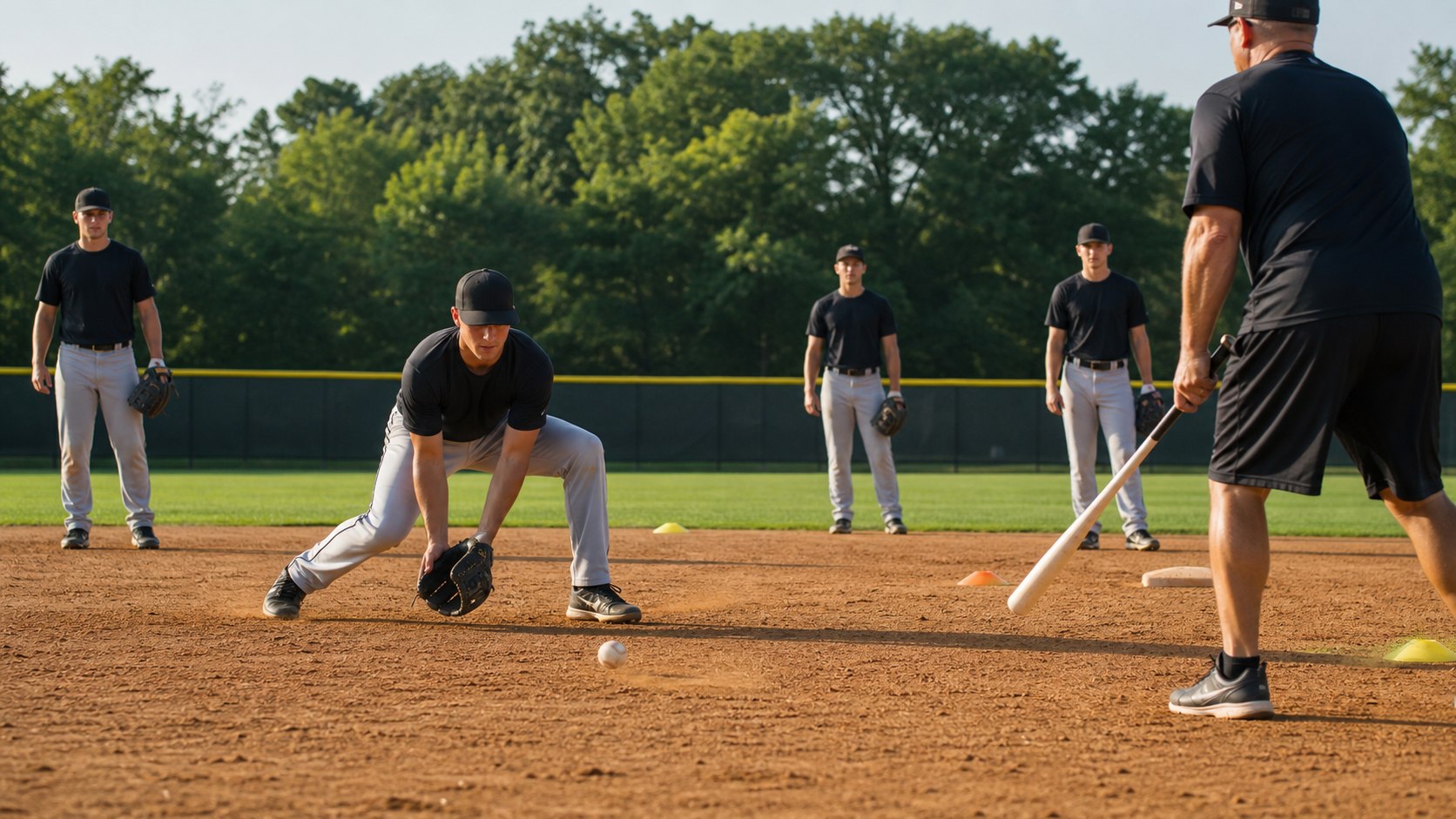
Clean hands begin with the ball being visible. Young infielders often hide the glove under the body, swipe from the side, or pull the head up before the ball arrives. Simple rolled balls, short hops from a coach, and wall work can teach the glove to receive out front with quiet fingers.
Barehand receiving can help because it removes the false comfort of a big glove. The player learns to give with the ball, keep the palm relaxed, and stay through the hop. Once that feeling appears, the glove goes back on and the same softness should remain.
Coaches should resist the urge to make every hand drill a race. Speed without a stable receiving position creates clanks. Add pace only when the player can repeat the shape several times in a row.
A useful progression is roll, short hop, fungo, then game-speed ball. Each step adds uncertainty. If the player loses the basic shape at a new speed, step back for a few reps before returning.
Hand work also benefits from different ball speeds and surfaces. A gym floor, turf lane, dry dirt, and damp infield skin all create different hops. Coaches do not need a perfect facility to teach this lesson. They need players to notice how the hop changes, lower the body without collapsing, and adjust the glove angle before the ball arrives.
Teach Feet as the Steering Wheel
Infield footwork is not choreography. It is how a fielder gets the body into a position where the glove can receive and the arm can throw. The feet decide whether the player fields through the baseball, across it, or from a trapped angle that makes the throw harder than necessary.
For routine grounders, most players need a small prep step, an approach that stays athletic, and a final rhythm that keeps the hands free. The exact right-left or left-right pattern can vary by position and angle, but the principle is consistent: arrive balanced and moving toward the throw.
Footwork drills should include mistakes on purpose. Place cones that are too close, too wide, or slightly behind the ideal lane, then ask the player what felt difficult. The athlete who can feel a bad route is closer to fixing it during a game.
Separate Position-Specific Demands
Third basemen need reaction, body courage, and a quick first throw. Shortstops need range, rhythm, and arm-slot adaptability. Second basemen need feeds, pivots, and quick transfers from shorter angles. First basemen need receiving skill, bag footwork, and decisions on balls near the line. One generic infield round cannot serve all of those needs equally.
A good practice gives every position a few shared fundamentals and then a specific block. Third base might work on firm balls and slow rollers. Middle infielders might work feeds and double-play footwork. First base might work picks, tags, and underhand feeds to the pitcher.
Players should still cross-train when age and roster size allow it. A second baseman who has played shortstop understands feeds better. A first baseman who has fielded third-base slow rollers respects how fast the play must develop.
Position-specific work also keeps practice honest. It is easy to call a drill advanced because it is fast. It is better to call it advanced when it resembles the decision the player will actually face.
The same idea applies to age level. A ten-year-old third baseman may need bravery, glove awareness, and an accurate throw across a shorter diamond. A varsity third baseman may need reaction reads, barehand slow rollers, bunt coverage, and throws from multiple slots. The label is the same, but the practice target is not.
Use Competition Without Losing Skill Quality
Competition can sharpen practice when it rewards the right habits. Count clean fields and accurate throws. Award points for choosing the correct base. Give a bonus for communicating on a ball between positions. The scoring system should make the desired behavior obvious.
Bad competitions create bad defenders. If the only goal is finishing first, players may rush transfers, throw off balance, or ignore the smart play. That can make practice louder without making anyone better.
Small-sided games work well for infielders. Put a runner at first, hit a ball with one out, and let the defense choose the play. Rotate runners and fielders quickly. Players learn that the best defensive answer depends on speed, score, inning, outs, and ball location.
Progress From Routine Plays to Uncomfortable Plays
Routine defense wins more games than circus defense, so every practice should protect the ordinary out. Still, infielders eventually need uncomfortable reps: bad hops, charging plays, backhands, high choppers, slow rollers, and throws from imperfect platforms. Those plays should be introduced with teaching, not surprise punishment.
Start by isolating the movement. A slow roller drill can begin with the ball already moving softly so the player learns the route and exchange. Then add a runner. Then add a late base call. Each layer should have a reason.
Backhands deserve the same patience. Some balls should be worked around; others must be backhanded. The player needs to learn which is which. A drill that forces every ball into a backhand can create poor reads, while a drill that forbids backhands leaves the player underprepared.
Uncomfortable work should end with reflection. Ask whether the fielder created an angle, secured the ball, chose the right target, and made a catchable throw. That conversation teaches more than simply saying safe or out.
It helps to sort difficult plays by cause. A high chopper asks for timing and patience. A slow roller asks for aggression and body control. A hard backhand asks for angle and glove strength. When the player knows why the play is difficult, the solution becomes more than hustle.
Make Throwing Part of the Fielding Drill
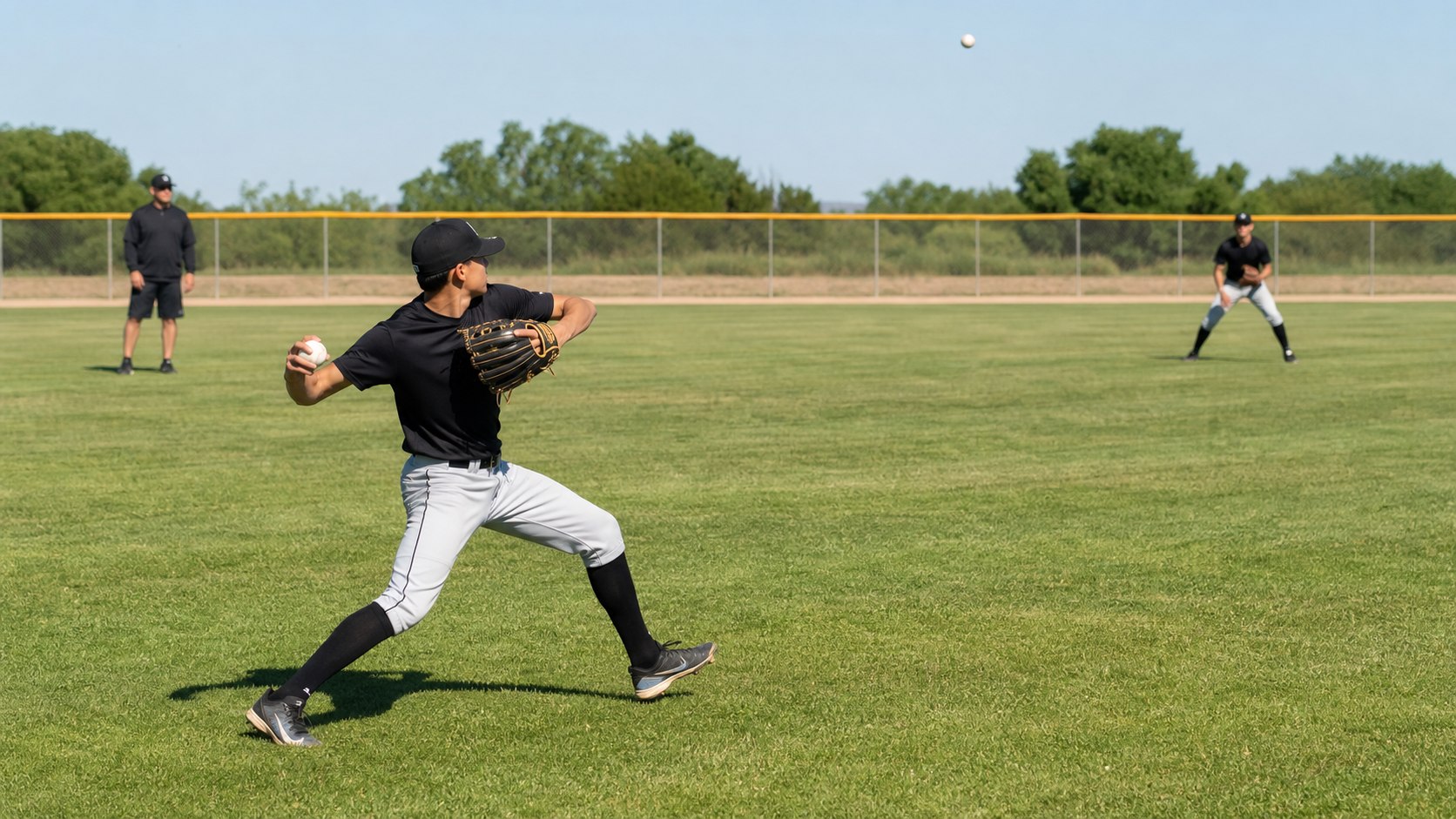
Many practice plans treat the catch as the drill and the throw as an afterthought. In games, the out usually requires both. The throw begins before the ball is in the hand because the route, body direction, transfer, and footwork all shape the release.
Targets should be realistic. A first baseman can move for imperfect throws, but consistent misses to the same side reveal a mechanical problem. Coaches can track whether throws sail arm-side, pull across the bag, bounce early, or arrive too late because of a slow transfer.
Throwing intensity should rise gradually. Players do not need maximum effort on every practice ball. They need enough pace to match the play while keeping the arm healthy and the mechanics connected.
Review Practice Like a Defensive Game Plan
At the end of practice, players should know what improved and what comes next. A simple review can cover the cleanest routine play, the hardest decision, the most common miss, and one target for the next session. That turns drills into a development path rather than a pile of activities.
Video can help when used sparingly. A short clip of footwork or glove position often explains what words cannot. The key is to show one clear fix, not make the player stare at every flaw.
Players should also learn to carry their own defensive notes. A simple sentence after practice, such as “I was late crossing over on balls to my glove side,” gives the next session a purpose. Older players can track throws, missed hops, and decisions over a week, then bring better questions to coaches.
Great infielders are not built by one magical drill. They are built by repeated, well-chosen reps that connect hands, feet, throwing, decisions, and poise. When practice follows that order, players stop hoping for clean hops and start expecting to handle the game.
Turn Drills Into Weekly Development
The best infield plans repeat core skills often enough that players can feel progress from week to week. Monday might emphasize routine ground balls and accurate throws. Wednesday might add backhands, slow rollers, and double-play feeds. The weekend review can ask which skill survived game speed and which one still needs controlled practice.
This weekly view prevents overcoaching. A player does not need ten new drills every session. He needs a few well-chosen challenges, honest feedback, and enough repetition to carry the habit into a game. When coaches build that rhythm, drills stop feeling random and start becoming a defensive identity.
Keep the Routine Play Sacred
Even advanced practices should return to the ordinary ground ball. The routine play is where trust is built between pitcher, defense, and coach. If an infielder can make the simple play every time, the team can survive the occasional difficult chance.
Players should learn to respect that standard rather than view it as boring. A clean approach, secure catch, balanced transfer, and accurate throw are the defensive equivalent of a quality at-bat. They do not always make noise, but they win innings.
When coaches protect the routine play while still adding challenge, infielders develop both confidence and range. They know the foundation, they understand the next layer, and they can keep improving without losing the play the team needs most often.
A simple standard helps: routine before remarkable. When players can repeat the ordinary out with calm body language, coaches can add speed, pressure, and creativity without losing the defensive floor. That balance is where real infield development lives, especially when players understand exactly why each careful daily rep matters.