Load Management Reduces Risk Without Promising Perfect Prevention
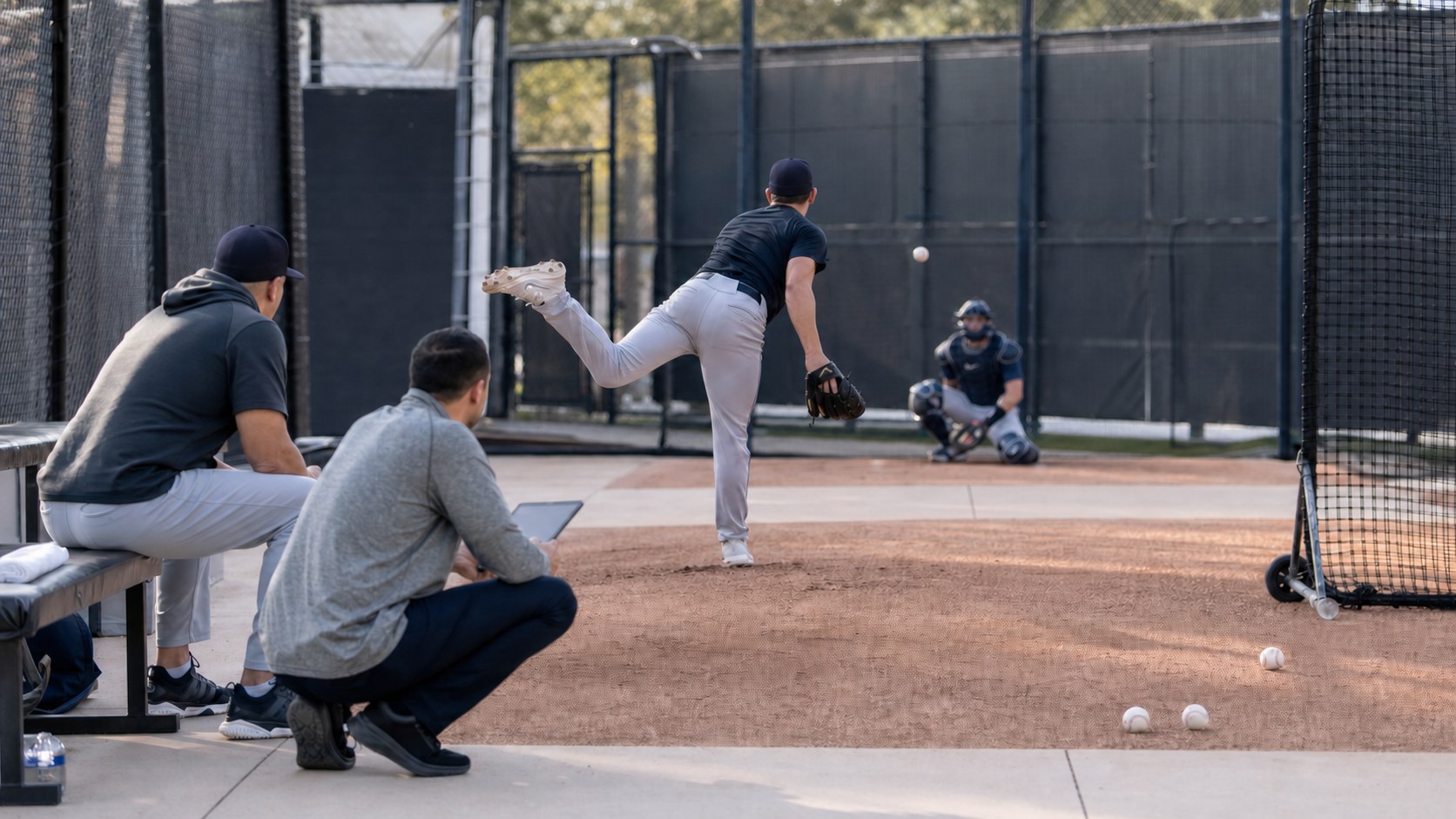
No Major League team can prevent every pitcher injury. Throwing a baseball at elite velocity places extraordinary repeated stress on the body, and injuries emerge from interacting factors that include tissue history, mechanics, workload, pitch intensity, recovery, fatigue, strength, age, calendar, and simple uncertainty. Load management is the organized effort to keep those demands within a range the individual pitcher can currently tolerate. Clubs track much more than the official pitch count: warmups, bullpens, catch play, high-intensity throws, recent spikes, days of rest, travel, sleep, soreness, velocity, command, and recovery response can all inform the next plan. Medical, performance, pitching, biomechanical, and front-office staff contribute different evidence, while the pitcher supplies information no sensor can replace. The goal is not to make every arm follow the same conservative limit. It is to notice changing capacity early, adjust exposure intelligently, and build enough roster flexibility that health decisions do not depend on one exhausted pitcher finishing an inning.
Define Load as More Than the Box-Score Pitch Count
The official count captures game pitches, but a pitcher also throws before the game, between innings, during bullpen sessions, in catch play, and sometimes several times while warming without entering. These exposures differ in intensity, yet ignoring them creates a false picture of the week. Clubs build a throwing ledger that preserves context.
A 95-pitch start can also vary internally. Long stressful innings, repeated runners, high-effort two-strike pitches, and poor command may require more recovery than an efficient outing with the same total. Pitch types and velocity intent can change demand. The number is useful because it is objective, but it must be interpreted.
Fielding throws and position work add smaller amounts. Travel, heat, illness, short sleep, and previous outings change how the body responds. Load management brings these factors together without pretending they can be reduced to one perfect score.
Build an Individual Baseline Before Searching for Warning Signs
Organizations collect preseason and ongoing information about range of motion, strength, movement, throwing volume, pitch characteristics, and recovery. The most meaningful comparison is often the pitcher against his own normal pattern. Two healthy pitchers may have different shoulder motion or delivery positions.
Baselines must be current. A veteran returning from surgery, a rookie building a first full season, and a reliever converted to starting have different capacities even if their radar readings match. Staff update expectations as the role and body change.
Track Workload Across Days, Weeks, and Seasons
Short-term overload can occur when a pitcher throws more or harder than recently prepared to tolerate. Long-term overload can accumulate through innings, repeated appearances, showcases, winter competition, and insufficient rest. Clubs examine both horizons because a quiet week does not erase a demanding year.
Workload models can highlight unusual changes, but thresholds are not universal laws. Recent research and industry debate have shown the limits of applying one acute-to-chronic ratio to every athlete. Teams use models as prompts for review alongside medical and performance evidence.
Starters follow a planned rhythm, yet rainouts, doubleheaders, and short outings disrupt it. Relievers face greater uncertainty. A pitcher may warm on three consecutive nights without recording an appearance. Bullpen staff therefore report preparation activity, not just innings.
Minor League and rehabilitation assignments need the same record. A pitcher moving between affiliates or joining the Major League roster should not lose context at the transaction. Shared systems and direct communication keep the new staff from treating the first local outing as the first recent workload.
Use Daily Readiness to Adjust the Written Plan
Players report soreness, sleep, energy, and throwing feel. Staff may assess motion, strength, tissue response, grip, or other individualized markers. None is flawless. The value comes from trends and disagreement: a pitcher who reports normal recovery but shows unusual movement may need a closer conversation.
Communication requires trust. If reporting soreness always removes a pitcher indefinitely, players may hide information. If reporting is ignored, the system becomes theater. Clubs need responses proportional to the signal, ranging from modified catch play to medical examination.
Readiness can change during the session. Command disappears, arm speed looks delayed, or the pitcher cannot recover between warmup sets. Coaches should distinguish competitive frustration from a physical change, but they do not need certainty to reduce exposure while qualified staff evaluate.
Plan the Rotation With Recovery in Mind
A five-day rhythm is traditional, not biologically identical for everyone. Teams can use off days, skipped starts, shortened outings, piggyback pitchers, or expanded rotations to create recovery. Each adjustment has roster and competitive costs, so depth is part of injury-risk management.
A young starter approaching unfamiliar innings may receive extra rest or an earlier shutdown. The decision should consider prior seasons, current response, pitch stress, and future goals rather than one arbitrary cap. Building capacity is necessary; simply avoiding all work does not prepare the pitcher for later volume.
Veterans may know which routines support them, but history can also include accumulated injury. Staff balance player experience with objective changes. A mutually understood plan makes a skipped start feel like strategy rather than punishment.
Postseason races complicate restraint. The games carry more value, yet tissue does not become invulnerable. Organizations that have prepared depth and communicated thresholds earlier can make clearer decisions when competitive pressure peaks.
Manage Relief Pitchers by Warmups and Leverage
Relievers may throw fewer game pitches but work more consecutive days and warm unpredictably. Getting hot, sitting, and restarting can add substantial high-intensity volume. Bullpen communication should delay full effort until the appearance becomes likely without leaving the pitcher unprepared.
Back-to-back availability depends on the prior outing, warmups, pitch effort, recovery, and individual history. A ten-pitch clean inning and a ten-pitch battle are not always equivalent. Staff can reduce later workload even when the public line appears small.
Leverage influences intensity. A reliever in a close jam may throw every pitch near maximal intent. Emotional stress is not a direct injury measurement, but high-effort execution and limited recovery matter. Teams should avoid treating a short high-leverage outing as automatically light.
Connect Strength and Conditioning to the Throwing Calendar
Pitchers train lower-body force, trunk control, upper-back strength, shoulder and forearm capacity, sprint ability, and general work tolerance. The exercise plan should support pitching rather than compete with it. Heavy fatigue placed before a bullpen can alter mechanics and obscure whether the pitching plan is working.
In season, maintenance may require fewer sets with sufficient intensity. Offseason phases can build capacity more aggressively after an appropriate throwing break. Rehabilitation follows a separate medical progression. The same exercise can be useful in one phase and mistimed in another.
Recovery basics remain powerful. Sleep, nutrition, hydration, and travel planning influence how athletes tolerate work. Advanced monitoring cannot compensate for a calendar that repeatedly removes sleep or for a pitcher who cannot refuel adequately.
Strength coaches and pitching coaches must share language. If one side adds high-intensity rotational work while the other adds pitch-design volume, the combined stress may exceed the plan. Department coordination prevents individually reasonable sessions from creating an unreasonable week.
Use Biomechanics to Ask Better Questions
Motion capture and high-speed video can describe joint positions, timing, velocities, and force patterns. These tools help staff compare a pitcher with personal baselines, study a performance change, or monitor a mechanical adjustment. They do not reveal one delivery that guarantees health.
A mechanical feature may improve pitch quality while changing physical demand. Adding velocity, altering arm slot, or developing a new breaking ball should be progressed gradually enough that the pitcher’s response can be observed. Performance gains and workload are linked.
Laboratory findings need field context. A change that looks efficient in controlled throws must still support command, pitch shape, fielding, and repeated game effort. Coaches translate measurements into a small cue or drill rather than asking the pitcher to consciously reproduce every angle.
Monitor Stuff and Command for Meaningful Change
Velocity, spin, movement, release point, and location patterns can reveal that the pitcher is different from normal. A small fluctuation may come from weather, ball tracking, strategy, or ordinary variance. A cluster of changes with soreness or altered movement deserves more attention.
Command is a valuable readiness signal because timing disruptions often appear in location. Wildness alone does not diagnose injury. It can come from mechanics, nerves, grip, or approach. Staff compare the miss pattern, pitch quality, and the pitcher’s report before acting.
Some pitchers maintain velocity by increasing effort as fatigue develops. Radar alone can therefore miss a declining state. Visual timing, recovery between pitches, facial behavior, and communication remain important. Sensors extend observation instead of replacing experienced attention.
Decisions should favor the next safe question. Reduce the outing, examine the pitcher, review video, or change the next throwing day. Teams do not need to identify a final diagnosis from the dugout to stop accumulating questionable load.
Make Medical Screening and Reporting Actionable
Medical staff evaluate symptoms, injury history, clinical measures, and imaging when indicated. Screening can identify areas for further attention but cannot promise prediction of a future injury. The pitcher should understand whom to contact and what will happen after reporting a concern.
Sharp pain, neurological symptoms, sudden loss of function, or significant movement change requires prompt professional assessment. Generic soreness advice is not sufficient. Return decisions belong to qualified clinicians working with the athlete and organization.
Privacy and competitive communication must coexist. Coaches need restrictions and readiness information without turning confidential medical details into clubhouse discussion. Clear roles protect the player and allow the manager to plan available innings.
Use the Injured List as a Health Tool, Not a Failure
Roster rules create a practical mechanism for recovery. Placing a pitcher on the injured list can remove daily pressure to be available and allow the club to add another arm. Waiting until the pitcher cannot perform may turn a manageable issue into a longer absence.
The decision still has consequences for the player and team. Competitive identity, service considerations, roster strategy, and postseason timing can intensify emotion. Transparent communication about medical reasoning and the progression ahead helps preserve trust.
Progress Return to Throwing Through Tolerated Stages
Rehabilitation begins with diagnosis and a clinician-led plan. Range of motion, strength, tissue healing, and symptoms guide when throwing starts. The athlete progresses through distance, volume, and intensity only after tolerating the current stage and recovering appropriately.
Mound work adds slope and delivery intensity. Pitch types may return in stages because grips and intent differ. Bullpens become more game-like before live hitters are introduced. Each step tests a new demand rather than merely passing time.
Rehabilitation games allow controlled competitive exposure. Innings, batters faced, pitch count, recovery days, and stuff can build gradually. The pitcher may look dominant before being ready for Major League workload, because one excellent inning does not prove repeated capacity.
Activation is another stage, not the end of monitoring. The club may use shorter starts, extra rest, or reduced back-to-back relief work. Continued communication catches the gap between being cleared to compete and being prepared for a full role.
Develop Amateur Pitchers Before They Reach Pro Ball
MLB and USA Baseball promote Pitch Smart principles for age-appropriate pitch counts, rest, time away from competitive pitching, and coordination across teams. Youth and college environments cannot copy Major League systems, but they can prevent hidden workload and normalize honest fatigue reporting.
Showcase calendars and overlapping teams can create year-round high-intensity throwing before professional resources exist. Families should keep one record and share it. The most prestigious event does not change the arm’s need for preparation and recovery.
Young pitchers need general athletic development, strength instruction, multiple skills, and periods without competitive pitching. Early velocity may attract opportunity, but long-term development requires enough health and capacity to use it later.
Build Roster Depth So Health Choices Remain Possible
Load management is partly a roster-construction problem. If only five starters and a few relievers are trusted, every schedule disruption creates pressure to overextend them. Multi-inning arms, optionable depth, prospects with appropriate workloads, and clear emergency plans give managers alternatives.
Depth must be usable, not theoretical. Pitchers need roles, preparation, and recent work that allows them to enter safely. Calling up an underbuilt arm to protect another pitcher merely transfers the risk. Development and Major League planning should share timelines.
Roster flexibility also supports earlier reporting. A pitcher is more likely to admit a problem when the club has a credible replacement and the conversation is not framed as abandoning the team. That culture does not remove competitive pressure, but it makes the safer option operationally possible. Health policy works best when the transaction plan supports it.
The strongest system accepts uncertainty. It tracks exposure, listens to the pitcher, monitors change, adjusts before crisis, and uses medical expertise when symptoms appear. Injuries will still occur, but coordinated load management improves the chance that decisions reflect the pitcher’s current capacity rather than habit or desperation.