The Best Off-Season Program Builds The Next Season Gradually
The best off-season training program for baseball players is not a random grind of workouts, cage swings, and throwing sessions. It is a staged plan that helps the athlete recover, rebuild strength, improve movement, sharpen baseball skills, and return to throwing and competition without rushing. Baseball players need power, mobility, speed, coordination, arm care, swing feel, throwing progression, and enough rest to absorb the work. The off-season is valuable because it creates space to fix weaknesses that the season hides. But more is not automatically better. A smart program matches age, training history, position, injury background, and calendar. The goal is to arrive at the next season stronger, healthier, and more prepared, not merely exhausted.
A: Begin with recovery, assessment, and a short reset before building new workload.
A: Many players benefit from a planned break from high-intensity throwing followed by a gradual ramp.
A: Age-appropriate, well-coached strength training can be useful, but technique and progression matter.
A: It depends on age, goals, and fatigue, but focused quality work is better than endless unfocused swings.
A: Recovery, strength, mobility, throwing progression, command foundations, and workload planning.
A: Yes, but it should support sprinting, repeat effort, and baseball movement rather than only long slow fatigue.
A: Only after recovery, strength, mechanics, and throwing readiness are in place.
A: No. Programs should match maturity, training age, school demands, and medical history.
A: Use planned rest, variety, realistic workload, and skill goals that keep baseball enjoyable.
A: The player enters the season healthier, stronger, more skilled, and ready for baseball-specific demands.
Begin With A Real Reset
The first part of the off-season should not be panic training. Players often finish the season with fatigue, nagging soreness, mental stress, and uneven movement. A short reset gives the body and mind room to recover before new work begins.
That reset does not mean becoming inactive for months. It means lowering baseball intensity, addressing soreness, sleeping well, eating consistently, and letting the athlete feel normal again. For throwers, it often includes time away from high-intensity throwing.
A player who skips recovery may start the off-season already behind. Training works best when the body can adapt to it.
Assess Before Building
A useful program starts with assessment. What did the season reveal? Did the player lose mobility? Did velocity fade? Did the swing break down against speed? Did sprint speed lag? Did the player report shoulder, elbow, back, or hip issues?
Assessment does not need to be complicated for every athlete, but it should be honest. Coaches and trainers need to know training age, injury history, position, throwing workload, strength level, and goals. A generic program may miss the player’s actual needs.
For younger players, assessment can be simple movement observation and baseball skill review. For older players, it may include strength testing, mobility screens, throwing history, and performance data.
The plan should answer the assessment. Otherwise the athlete is just exercising.
A written starting point also helps motivation. Players can see what changed by the end of the off-season instead of relying on vague feelings.
Strength Is The Off-Season Foundation
Baseball players need strength that supports sprinting, throwing, hitting, decelerating, and changing direction. Lower-body strength helps players create force. Core strength helps transfer force. Upper-body strength supports posture, durability, and control.
The best strength program is progressive. Athletes should learn movement quality before chasing heavy loads. Squats, hinges, lunges, pulls, pushes, carries, and rotational patterns can all have value when coached well.
Younger athletes should prioritize technique and body control. Advanced athletes can handle more loading if they have earned it. The goal is not to win the weight room. It is to make baseball movement more powerful and resilient.
Strength training should also match the throwing calendar. A heavy upper-body day placed carelessly before a throwing ramp can make the arm feel dead. Good planning connects the weight room to baseball work.
Mobility Keeps Skill Available
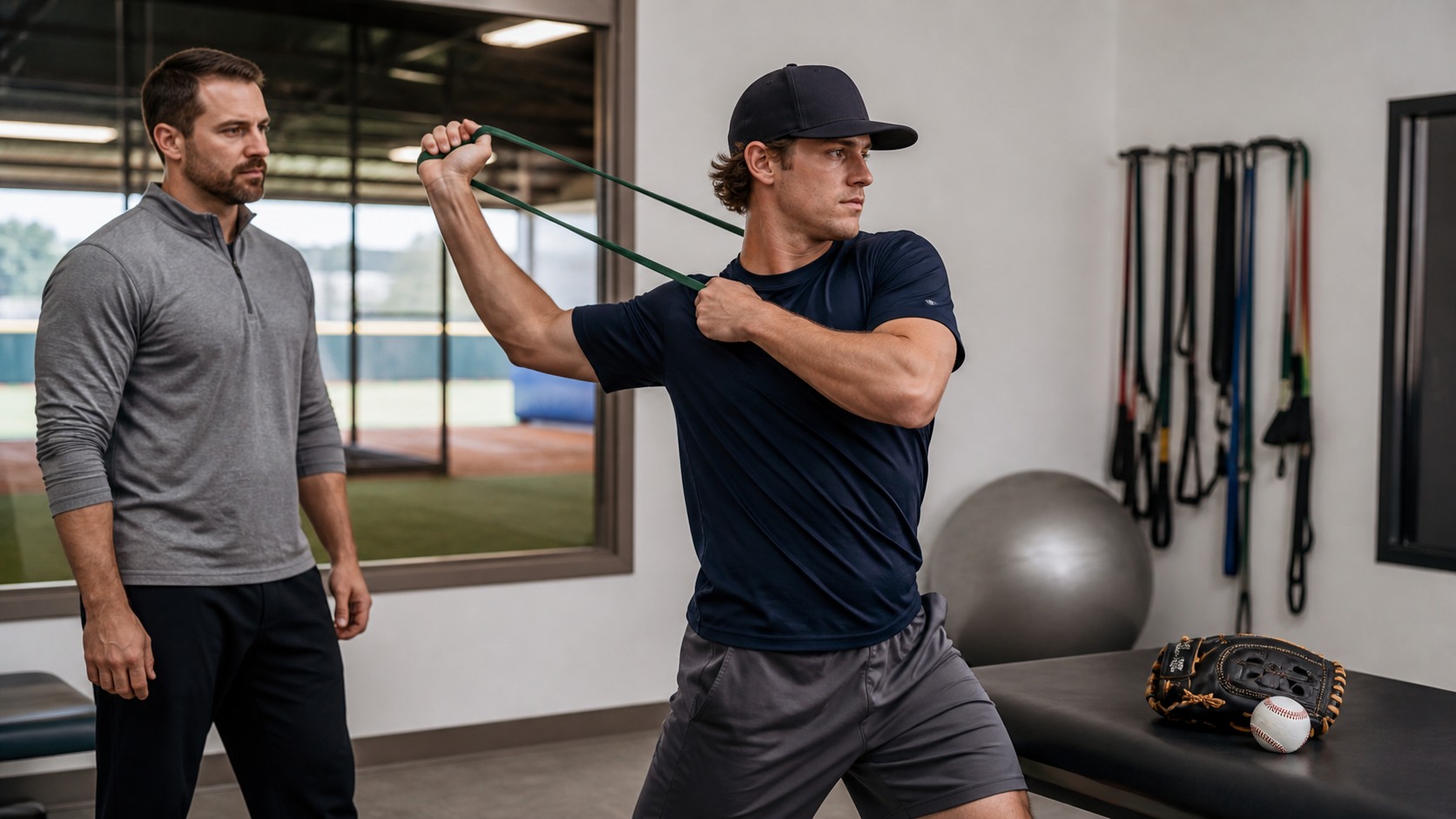
Mobility matters because baseball positions demand range and control. Pitchers need hips, shoulders, thoracic spine, and ankles working together. Hitters need rotation without losing posture. Catchers need durable hips and ankles. Fielders need low positions and quick transitions.
Mobility training should be targeted. Random stretching may feel productive but not solve the player’s limiting factor. A player with poor hip rotation may need different work than a player with stiff shoulders or limited ankle movement.
Mobility also needs strength. Range without control may not transfer. The athlete should learn to own positions, not simply reach them passively.
Throwing Progression Must Be Planned
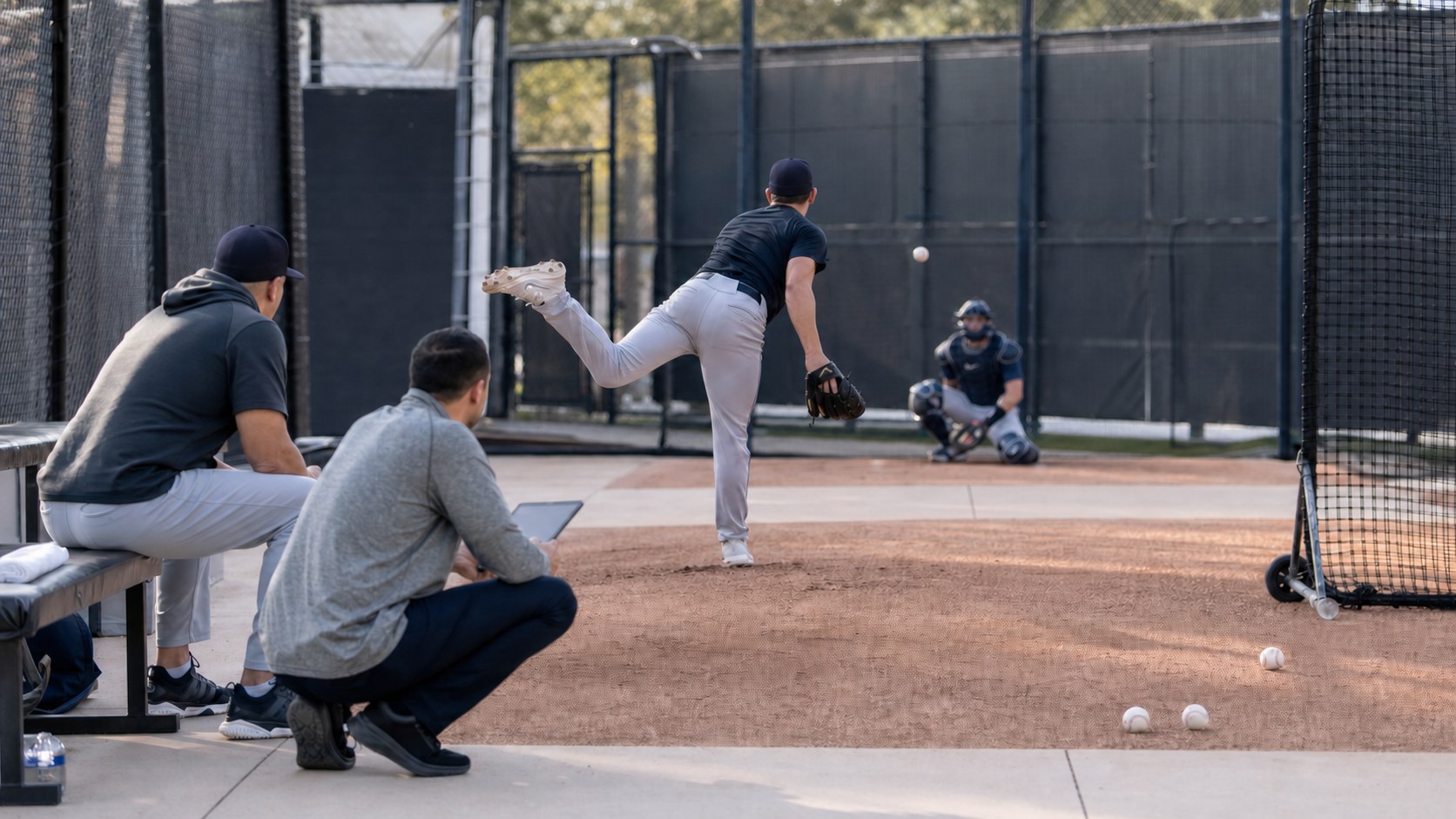
The throwing ramp is one of the most important off-season decisions. After a rest period, players should return gradually. Light catch, distance, volume, intensity, position-specific throws, bullpens, and game-like work should appear in a logical order.
Pitchers need special care because mound work adds intensity and repetition. A pitcher should not jump from casual catch to full bullpens because the calendar says tryouts are near. The arm needs preparation.
Position players need progression too. Outfielders making long throws, catchers throwing to bases, and infielders working quick releases all create stress. Their ramps may differ, but they still matter.
Pain should stop the progression. Soreness patterns should be reported and addressed instead of hidden.
Speed Training Should Look Athletic
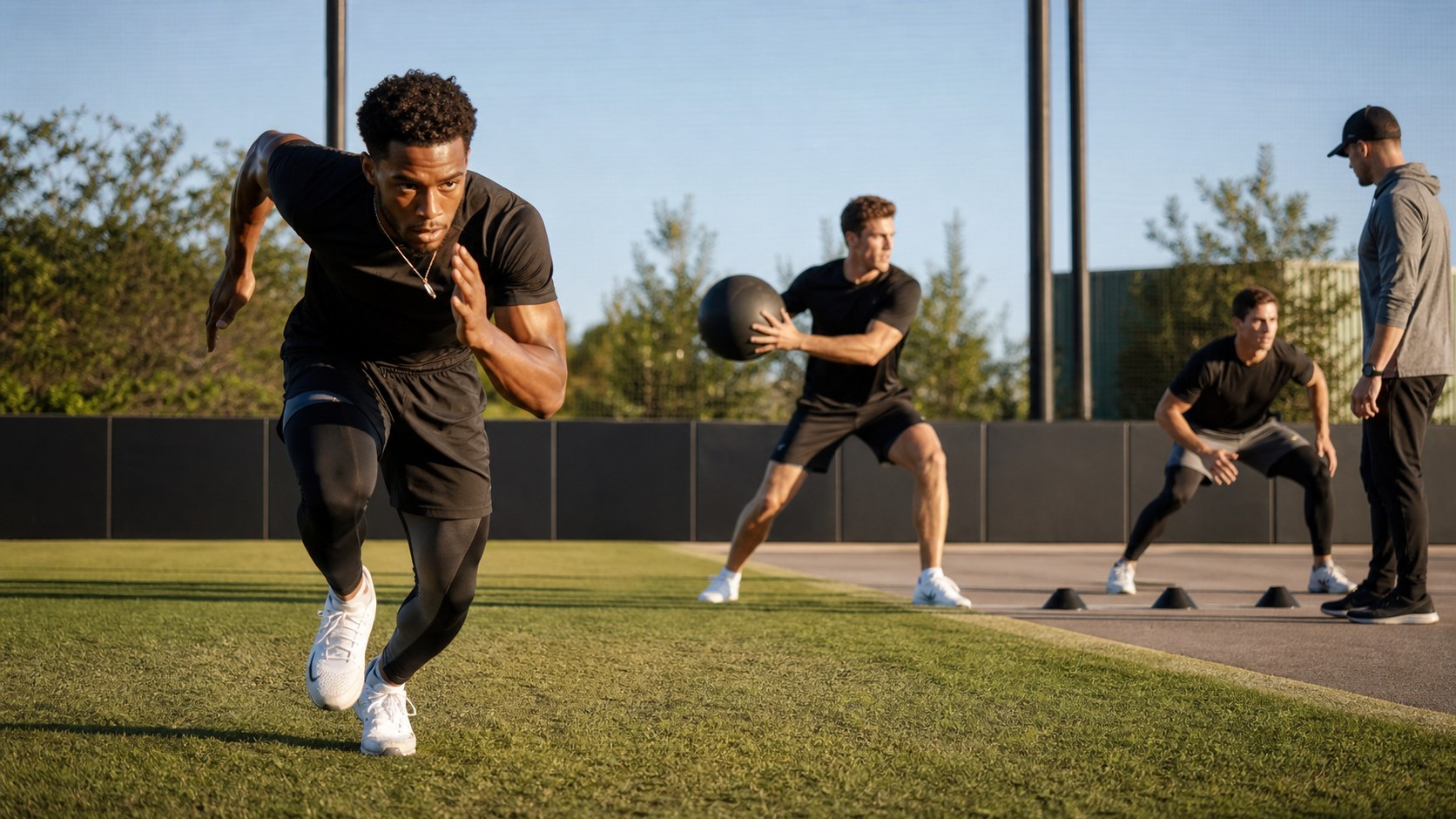
Baseball speed is not only long-distance conditioning. Players need first-step quickness, acceleration, deceleration, lateral movement, and repeated bursts. Off-season speed work should reflect those needs.
Sprints, starts, jumps, skips, change-of-direction drills, and base-running angles can all fit. Long slow running may have a place for general fitness, but it should not replace baseball-specific speed and power.
Quality matters. Speed training performed while exhausted often becomes sloppy. Players need enough rest between reps to move fast and learn good positions.
Hitting Work Needs A Narrow Focus
The off-season is a good time to improve swing habits, but hitters can ruin themselves by changing everything at once. A better plan chooses one or two priorities: timing, contact point, pitch selection, posture, bat path, or strength through contact.
Tee work, front toss, machine work, live tracking, and video can each help if used with purpose. Endless swings without decisions may build stamina but not better at-bats. The hitter should know what the round is teaching.
Players should also take pitches during training. Strike-zone judgment is a skill. If every ball in a cage must be swung at, the hitter may train habits that hurt in games.
The best hitting block ends with the player understanding what changed and how it will show up against real pitching.
Position Skills Can Improve Without Full Games
Fielders can develop in the off-season without playing constant games. Footwork, glove presentation, transfers, throwing accuracy, first-step reads, and communication can be trained in small spaces. Catchers can work receiving, blocking, mobility, and throw footwork. Base runners can train starts and acceleration.
Skill work should stay connected to baseball decisions. An infielder can hear a base call. An outfielder can choose a throw target. A catcher can block and recover to a ball. These details keep training from becoming empty movement.
Limited facilities are not an excuse for random work. Good coaches can build useful reps with nets, walls, cones, balls, and imagination.
Recovery Is Part Of The Program
The off-season is when many players finally have time to build better recovery habits. Sleep, nutrition, hydration, mobility, rest days, and mental breaks all affect adaptation. A program that ignores recovery may create fatigue instead of improvement.
Rest days should be planned, not treated as failures. Muscles, tendons, nervous system, and throwing tissues need time to respond to training. Players who train hard every day may feel committed while quietly reducing progress.
Mental recovery matters too. Baseball can become emotionally crowded after a long season. Time away, other interests, and lower-pressure movement can restore motivation.
A player who begins the season hungry and healthy has gained something important.
Recovery habits should be practiced before the season gets chaotic. If sleep and food are already inconsistent in January, they rarely improve during tournament weekends.
The Plan Should Ramp Toward Baseball
As the season approaches, training should become more baseball-specific. Throwing intensity rises gradually. Hitters see more game-like speed and pitch shapes. Fielders make more live decisions. Conditioning shifts toward repeated baseball bursts.
This ramp should not be sudden. A player who lifts hard all winter but does not prepare for throwing and game tempo may feel strong yet unready. The last phase connects the off-season foundation to the field.
Coaches should reduce weight-room fatigue as baseball intensity grows. The player cannot peak in every category at once.
The ramp should include practice recovery too. It is not enough to feel good for one workout; the athlete has to recover well enough to repeat baseball activities across a week.
Position Groups Need Different Details
A catcher, pitcher, middle infielder, corner infielder, and outfielder all need a shared athletic base, but the details differ. Catchers need durable hips, receiving mobility, and repeated throwing readiness. Pitchers need carefully planned throwing progression and total-body power. Middle infielders need quick feet, transfers, and first-step speed.
Outfielders may need more long-throw preparation and sprint work. Corner players may need reaction, lateral power, and rotational strength. A generic plan can help general fitness, but position details make the program more useful.
Players who handle multiple positions should build the broadest base. Youth athletes especially benefit from versatility rather than narrowing too soon.
The off-season is the right time to add those details because the pressure of daily games is lower. Players can slow down, learn movement, and then speed it back up.
Position detail should never remove athletic variety completely. Baseball players still need to run, jump, rotate, stop, start, and adapt.
Testing Should Guide, Not Dominate
Testing can be useful. Sprint times, jump measures, strength benchmarks, mobility checks, throwing readiness, and swing feedback can show progress. The danger is turning the off-season into a constant test instead of a training process.
Players need time to build between evaluations. If every week is a max effort competition, fatigue rises and learning drops. Testing should answer whether the plan is working, not replace the plan.
The best tests connect to baseball. A bigger lift is helpful if it supports speed, throwing, durability, or swing force. A faster sprint matters when it shows up in base-running and defense.
Coaching Communication Keeps The Plan Together
Many baseball players work with several adults in the off-season: a team coach, hitting instructor, pitching coach, strength coach, physical therapist, or parent. If those people do not communicate, the athlete can end up with too much volume and too many competing messages.
A hitter may be told to change a swing while strength training creates heavy fatigue. A pitcher may be ramping throwing while also doing aggressive velocity work and upper-body lifting. Each piece may look reasonable alone, but the combined load can be too much.
Someone should own the calendar. That person does not have to control every detail, but the player needs a coherent week. Hard days, recovery days, throwing days, lifting days, and skill days should support each other.
Good communication protects the athlete from accidental overtraining. It also keeps skill cues from fighting each other.
The Best Program Fits The Athlete
There is no single best off-season program for every baseball player. A twelve-year-old catcher, a high school shortstop, a college pitcher, and an adult amateur need different plans. Training age, injury history, schedule, and goals all matter.
The best programs share principles: recover first, assess honestly, build strength and mobility, return to throwing gradually, train skills with purpose, and protect rest. The details change by athlete.
An off-season should leave a player more prepared for the next season and more confident in his body. If the program only creates soreness, anxiety, or endless fatigue, it is missing the point. Baseball improvement is built, not beaten into place, one sustainable training block at a time.