Why One Baseball Can Become a Legend
A baseball may look simple at first glance, but in the right moment, it becomes one of the most powerful objects in sports. It can carry the weight of a record, the heartbreak of a defeat, the roar of a stadium, or the memory of a generation. Most game balls disappear into routine, tossed from pitcher to catcher, fouled into the seats, or retired without ceremony. But a few become historic baseballs, preserved because they were touched by greatness at the exact second the game changed. The most famous baseballs in history are not valuable only because of age or rarity. They matter because of what happened around them. A ball struck over a fence, caught in a glove, saved by a fan, or authenticated by officials can become a physical link to baseball’s biggest stories. These legendary game balls are artifacts of pressure, timing, and myth. They remind fans that baseball history is not only written in box scores, but also in leather, stitches, dirt, and memory.
A: A baseball becomes famous when it is tied to a major record, championship, player, or unforgettable moment.
A: They can be, especially when connected to milestone records, legendary players, or historic games.
A: Authentication helps prove the ball’s connection to the specific moment collectors care about.
A: Yes, museums often preserve famous baseballs as sports history artifacts.
A: Yes, if it becomes part of a controversial or memorable moment.
A: Provenance is the documented history showing where an artifact came from and why it matters.
A: No, signed balls focus on autographs, while game-used balls focus on the moment of play.
A: Some fans return them out of respect for the player, team, or historical milestone.
A: Keep it in a protective display case away from sunlight, moisture, and frequent handling.
A: They turn legendary baseball moments into physical objects fans can see, preserve, and remember.
The Baseball as Baseball’s Smallest Time Capsule
Every famous baseball begins as an ordinary object built for motion. It is meant to be thrown hard, hit harder, and replaced often. Yet when a defining moment arrives, that same ball becomes a time capsule. It captures the sound of the swing, the angle of the flight, the reaction of the crowd, and the significance of the inning. Long after the game ends, the ball remains as proof that the moment was real.
That is why historic game balls fascinate collectors, museums, players, and fans. They are compact, physical pieces of baseball storytelling. A bat may represent the hitter, a glove may represent the defender, and a jersey may represent the player, but the baseball often represents the moment itself. It is the object everyone was chasing, watching, throwing, or trying to control.
Babe Ruth’s Called Shot and the Power of Myth
Few baseball stories have grown larger than Babe Ruth’s famous “called shot” in the 1932 World Series. Whether Ruth truly pointed to center field before launching the home run has been debated for decades, but the baseball connected to that moment lives in the imagination of fans because it represents more than one swing. It represents confidence, showmanship, rivalry, and the birth of baseball mythology on a grand stage. The ball from Ruth’s legendary blast became part of a larger cultural memory around the Bambino. Ruth turned baseball into spectacle, and the idea of one baseball flying into history perfectly matches his outsized personality. Even when details are debated, the object remains symbolic. It reminds fans that baseball’s most famous artifacts often carry both fact and folklore, and sometimes the legend becomes nearly as important as the box score.
The Ball From Bobby Thomson’s Shot Heard ’Round the World
Bobby Thomson’s 1951 pennant-winning home run is one of the most dramatic moments in baseball history. The ball he hit became famous because it ended a legendary playoff between the New York Giants and Brooklyn Dodgers. In one swing, a season turned, a rivalry exploded, and radio history gave the moment its immortal name: the Shot Heard ’Round the World.
That baseball matters because it represents baseball at its most cinematic. The pitch, the swing, the roar, and the call all arrived together in a burst of emotion. It was not just a home run ball; it was the object at the center of one of the sport’s greatest sudden endings. For generations of fans, Thomson’s ball stands as a reminder that baseball can move from tension to immortality in a single pitch.
Hank Aaron’s 715th Home Run Ball
Hank Aaron’s 715th home run ball is one of the most important baseball artifacts ever created by the game. When Aaron passed Babe Ruth on the all-time home run list in 1974, the moment carried enormous athletic, cultural, and emotional weight. The baseball he struck over the fence represented endurance, excellence, and dignity in the face of intense pressure. This ball is famous because it marked more than a new record. It marked a national moment. Aaron’s chase took place under extraordinary scrutiny, and his achievement became a symbol of grace, courage, and historic greatness. The ball from number 715 remains one of baseball’s most meaningful objects because it connects sports history to American history.
The Baseball From Mark McGwire’s 70th Home Run
Mark McGwire’s 70th home run ball from the 1998 season became one of the most discussed sports collectibles of its time. The chase between McGwire and Sammy Sosa captivated baseball fans and helped bring new energy to the sport. When McGwire reached 70 home runs, the baseball became a symbol of a season that felt larger than life.
Over time, the meaning of that ball became more complicated. The home run race is still remembered for its excitement, but also viewed through the lens of baseball’s performance-enhancing drug era. That complexity makes the ball historically important. It does not simply represent celebration; it represents how baseball history can change as fans learn more about the era that produced it.
Barry Bonds’ 756th Home Run Ball
Barry Bonds’ 756th home run ball is one of the most famous and controversial baseballs in history. When Bonds passed Hank Aaron on the all-time home run list in 2007, the ball instantly became a major artifact. It represented the breaking of one of baseball’s most iconic records, but it also carried the debate and tension surrounding Bonds’ career. The story of this baseball grew even more unusual after it was purchased and marked with an asterisk before being sent to the Hall of Fame. That act transformed the ball into a statement about memory, judgment, and the way fans process complicated greatness. Whether viewed as a record-breaking treasure or a symbol of controversy, Bonds’ 756th home run ball is unforgettable because it forces baseball to confront how history is remembered.
Derek Jeter’s 3,000th Hit Ball
Derek Jeter’s 3,000th hit ball became famous because the moment felt perfectly scripted. Jeter reached the milestone with a home run at Yankee Stadium, giving fans a dramatic scene worthy of his career. The baseball instantly became one of the most celebrated modern Yankees artifacts, tied to a player known for consistency, leadership, and postseason greatness.
The story gained even more attention because the fan who caught the ball returned it to Jeter. That decision added a human layer to the artifact’s legacy. Instead of becoming only an auction item, the ball became part of a story about respect between fans and players. It stands as one of the great modern examples of how a baseball can represent both achievement and sportsmanship.
Cal Ripken Jr.’s Record-Breaking Game Ball
Cal Ripken Jr.’s consecutive games streak is one of baseball’s most admired records, and the baseballs connected to his milestone games carry special importance. Ripken’s achievement was not built on one explosive swing, but on durability, discipline, and daily commitment. A game ball from his record-breaking night represents a different kind of baseball greatness. Unlike famous home run balls, Ripken’s milestone game ball symbolizes endurance. It reflects the value of showing up, playing hard, and respecting the rhythm of a long season. In a sport defined by daily repetition, that kind of artifact has lasting power. It reminds fans that baseball history is not always made by sudden drama; sometimes it is built one game at a time.
World Series Final-Out Baseballs
Few baseballs carry more emotional force than World Series final-out balls. These are the game balls that end championships, trigger celebrations, and seal legacies. When the final out is recorded, the ball often becomes the most desired object on the field. Players leap, gloves fly, crowds erupt, and that one baseball becomes the physical marker of a team’s ultimate achievement.
World Series final-out balls are especially powerful because they belong to entire fan bases. They are not only tied to one player, but to cities, generations, and seasons of hope. Whether it ends a long championship drought or confirms a dynasty, the final-out ball becomes a sacred artifact. It is the object that says the wait is over.
Don Larsen’s Perfect Game Ball
Don Larsen’s perfect game in the 1956 World Series remains one of the most extraordinary pitching performances in baseball history. The baseballs from that game are legendary because perfection in baseball is so rare, and perfection on the World Series stage is almost unimaginable. Every pitch mattered, every out built suspense, and every ball used in that game became connected to a performance that still feels impossible. The final baseball from Larsen’s masterpiece is especially meaningful because it represents absolute command under pressure. A perfect game leaves no room for error, and the object tied to its conclusion carries the weight of every pitch before it. For collectors and historians, Larsen’s game ball stands among baseball’s most elegant artifacts: simple, clean, and tied to one of the purest achievements in sports.
The Baseballs That Broke Curses
Some famous baseballs matter because they ended decades of frustration. When a franchise finally wins after years of heartbreak, the baseballs from those final moments become symbols of release. They carry not only the result of a game, but the emotions of fans who waited through generations of near misses, disappointment, and hope.
These game balls are powerful because they represent shared memory. A final-out baseball from a curse-ending championship does not belong emotionally to one person alone. It belongs to grandparents, parents, children, neighborhoods, and cities. It becomes a bridge between the fans who endured the drought and the fans who finally witnessed the breakthrough.
Foul Balls That Became Famous
Not every famous baseball is tied to a home run or final out. Some foul balls have entered baseball history because of where they landed, who touched them, or what happened next. A foul ball can become infamous when it changes the emotional direction of a game or becomes part of a larger controversy. These moments show that even baseballs outside the field of play can shape history. Foul balls also reveal the unpredictable relationship between fans and the game. Most are souvenirs, but a few become symbols of tension, luck, or heartbreak. They remind us that baseball’s boundary between spectator and participant is thinner than in many other sports. One ball into the stands can turn an ordinary fan into part of baseball history forever.
Milestone Hit Baseballs and the Meaning of Numbers
Baseball loves numbers, and milestone baseballs are among the sport’s most valued objects. A 3,000th hit ball, 500th home run ball, or record-breaking strikeout ball carries instant historical significance. These objects matter because baseball fans understand the achievement behind the number. They know how many seasons, swings, pitches, failures, and adjustments were required to reach that mark.
Milestone baseballs are especially useful for storytelling because they make achievement visible. A statistic can feel abstract, but a baseball gives it shape. It allows fans to point to one object and say, “That was the moment.” In a sport filled with records, the ball often becomes the trophy that the official trophy never could.
Why Authentication Changed Baseball Collecting
As famous baseballs became more valuable, authentication became essential. In earlier eras, many historic balls relied on personal testimony, handwritten notes, or family stories. Modern baseball uses tighter tracking, official authentication programs, and documentation to confirm the identity of important game-used objects. This has transformed the collectibles market and changed how fans view historic baseballs. Authentication matters because a famous baseball’s value depends on trust. Without proof, even a fascinating object can become uncertain. With strong documentation, a baseball can become a museum-quality artifact or a high-value auction piece. This shift has helped preserve modern history more carefully, ensuring that future fans can connect important baseballs to the exact moments they shaped.
The Auction Power of Legendary Baseballs
Famous baseballs can command enormous attention at auction because they combine rarity, emotion, and cultural memory. Unlike mass-produced collectibles, a historic game ball is unique. There is only one ball from a specific record-breaking home run or final out. That scarcity creates excitement among collectors, especially when the object is tied to a beloved player or unforgettable moment.
The auction market also reveals how baseball history is valued by different generations. Some buyers chase nostalgia, others chase investment potential, and others simply want to preserve a piece of the game. The most famous baseballs often become public conversations because their sale prices reflect how deeply fans still care about the moments attached to them.
How Museums Turn Baseballs Into Storytelling Objects
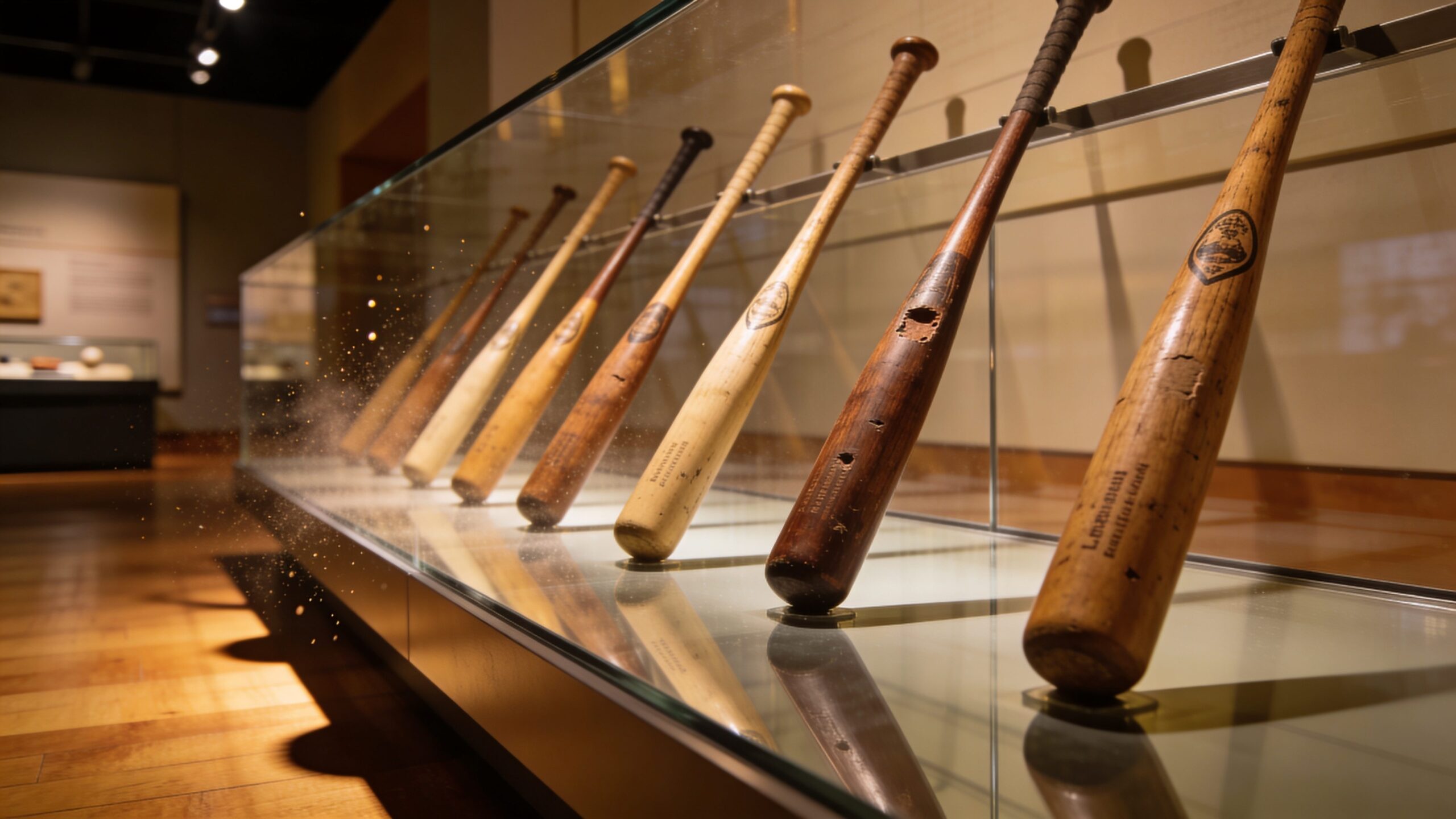
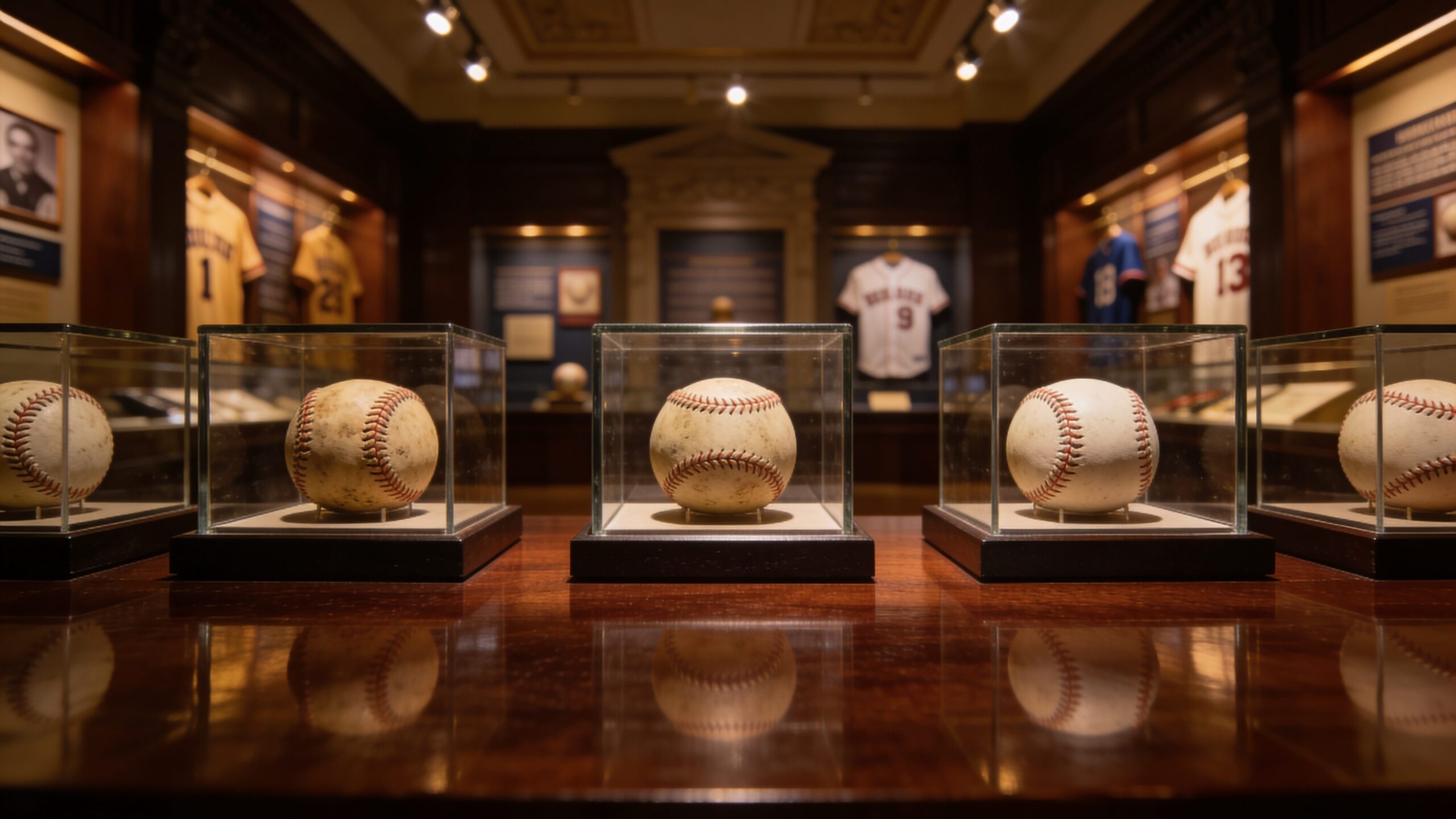
Museums play a major role in preserving baseballs that changed the sport. A famous game ball displayed in a museum does more than sit behind glass. It invites visitors to slow down, imagine the moment, and connect with the people who witnessed it. The ball becomes a doorway into a larger story about players, teams, cities, and eras. This preservation matters because baseball is built on memory. Without artifacts, history becomes easier to flatten into statistics and summaries. A real game-used baseball restores texture to the past. Its scuffs, stains, and worn seams remind fans that legendary moments happened in physical space, under pressure, with real objects moving at real speed.
The Emotional Life of a Game Ball
A legendary baseball can mean different things to different people. To a player, it may represent a lifetime of work. To a fan, it may represent a childhood memory or a family connection. To a collector, it may represent rarity and provenance. To a city, it may represent triumph after decades of waiting. That layered meaning is what makes famous baseballs so powerful.
The emotional life of a game ball often grows over time. At first, it may be known only as the ball from a big play. Years later, it may become a symbol of an entire era. As players retire and generations change, these baseballs gain new meaning. They become anchors of memory, helping fans remember not only what happened, but how it felt.
Why Legendary Baseballs Still Matter
The most famous baseballs in history matter because they prove that the smallest object on the field can carry the biggest story. A baseball is thrown, hit, caught, lost, found, authenticated, displayed, debated, and remembered. It travels through the game as a tool, then sometimes leaves the game as an icon. Few objects in sports can transform so quickly from ordinary equipment into priceless history. For Baseball Streets, legendary game balls are perfect artifacts because they connect fans to the soul of the sport. They blend performance, memory, controversy, craftsmanship, and culture. They remind us that baseball history is not only made by players and teams, but also by the objects that survive the moment. One ball can change a game, define a career, lift a city, or become a legend that never stops rolling through time.