Fielding Mechanics Are a Chain, Not a Single Position
Good fielding is often described as if one perfect stance solves everything. In reality, baseball fielding mechanics are a complete system that begins before contact and ends after the throw or recovery. A defender prepares with the pitch, reads ball speed and direction, chooses a route, controls the body, presents the glove, receives the hop, transfers through the feet, throws to the correct target, and resets for the next play. If one link is late, the rest of the chain becomes rushed. This system view helps players and coaches diagnose problems more accurately. A bobble may begin with poor posture, a wild throw may begin with bad approach angle, and limited range may begin before the ball is hit.
Pre-Pitch Readiness Starts the System
The fielding chain begins before the ball is hit. A defender who is flat-footed at contact is already late, even if his hands are good. Pre-pitch movement times the body so the first step can happen without a restart.
Readiness should be athletic, not theatrical. Some players bounce too much, sink too low, or freeze in a pose that looks ready but does not move well. The best setup lets the defender react left, right, forward, or back without unlocking the body first.
Information also belongs in the pre-pitch phase. The defender should know the hitter, count, pitch plan, runner speed, outs, and likely target. Mechanics improve when the player knows what the next play might require.
The First Read Determines the Route
Once contact happens, the defender reads direction, speed, height, and spin. That first read decides the route. A hard ground ball, slow roller, top-spin chopper, slicing liner, and high pop-up each ask the body to solve a different problem.
Young fielders often run at the ball’s current location. Better defenders move toward the future fielding point. They ask where the ball will be catchable and what body position will allow the next throw. That turns movement into a plan.
The first step should be honest. Guessing can create a dramatic jump in the wrong direction, and recovering from a false step costs more time than a patient read. A good first step is early enough to gain ground and disciplined enough to avoid panic.
Coaches can watch the first two steps to diagnose many issues. If the player crosses awkwardly, stands up, or drifts behind the ball, the later glove problem may actually be a route problem.
Approach Angle Builds the Throw
Fielding mechanics should not stop at catching the ball. The approach angle has to create the throw as well. An infielder moving through a routine grounder should arrive in a position that lets momentum travel toward the target.
On balls to the glove side, the player may round the route slightly to field through the ball. On balls in the hole, the backhand may be the best option because circling would take too long. On slow rollers, the defender may need to field while still moving.
The correct angle depends on time. A slow runner allows more setup. A fast runner demands a quicker catch-to-throw sequence. Mechanics are only useful when they match the actual clock of the play.
Body Control Creates a Glove Window
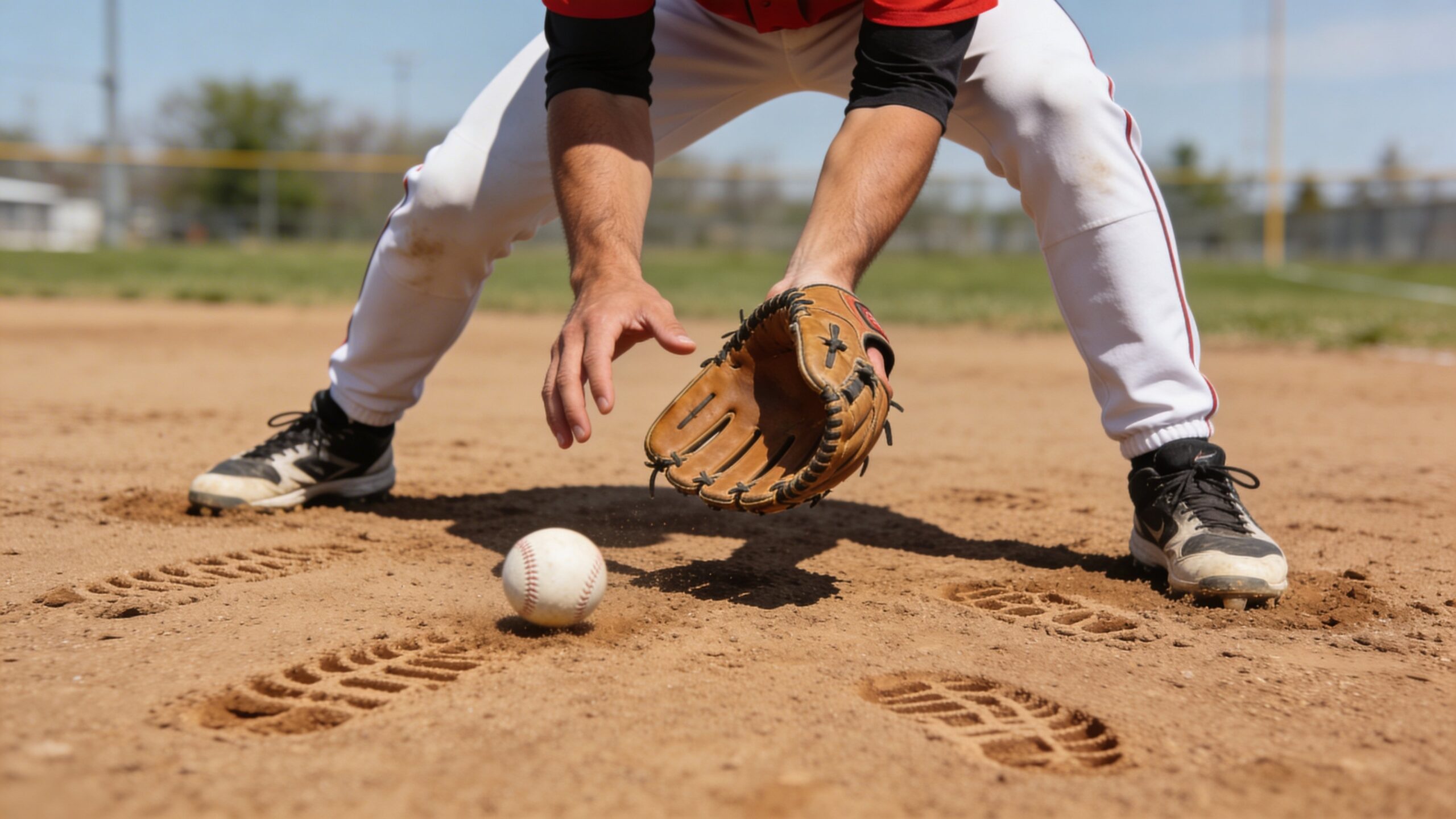
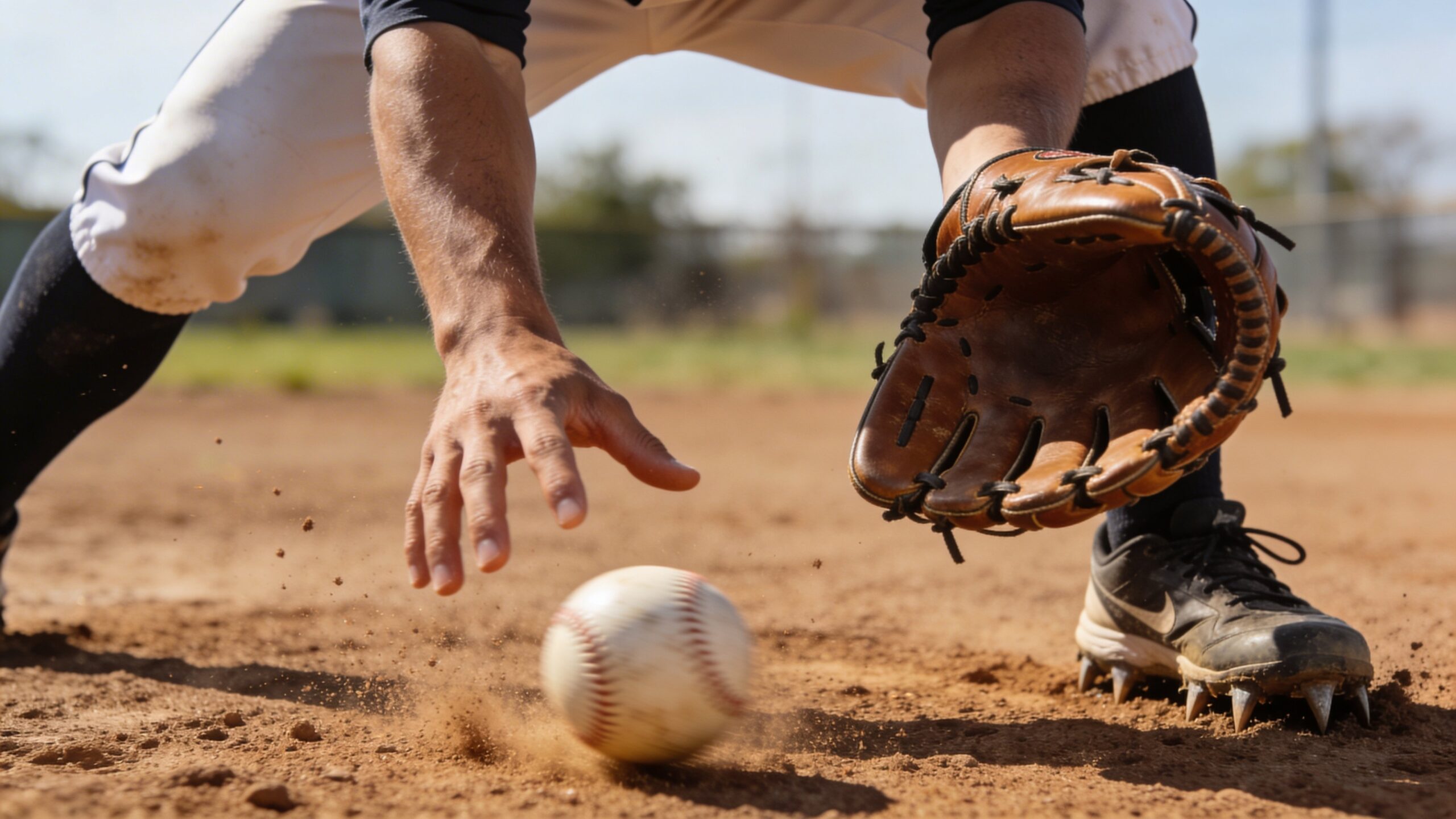
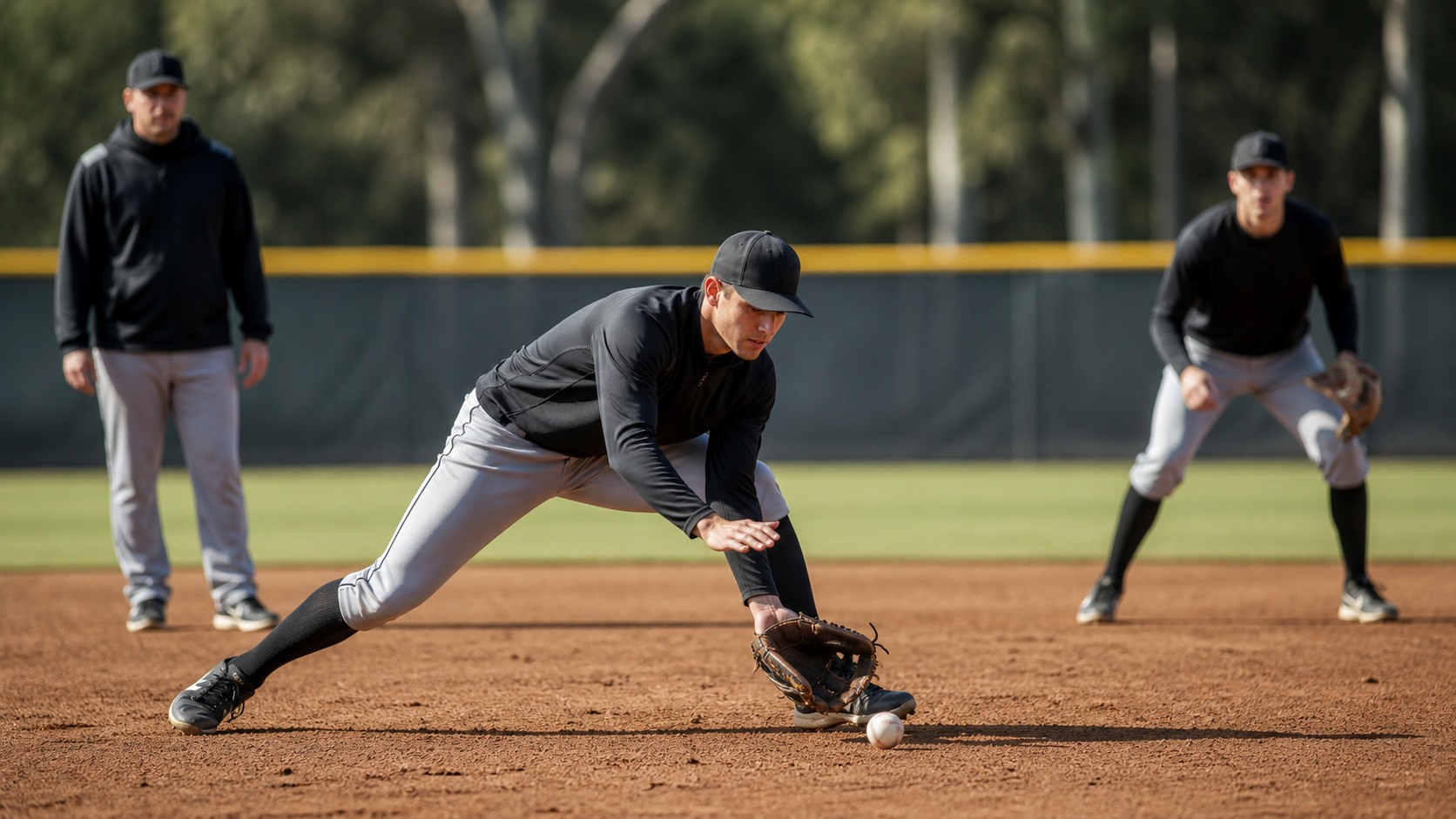
The glove works best when the body gives it a stable window. If the defender arrives too fast, too tall, or too far from the hop, the glove has to stab. If the defender brakes under control, the glove can receive softly.
Braking is not stopping completely. It is reducing uncontrolled speed so the eyes and hands can work. The defender may still move through the ball, but the head should stay calm enough to track the hop.
Posture matters because the eyes lead the glove. A player who pops up loses the ball late. A player who collapses too low may trap the hands. The best posture is strong, flexible, and adjustable to hop height.
Body control is especially important on bad hops. A fielder who remains balanced has a chance to recover. A fielder whose body is already falling has fewer options.
Glove Presentation Is Timing, Not Decoration
Presenting the glove early gives the ball a target, but the glove cannot become rigid. The pocket should be visible and ready while still able to adjust to the hop. Good fielders show the glove, then let the ball travel into it.
Late presentation causes panic. When the glove appears only at the last instant, the player has no time to read the final bounce. The result is stabbing, flipping the wrist, or catching the ball too deep under the body.
The throwing hand supports the transfer but should not interfere with receiving. Some players crowd the glove and create hard hands. Others leave the throwing hand so far away that the exchange becomes slow. The system needs both hands working in sequence.
The Transfer Connects Catching to Throwing
The transfer begins as the ball is secured. A clean catch that leaves the throwing hand trapped or the feet facing the wrong way is not finished mechanics. The fielder must turn possession into an accurate throw.
Different plays require different transfers. A second baseman feeding a double play may use a quick underhand or short-arm feed. A third baseman charging a bunt may transfer while moving. A shortstop deep in the hole may use a longer exchange because the throw needs carry.
Players should train transfer speed only after they can catch securely. Rushing the exchange before possession creates bobbles. The goal is quick because clean, not quick instead of clean.
The transfer also includes decision-making. The fielder should know whether to throw to first, second, home, a cutoff, or no one. Mechanics without a target can become wasted athleticism.
Throws Must Fit the Play
A standard throw with set feet is only one version of fielding. Real plays include throws on the run, flips, relays, backhand throws, and throws after bobbles. The arm action should match the body position and urgency.
Accuracy matters more than showing off arm strength. A throw that pulls the receiver away from the base can erase good fielding work. A slightly slower but catchable throw often produces more outs than a rushed missile.
Fielders should know when not to throw. If the runner has clearly beaten the play, a desperate throw can create an extra base. Holding the ball may feel unsatisfying, but it can be the best defensive finish.
Position-Specific Details Change the Chain
The fielding system applies everywhere, but each position emphasizes different links. Third basemen live with reaction speed, corner angles, and long throws. Shortstops need range, backhands, feeds, and arm-slot creativity. Second basemen handle pivots, shorter throws, and traffic around the bag.
First basemen receive as much as they field. Their mechanics include footwork around the base, picks, stretches, tags, and throws after bunts. Outfielders read longer ball flights, route to intercept points, and throw through cutoffs from greater distance.
Catchers have their own defensive chain built around receiving, blocking, throwing, fielding bunts, and directing the defense. The common idea is still sequence. Prepare, read, move, secure, finish, and recover. The details change because the position’s job changes.
This is why one universal cue can mislead players. Telling everyone to get around the ball may help on a routine grounder but hurt a third baseman reacting to a smash or an outfielder cutting off a gapper. Coaching has to protect the system while respecting the position’s clock.
Communication Is Part of Mechanics
Fielding mechanics are not only individual body movements. Defenders share space. Pop-ups, relays, bunts, cutoffs, rundowns, and backup responsibilities all require communication. A mechanically clean player who never speaks can still create defensive confusion.
Calls should be early and clear. Waiting until the ball descends creates collisions or hesitation. Infielders and outfielders need shared language for who takes balls in shallow outfield, who covers bases, and who backs up throws.
Communication also helps after deflections. If a ball kicks off a glove, the nearest teammate may have the better play. The defense needs quick words and movement so one mistake does not become several.
Teams should practice these mechanics together. A relay throw, for example, includes the outfielder’s footwork, cutoff positioning, receiver target, and base coverage. It is one system spread across multiple players.
Good talk also reduces physical hesitation. When two defenders both know who owns the ball, each can move more aggressively. Clear communication turns uncertain space into assigned responsibility.
Recovery Protects the Inning
No fielding system prevents every bad hop, bobble, or awkward bounce. Recovery mechanics decide how much damage follows the mistake. A defender who stays with the ball can still record an out or hold a runner.
Recovery begins with the eyes. Find the ball, find the next play, and decide whether a throw still exists. Panic throws often create worse outcomes than the original bobble. Calm recovery keeps the inning manageable.
Body language matters too. Dropping the head after an error can cost the next responsibility. Good defenders reset quickly because the ball may still be live, runners may still move, and the pitcher still needs the defense behind him.
Practice Should Include Bad Information
Games rarely give defenders perfect practice hops. Wind changes fly balls, grass slows rollers, dirt creates lips, and spin pulls the ball away from the expected path. A complete fielding system needs practice against imperfect information.
Coaches can vary speed, angle, surface, and decision calls. One round might include routine grounders, another might include choppers, and another might force the defender to choose between first and second. The point is not chaos. It is controlled variety that teaches players to keep reading.
Bad-information practice also builds trust. A player who has seen awkward hops in training is less likely to panic in a game. The body learns that a strange bounce is a solvable problem, not proof that the play is already lost.
Variety should still have a purpose. If the team is working on slow rollers, every rep should connect the charge, glove angle, transfer, and throw. If the team is working on pop-up communication, the coach should grade the call as much as the catch. Unusual reps matter most when they still teach an identifiable defensive habit.
How to Train the Complete Chain
Practice should connect the links. A drill that works only hands may help, but the player still needs pre-pitch timing, reads, routes, transfers, throws, and decisions. Complete fielding practice moves from isolated skill to game-like sequence.
A useful progression starts with controlled ground balls, adds angles, adds runner-speed calls, and then adds base decisions. The coach can focus on one link at a time while still reminding players that the whole chain matters.
Video can help when it traces the mistake backward. Did the throw sail because the arm failed, or because the route forced the body away from the target? Did the ball kick off the glove because the hands were bad, or because the first step created a poor hop?
Players should finish some reps with a verbal explanation of the decision. Naming the read forces the defender to connect movement with awareness. It also gives coaches a cleaner way to separate a physical mistake from a misunderstanding.
The complete system breakdown gives players a better language for improvement. Instead of saying “field it better,” coach the exact link that failed. That is how mechanics become usable defense.