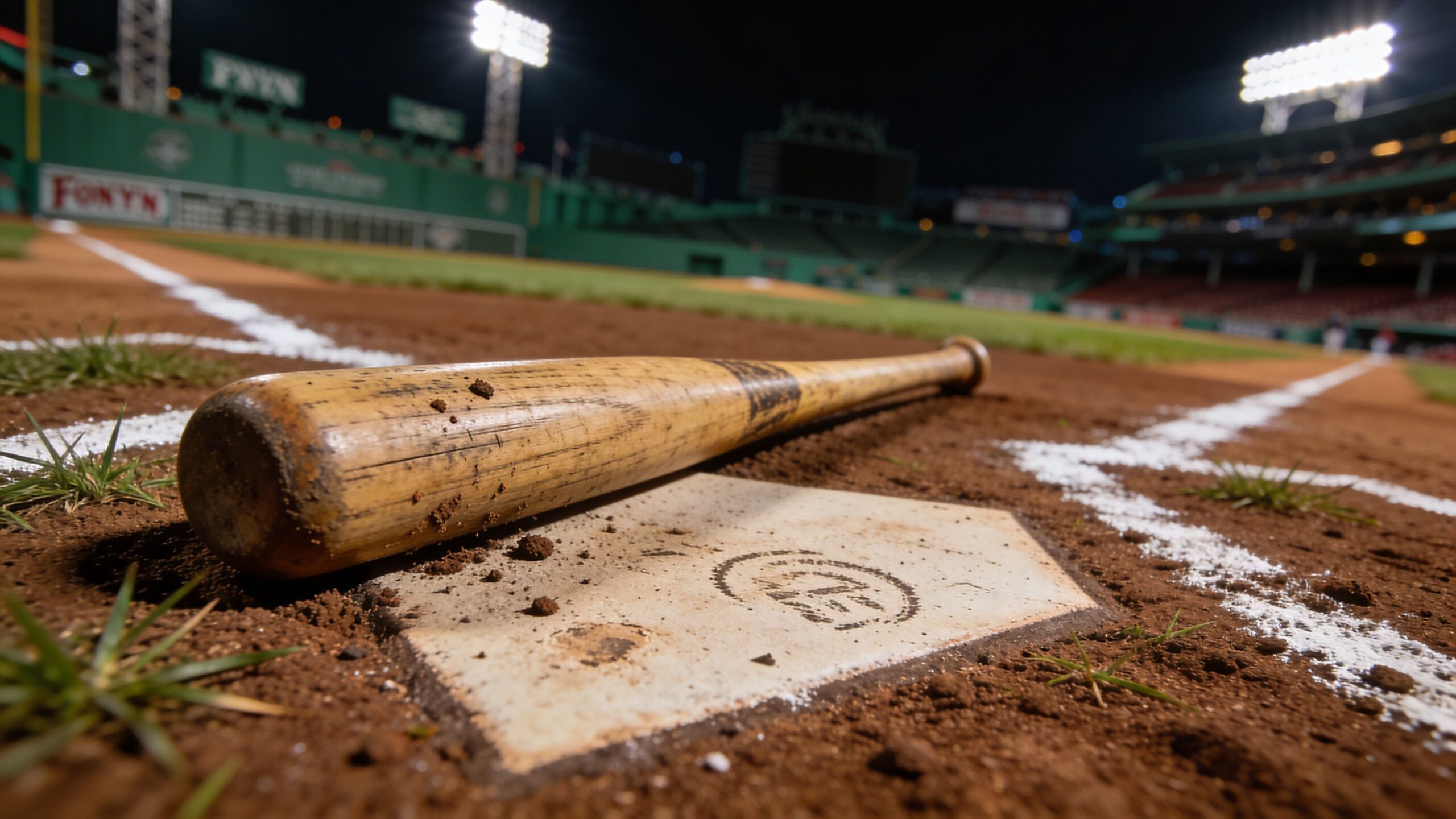
A Swing That Changed Boston Forever
Few pieces of baseball equipment carry the emotional weight of David Ortiz’s bat during the Boston Red Sox’s unforgettable 2004 postseason run. For nearly a century, Red Sox fans lived with one of the most famous legends in sports history—the so-called Curse of the Bambino. Ever since Babe Ruth was sold to the New York Yankees in 1919, Boston had endured decades of heartbreak, near misses, and painful postseason collapses. Generations of fans grew up believing that something mysterious stood between their team and another championship. Then David Ortiz stepped into the batter’s box. With his powerful left-handed swing and fearless approach to high-pressure moments, Ortiz delivered a series of clutch hits that transformed the Red Sox from cursed contenders into champions. The bat he carried to the plate during those dramatic October nights became the symbol of redemption for an entire city.
A: It became the symbol of his clutch postseason hits that helped Boston break its 86-year championship drought.
A: The Curse of the Bambino, tied to the Red Sox’s long title drought after Babe Ruth was sold to the Yankees.
A: His walk-off home run in Game 4 kept Boston alive and helped spark the historic comeback.
A: Yes, he drove in the winning run in extra innings in Game 5 as well.
A: The St. Louis Cardinals.
A: Boston became the first MLB team to rally from a 3–0 postseason series deficit.
A: He combined huge power, strong plate discipline, and rare calm in the biggest moments.
A: It represents redemption, clutch greatness, and one of the biggest turning points in Red Sox history.
A: Yes, he became one of the greatest and most beloved players in franchise history over many seasons.
A: Because it stands for the swings that changed Boston baseball forever.
The Long Shadow of the Curse
The Curse of the Bambino was more than a baseball superstition—it became part of Boston’s identity. After trading Babe Ruth to the Yankees, the Red Sox watched their former star become the centerpiece of New York’s rise into baseball’s most dominant franchise. Meanwhile, Boston endured 86 years without a World Series title.
Throughout those decades, the Red Sox repeatedly came close to breaking the drought. Yet every opportunity seemed to end in heartbreak. From dramatic postseason losses to bizarre plays that slipped away at the worst possible moment, the curse felt almost mythological. Fans spoke about it with humor and frustration, but deep down many wondered if the drought would ever end. By the early 2000s, the Red Sox had assembled a powerful roster capable of challenging for a championship. But one obstacle always seemed to stand in their way: the New York Yankees.
Enter David Ortiz
David Ortiz did not arrive in Boston as a guaranteed superstar. After struggling to establish himself with the Minnesota Twins, he was released in 2002 and searching for another opportunity. The Red Sox took a chance on him in 2003, and the move would eventually become one of the most important decisions in franchise history. Ortiz quickly proved that his powerful swing and calm demeanor were perfect for the pressure of Boston baseball. Towering home runs and dramatic late-inning hits turned him into a fan favorite almost immediately. His nickname, “Big Papi,” soon echoed through Fenway Park whenever he stepped to the plate. But Ortiz’s true legacy would be built during the postseason. When the stakes rose and the pressure intensified, his bat seemed to deliver exactly when the Red Sox needed it most.
The Rivalry That Defined an Era
Few rivalries in sports match the intensity of Red Sox versus Yankees. By the early 2000s, the tension between the two teams had reached historic levels. Every meeting carried emotional weight, and postseason matchups between the clubs felt like battles for baseball supremacy.
In 2003, the Red Sox came heartbreakingly close to reaching the World Series, only to lose to the Yankees in Game 7 of the American League Championship Series. The loss was devastating for Boston fans and reinforced the belief that the curse might still linger.
When the teams met again in the 2004 ALCS, the tension was even greater. The Yankees stormed to a three-games-to-none lead in the series, putting the Red Sox on the brink of elimination. No team in Major League Baseball history had ever come back from a 3–0 deficit in a postseason series. Boston’s season—and perhaps its long-awaited redemption—seemed finished.
The Moment That Sparked the Impossible
Game 4 of the 2004 ALCS became the turning point in baseball history. With the Red Sox facing elimination, the game stretched into extra innings as Fenway Park held its collective breath. David Ortiz stepped to the plate in the bottom of the twelfth inning with a chance to keep Boston alive. The atmosphere was electric, filled with both hope and desperation.
Then Ortiz unleashed the swing that would change everything. The ball soared into the night sky and cleared the fence for a walk-off home run. Fenway Park erupted in a roar that seemed to shake the entire city. The Red Sox had survived, and suddenly the impossible comeback no longer felt impossible.
Big Papi Delivers Again
If Ortiz’s Game 4 home run sparked the comeback, his performance the following night proved that something special was unfolding. Game 5 once again stretched into extra innings, with both teams battling through exhaustion and pressure. In the bottom of the fourteenth inning, Ortiz delivered another decisive blow. His line-drive hit brought home the winning run and secured another dramatic victory for Boston. The Red Sox had now won two straight elimination games against their greatest rival. Momentum had shifted. The Yankees suddenly looked vulnerable, and the Red Sox clubhouse began to believe that history could be rewritten.
Completing the Greatest Comeback
What followed became one of the most remarkable comebacks in sports history. The Red Sox won Game 6 behind dominant pitching and relentless determination. Then they captured Game 7 at Yankee Stadium, completing the first 3–0 comeback in MLB postseason history.
For Boston fans, the victory over New York felt like a curse lifting in real time. The team had finally conquered the rival that had haunted them for decades. David Ortiz’s bat had been the catalyst. His clutch hits had ignited belief in a team that refused to accept defeat.
The World Series Redemption
After the emotional roller coaster of the ALCS, the Red Sox entered the 2004 World Series with renewed confidence. Their opponent, the St. Louis Cardinals, had one of the strongest teams in baseball. But Boston was playing with unstoppable momentum. The Red Sox dominated the series, winning four straight games to capture their first championship since 1918. When the final out was recorded, decades of frustration turned into pure celebration. Red Sox players poured onto the field, and fans across New England erupted with joy. The Curse of the Bambino was finally broken.
The Bat That Made History
The bat Ortiz used during those dramatic postseason moments became one of baseball’s most symbolic artifacts. Crafted from traditional ash wood, it represented the classic design favored by many power hitters of the era.
Yet the bat’s true significance lies not in its materials but in the moments it produced. Each clutch swing carried the hopes of a city desperate for redemption. Each hit moved the Red Sox closer to ending their historic drought. In baseball, equipment often becomes legendary because of the memories attached to it. Ortiz’s bat is one of those rare objects that represents an entire chapter of sports history.
The Rise of a Boston Icon
David Ortiz’s heroics during the 2004 postseason cemented his place among the greatest players in Red Sox history. His powerful swing, charismatic personality, and ability to deliver in the biggest moments made him a beloved figure throughout Boston. Over the following years, Ortiz continued to build his legacy with more clutch hits and championship runs. But for many fans, the defining image of his career remains those dramatic swings during the 2004 comeback. Big Papi became more than a star player. He became the symbol of a franchise reborn.
Why the Legend Endures
Years after that unforgettable season, David Ortiz’s postseason heroics remain a central part of baseball lore. Fans still revisit the highlights, reliving the walk-off home run, the dramatic extra-inning hits, and the emotional celebration that followed the World Series victory.
Part of the story’s lasting power lies in its improbability. The Red Sox were down three games to none against their greatest rival. Their season appeared finished. Yet one player’s bat sparked a comeback that had never been seen before in Major League Baseball. The story feels almost cinematic, a reminder that baseball’s greatest moments often arrive when hope seems lost.
The Power of One Perfect Swing
Baseball has always been a game of moments. A single swing of the bat can shift momentum, change history, or ignite the imagination of millions of fans. David Ortiz’s bat delivered multiple such moments during the 2004 postseason. Each clutch hit pushed Boston closer to its long-awaited redemption. Those swings were not just athletic achievements—they were emotional milestones for an entire fan base that had waited nearly a century for victory.
A Symbol of Redemption
Today, the bat associated with David Ortiz’s legendary postseason performance stands as one of the most meaningful symbols in Red Sox history. It represents perseverance, resilience, and the belief that even the longest drought can end.
For Boston fans, the memory of those October nights remains vivid. The roar of Fenway Park, the swing of Ortiz’s bat, and the celebration that followed are woven permanently into the identity of the franchise.
The Legacy of Big Papi
David Ortiz’s career eventually led him to the Baseball Hall of Fame, but his legacy had already been secured long before that honor arrived. His ability to thrive under pressure and deliver unforgettable moments made him one of the most clutch hitters in baseball history. Whenever fans discuss the greatest postseason performances, the 2004 run inevitably appears near the top of the list. And at the center of that story stands a powerful left-handed hitter with a bat that changed everything.
When a Bat Becomes a Legend
In the end, David Ortiz’s bat represents more than a piece of wood used in a baseball game. It represents hope for a city that had waited generations for redemption. It represents the courage to believe that even impossible comebacks can happen.
Most of all, it represents the moment when the Red Sox finally shattered the Curse of the Bambino. With one fearless swing after another, Big Papi turned a simple bat into a legendary symbol of baseball history.