The Best Program Is the One That Fits the Player’s Next Stage
America does not have one youth baseball program that is best for every family. A strong community league can give a beginner more meaningful development than an expensive travel roster, while an advanced teenager may benefit from a carefully selected national identification event or academy. The useful comparison is not prestige versus obscurity. It is coaching quality, practice design, playing opportunity, health standards, competition level, affordability, travel demand, and whether the program’s promises match its actual pathway. National organizations such as Little League, Babe Ruth/Cal Ripken, PONY, USA Baseball, and MLB-supported development initiatives serve different purposes, and independent clubs vary widely within the same label. Families should identify what the player needs now, observe how the program teaches, verify workload and safeguarding policies, and ask where graduates actually progress. The right environment creates harder baseball problems without making the child’s health, education, confidence, or family stability the price of admission.
A: No single label guarantees recruitment. Skill, healthy development, academic fit, competition, verified evaluation, and exposure at the appropriate age all matter.
A: USA Baseball operates identification and development opportunities such as NTIS and age-group programs, with current eligibility and selection details published for each cycle.
A: No. Local league quality and competition vary, and Little League also offers structured divisions and tournament play. Its community model can serve many developmental stages.
A: The right size depends on schedule and positions, but families should calculate whether every player can receive meaningful innings, plate appearances, and instruction.
A: Not automatically. Paid staff can provide expertise, while well-trained volunteers can build excellent environments. Observe teaching quality and player engagement directly.
A: When the athlete is physically ready, has a realistic audience to reach, understands the event’s purpose, and will gain more than the cost and workload remove.
A: Watch practice, ask about training and background checks, speak with current families, examine communication, and see whether instruction produces understandable progressions.
A: Guaranteed scholarships, professional outcomes, constant urgency, hidden costs, and claims that one roster is the only route are strong reasons for caution.
A: Overlapping schedules can increase throwing load and reduce recovery. If multiple teams are used, all coaches need a shared workload record and clear priority plan.
A: At least after each season and whenever health, motivation, role, school demands, cost, or coaching changes materially alter the experience.
Define What Development Must Accomplish This Year
A seven-year-old learning to enjoy catching and throwing needs a different program from a sixteen-year-old seeking stronger competition. Families should write three priorities for the coming season: perhaps strike-zone recognition, broader position experience, confidence against faster play, or preparation for high school tryouts. Clear needs make marketing easier to evaluate.
The player’s voice matters. A child asking for more challenge may be ready to explore another level; one who dreads every weekend may need rest, a different coach, or a less consuming schedule. Adults can guide long-term choices without turning baseball into a project the athlete merely performs for them.
Development also includes health, independence, and decision-making. A program that improves exit velocity while creating chronic pain or total dependence on coaches is incomplete. The goal is a player who can prepare, compete, adjust, and recover at the next stage.
Start With Strong Community Baseball
Little League, Babe Ruth/Cal Ripken, PONY, and other community organizations can provide an accessible foundation with local practices and recognizable age divisions. The brand alone does not determine quality; local leadership, coaching education, facilities, roster size, and culture create the actual experience. Families should evaluate the specific league rather than its national name.
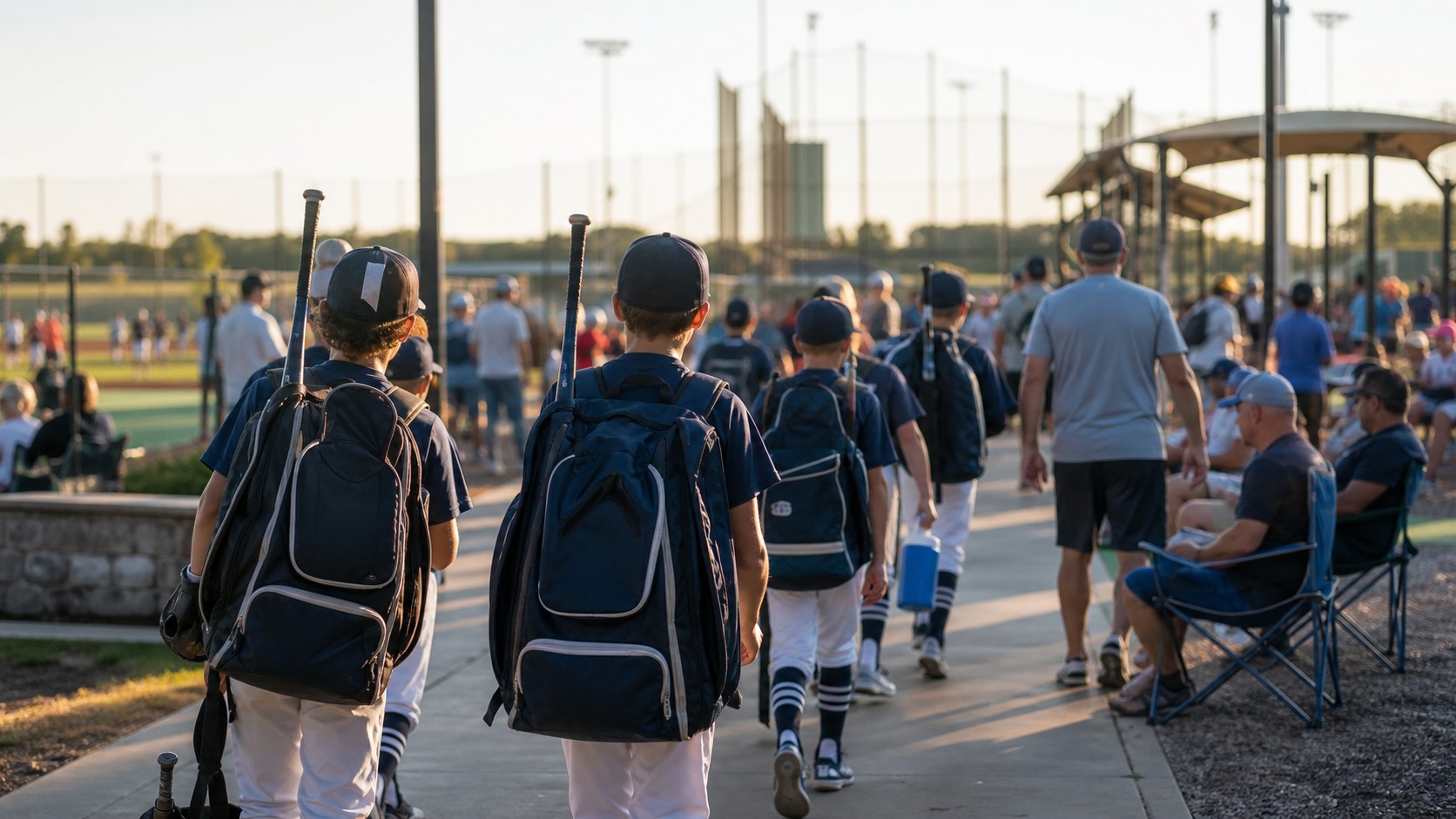
Community play offers valuable repetition without automatic interstate travel. Nearby practices are easier to attend consistently, and players may remain involved with school friends and several sports. Lower cost can also make targeted clinics or equipment more feasible. Development grows from repeated quality work, not the distance driven to the game.
Use Little League for Structured Local Progression
Little League publishes age charts, division structures, rules, and pitch-count requirements that create a common framework for local programs. Players can progress from introductory formats toward Majors, Intermediate, Junior, and Senior divisions where offered. The local league should still explain how teams are formed and how practice standards are maintained.
Its tournament pathway adds higher-pressure competition for selected teams, but the regular-season experience remains the developmental core for most players. A family should not judge the entire year by all-star selection. Daily coaching and meaningful participation shape more athletes than a short elimination event.
Mandatory play provisions and roster rules vary by division and context, so families should review current local and tournament policies. The practical question is how coaches use available innings. Minimum participation can prevent exclusion, but purposeful position work and feedback determine whether those innings teach.
Little League’s current pitch-count system ties daily limits and required rest to league age. That rule is a protection floor, not a command to reach the maximum. Coaches still need to observe fatigue and count throwing outside official games.
Compare Cal Ripken, Babe Ruth, and PONY Options Locally
Cal Ripken Baseball and Babe Ruth Baseball provide age-based competition that can extend from youth diamonds into older divisions. PONY Baseball uses a progression associated with changing field dimensions and age groups. In some communities, these organizations offer the strongest nearby coaching and facilities; elsewhere, another league is better established.
Field size influences the baseball problems players encounter. Gradual changes can help arms, running, leads, and defensive spacing develop with growing bodies. Families should ask when the local program changes distances and whether practice teaches those new demands before games expose them.
Interleague schedules and tournaments may create varied competition without the full cost of an independent travel club. Review current rules, geographic reach, and age eligibility directly with the organization and local league. National structure cannot guarantee that one town has enough teams for balanced play.
Consider USA Baseball Identification at the Right Time
USA Baseball’s National Team Identification Series is a current national pathway with regional selection events and age-group opportunities. For 2026, its published program spans multiple youth age groups and can lead selected players toward future development and national-team training opportunities. Eligibility and event details change by cycle, so families should use the official site.
NTIS is an identification environment, not a substitute for year-round skill development. A player benefits most when daily training and competition have already created tools that can be evaluated. Chasing repeated identification events without enough practice can become expensive testing instead of development.
USA Baseball also runs Athlete Development and National Team Development programs for selected age groups. These programs combine competition with instruction and education. Their value lies partly in bringing strong players together under a national development framework, but access is selective and should not define a young athlete’s worth.
Families should verify selection channels rather than trusting third-party claims. Ask whether an event is officially connected, what stage it represents, and what participants receive. Real pathway information includes age eligibility, regional structure, dates, coaches, and next steps—not only a prestigious logo.
Evaluate MLB-Supported Development Opportunities
MLB and club-supported initiatives can expand access through urban youth academies, development events, camps, and special programs. Offerings vary by region, age, season, and selection method. Some emphasize participation and instruction; others identify advanced players. The official program description should make that purpose clear.
A professional affiliation can bring experienced coaching, facilities, and connections, but families should still examine the actual session. How many athletes share each coach? How much activity occurs? Is feedback individual or generic? A logo cannot compensate for two hours spent mostly waiting.
Judge Travel Teams by Training, Not Tournament Count
Travel baseball can provide stronger competition and broader geographic exposure, especially when the local player pool is small. It can also consume weekends with long drives, short games, and limited practice. The best clubs treat tournaments as tests of training rather than the entire program.
Ask for the weekly calendar. A roster playing six games and practicing once may be collecting outcomes faster than it can improve. Quality practice should address defense, throwing, baserunning, hitting decisions, and team situations. Private lessons cannot fully replace coordinated team learning.
Roster size and role transparency are essential. A club may carry extra players for pitching depth but still owe each family an honest description of likely opportunity. “Everyone earns it†is incomplete when some players were recruited for fixed showcase roles. Coaches should explain how improvement can change usage.
Travel schedules also create cumulative arm load. Tournament pitch rules may permit more than an individual should throw, especially across school, lessons, and another team. A responsible club tracks all competitive pitching and treats a family’s report of fatigue as useful information rather than disloyalty.
Use Academies and Private Coaching for Specific Problems
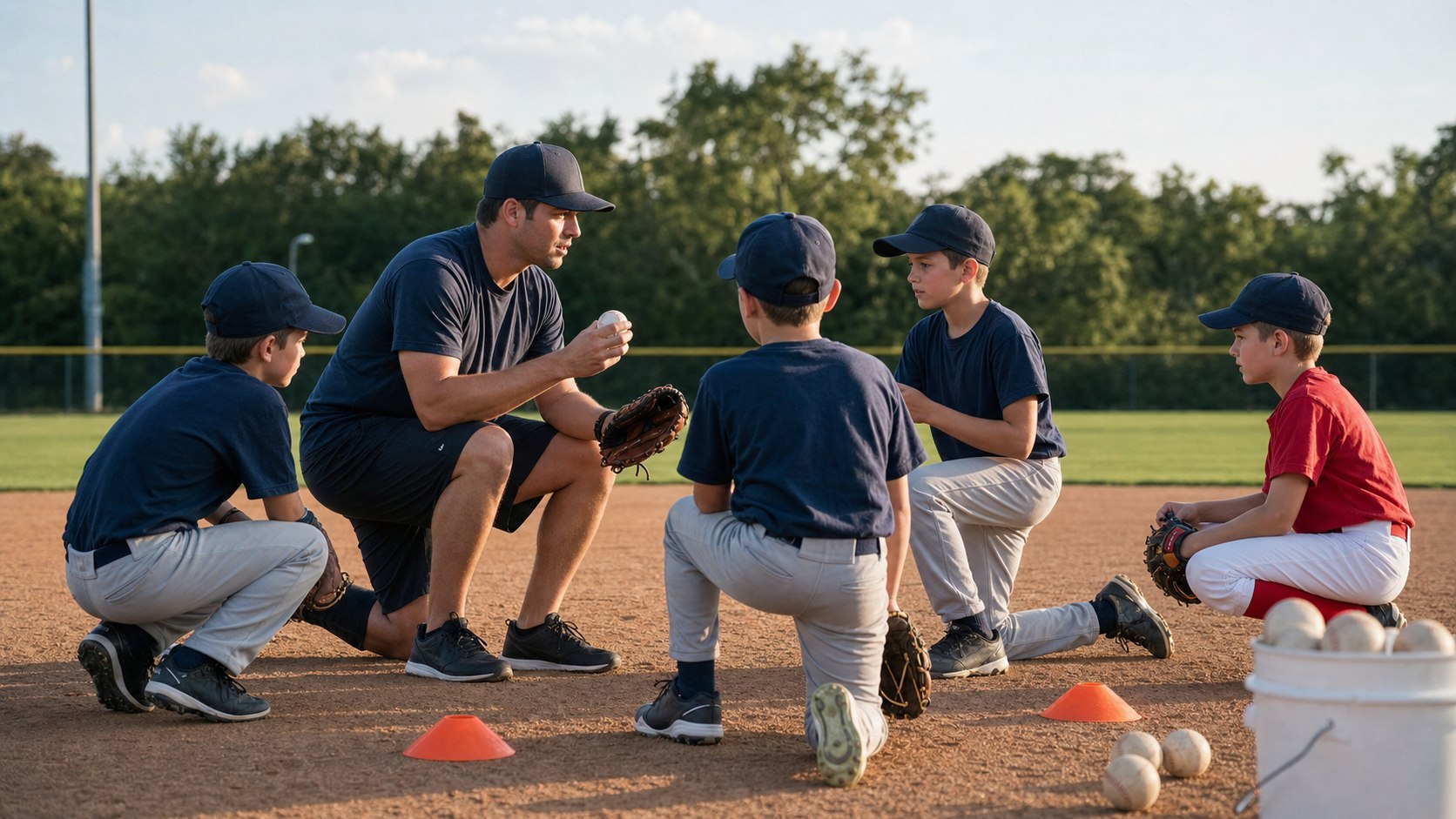
A good academy offers a progression, not an endless subscription to isolated drills. Coaches assess the player, identify priorities, teach a manageable plan, and evaluate transfer into moving balls and games. Facilities and technology can support that process, but the athlete should understand what the measurement changes.
Private instruction is most efficient when the need is clear: rebuilding throwing after medical clearance, learning catching technique, improving pitch recognition, or preparing for a new field dimension. General weekly lessons can still help, but families should watch for dependence. The player must eventually practice and adjust without the instructor standing nearby.
Group training can provide better decision-making and lower cost. Hitters see varied pitching, fielders communicate, and athletes learn from peers. One-on-one attention is valuable for technical detail; group environments reveal whether the detail survives baseball speed.
Match Competition to Productive Difficulty
A player improves when the game is hard enough to demand adjustment but not so overwhelming that every response becomes survival. Dominating much weaker competition may hide flaws. Facing opponents far beyond current skill can reduce repetitions and confidence. The useful level creates both success and failure with understandable causes.
Age does not perfectly describe readiness. Physical maturity can temporarily separate players, particularly during adolescence. Coaches should avoid treating early size as destiny and help later developers find roles where skill and baseball awareness continue growing.
Moving up should solve a real problem. If the player no longer receives challenging strikes, throws, or decisions, a higher level may help. If the issue is inconsistent practice habits, changing logos will not fix it. The next team should offer a more suitable task, not just a more impressive schedule.
Playing down for confidence can also be purposeful when rules allow, but it should not become permanent avoidance. Families and coaches can set a review date and define what readiness will look like. Development requires an honest relationship between challenge and support.
Audit Safety, Safeguarding, and Communication
Programs should publish emergency procedures, background-check expectations, adult conduct rules, and reporting channels. Coaches must follow current pitch-count and rest standards and respond appropriately to pain, heat, concussion signs, and dangerous field conditions. A vague promise to “take care of the kids†is not a policy.
Communication should include schedule, cost, attendance, role expectations, travel, and how concerns are raised. Families deserve direct answers without sideline negotiation during games. Players should know which coach to approach and should not be shamed for asking about health or instruction.
Observe how adults speak after errors. Development environments can be demanding without humiliation. Coaches who correct the play, offer a next action, and maintain standards teach resilience. Coaches who use fear to control children may win short-term compliance while reducing learning and trust.
Calculate the Full Family Cost
Registration is only the beginning. Add uniforms, equipment, training fees, hotels, fuel, flights, food, gate fees, fundraising, and time away from work or siblings. Then compare that total with the number of quality practices and realistic opportunities the player will receive.
Prestige marketing often creates artificial urgency. No responsible program can guarantee a scholarship, draft selection, or national-team place. Families should be especially cautious when expensive add-ons are presented as mandatory for visibility. Ask which services are included and which are optional before signing.
An affordable local team plus a few carefully chosen clinics may outperform a national schedule for the player’s current needs. Spending less is not evidence of lower commitment. Resources preserved for education, recovery, family stability, and future stages can support a longer baseball path.
If the budget creates constant stress, the program’s developmental benefit may be offset by the family cost. The best choice must be sustainable enough that the athlete can participate without carrying adult financial anxiety onto the field.
Review Fit After Every Season
Programs change when coaches leave, rosters expand, competition shifts, or the player grows. At season’s end, compare the original goals with evidence: skills learned, decisions improved, positions experienced, health maintained, and desire to continue. Wins and invitations belong in the review but should not dominate it.
The final choice should produce a clear next step. Stay because the environment still creates growth, move because another program solves a defined need, or rest because the athlete needs recovery. America offers many routes into better baseball; the useful route is the one that keeps this player learning safely at this moment.