Development Is a Sequence of New Baseball Problems
Players do not travel from Little League to high school by following one identical ladder. Local divisions, school systems, growth rates, competition, and family choices produce different routes. The shared pattern is a series of transitions: a child learns to throw and catch, begins making decisions in live play, adapts to longer distances and faster pitching, navigates adolescent physical change, earns a role through tryouts, and gradually takes ownership of preparation. Each stage rewards different evidence. Early success may come from size or fearlessness, while later baseball exposes command, bat decisions, movement quality, communication, and resilience. Families can support the path by choosing appropriate challenge, protecting throwing health, maintaining academic habits, and resisting the urge to treat every season as a final evaluation. The goal is not to make an eight-year-old look like a high school player. It is to solve today’s problems well enough that tomorrow’s game remains open.
A: Readiness matters more than one age. The child should be able to participate safely, follow simple directions, and enjoy short group activities with age-appropriate equipment.
A: Role focus increases with competition, but broad position experience remains valuable through youth baseball and can create more high school opportunities.
A: Throwing distances, leads, steals, pitcher-catcher control, relay spacing, and ball travel all change. Players need progressive practice rather than an instant performance expectation.
A: No. A strong local program, school preparation, clinics, and independent work can build high school readiness. The quality and fit of development matter more than the label.
A: General development is year-round, but throwing and running volume should be built progressively well before tryouts rather than started at maximum intensity that week.
A: Reliable routine skills, athletic movement, game awareness, coachability, competitiveness, and roster fit often matter alongside standout tools.
A: Some do, depending on ability, maturity, school size, roster need, and local rules. Junior varsity can also provide more repetitions and a productive development stage.
A: It varies by player and level, but academics, honest skill evaluation, healthy progress, and understanding current recruiting rules should precede expensive exposure decisions.
A: Request appropriate feedback, identify controllable priorities, find a healthy place to keep playing, and treat one roster decision as information rather than a final identity.
A: The player handles harder baseball with improving decisions, remains physically healthy, accepts feedback, and takes more ownership of preparation.
Begin With Throwing, Catching, Striking, and Joy
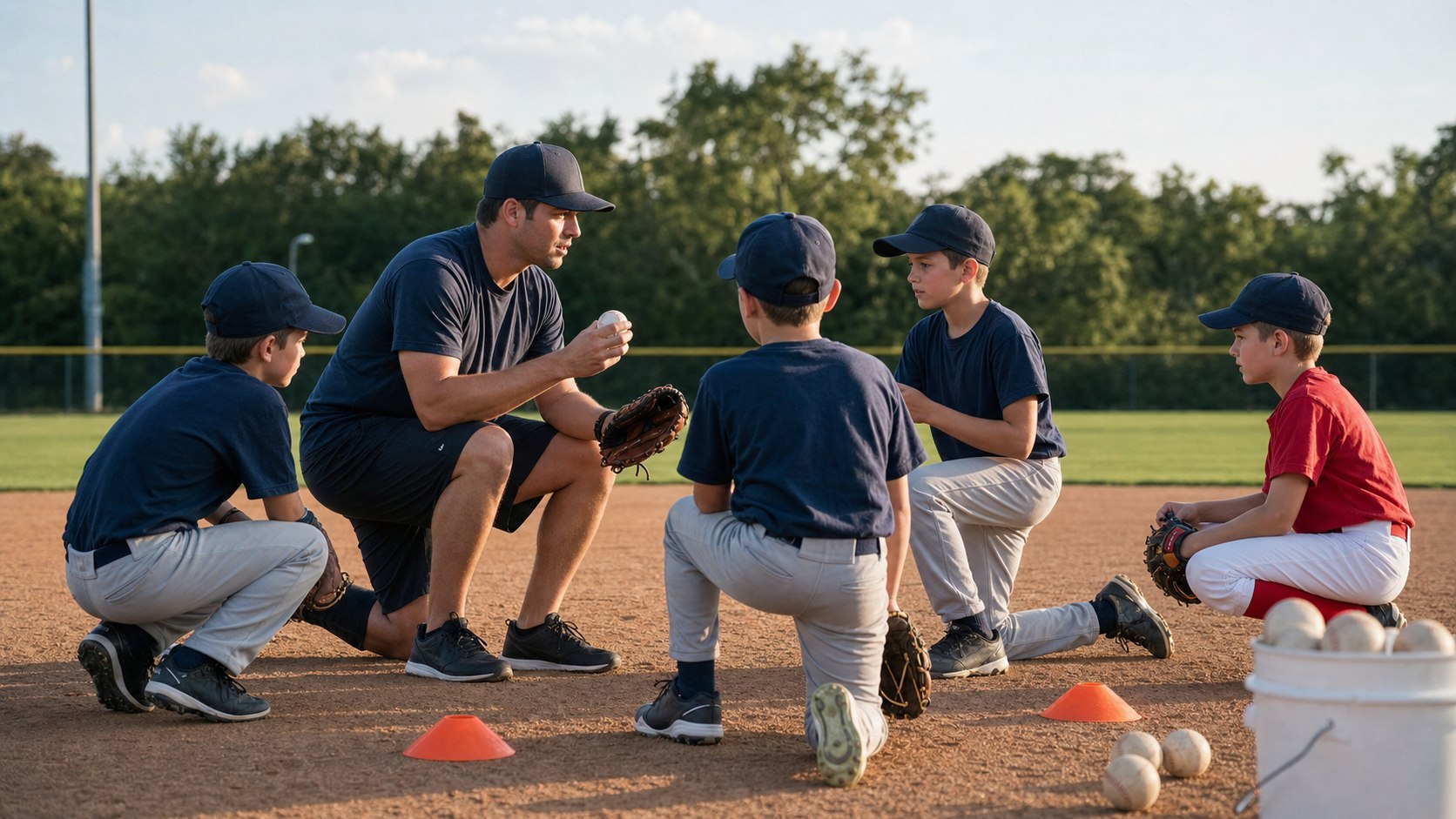
The first stage should make baseball’s basic interactions understandable. Players learn that the ball can be caught safely, a throw has a target, a swing meets a moving object, and running follows simple boundaries. Small games create more useful repetitions than long explanations of every rule.
Equipment and dimensions should fit the athlete. A bat that can be controlled, a ball appropriate to the level, and a catch distance that permits success allow better movement. Asking children to imitate adult power often creates fear, compensations, and slow practice.
Enjoyment is not separate from discipline. Players can learn to listen, hustle, and protect teammates while practice remains playful. When a child associates attention with more action rather than punishment, the foundation for later training becomes stronger.
Use Coach-Pitch and Player-Pitch Stages Differently
Coach-pitch formats can increase hittable balls and teach defense to respond to contact. The coach should vary location gradually and avoid turning every at-bat into a perfect toss. Hitters still need to see, decide, and adjust, while fielders need enough balls in play to learn routes and outs.
Player pitch adds uncertainty. Young pitchers learn direction and composure; hitters learn strike-zone decisions; catchers learn receiving and blocking. Games may slow while these skills emerge. Adults should resist solving that discomfort by overusing one advanced pitcher or pressuring hitters to swing at everything.
Build Game Awareness Through Repeated Situations
Rules become durable when they solve a live problem. With a runner on first, players can identify the force and choose a base. With a fly ball, runners learn to read catch or drop. With two outs, everyone adjusts the priority. Short situational games give these ideas consequences.
Coaches should ask players what they knew before the pitch. Outs, runners, score, and likely ball direction form a pre-pitch scan. The answer may be incomplete, but the habit prepares athletes for larger fields where coaches cannot direct every movement in time.
Communication grows with awareness. Infielders call popups, catchers direct bunts, and outfielders identify priority. Young players may be quiet because they are uncertain, not indifferent. Rehearsed words and clear ownership make confident communication possible.
Base running deserves equal practice. Players learn to run through first, turn efficiently, listen for coaches, tag, and avoid unnecessary outs. Speed helps, but the runner who reads the ball often creates more value than the athlete who simply runs fast.
Rotate Positions Before Growth Sorts the Roster
Early physical maturity can make one player look like a permanent shortstop and another like a permanent first baseman. Bodies change, and later opportunities may require different skills. Position rotation develops throwing angles, footwork, field vision, and empathy for teammates’ responsibilities.
Pitching and catching require extra instruction and workload attention, but interested players deserve a path to try. Not everyone will keep those roles. The experience still teaches strike-zone control, receiving, leadership, and the relationship between battery and defense.
Prepare Gradually for the Larger Diamond
The move from smaller youth dimensions to longer base paths and pitching distance changes the entire game. Throws take longer, runners take leads, pitchers must hold them, catchers face longer exchanges, and relays become essential. A player who looked effortless on the smaller field may temporarily appear slow or inaccurate.
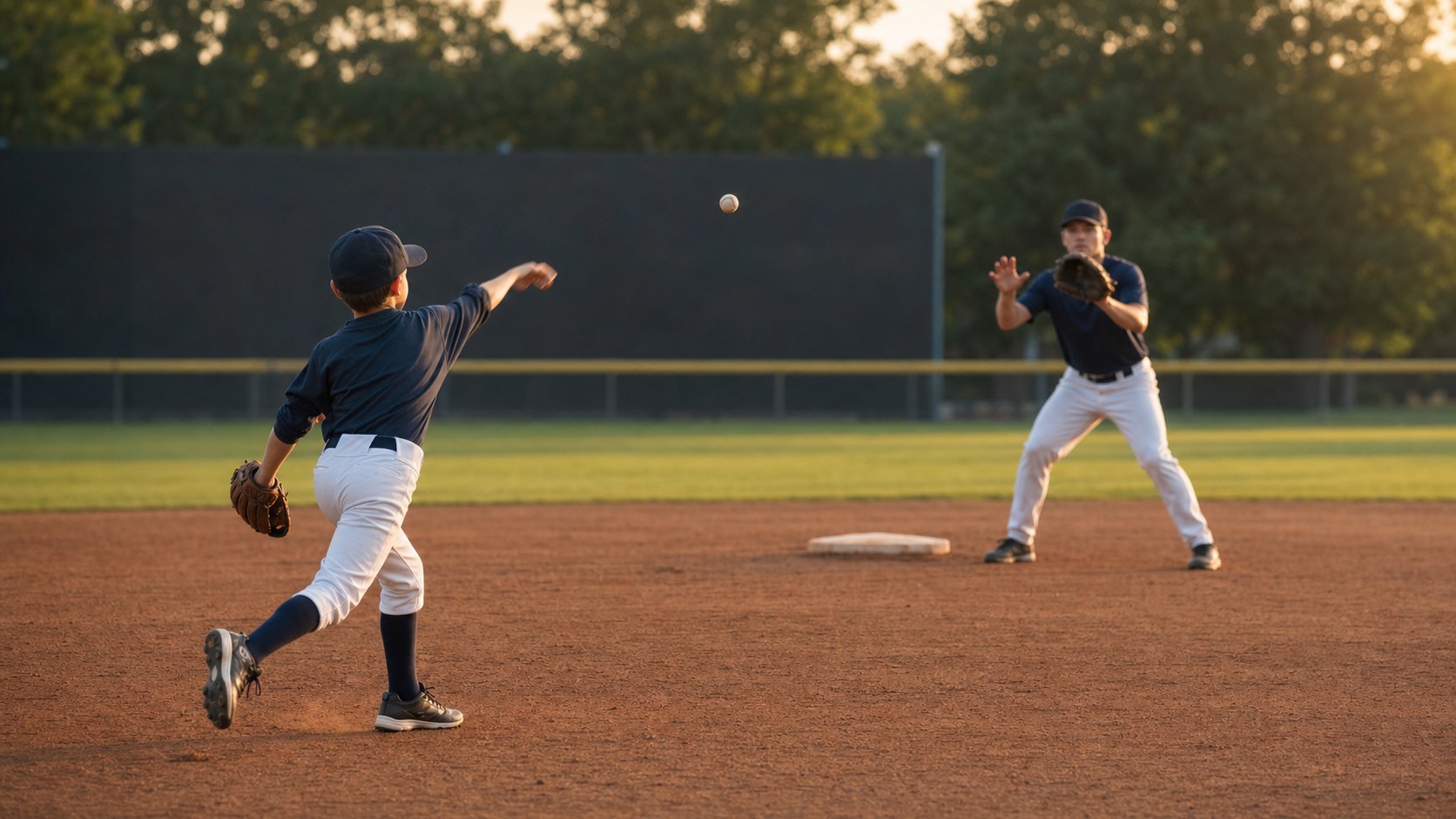
Throwing distance should grow through progressive catch play rather than forced heaves. Players need time to develop momentum, direction, and carry while maintaining comfortable mechanics. Stronger teammates should not become the only athletes allowed to attempt long throws, or others will never build the skill.
Infielders learn that positioning and first step can compensate for distance. Outfielders use intercept routes and throw through a cutoff. Catchers improve footwork before trying to manufacture arm strength. The larger field rewards organized movement more than isolated effort.
Offensively, pitchers have more time and space to change speed and movement. Hitters may need earlier preparation without starting the swing earlier. Base runners add leads and secondary movement while learning balk rules and pickoff reads. Each new feature should be taught before it is used as a test.
Expect Coordination to Change During Adolescence
Growth spurts can temporarily disrupt timing, balance, and body awareness. A player who suddenly gains height may struggle with a familiar delivery or swing. Coaches should distinguish a coordination transition from laziness and give the athlete stable external goals while the body reorganizes.
Strength training becomes increasingly useful when supervised and taught correctly. Squatting, hinging, pushing, pulling, landing, sprinting, and rotating can improve force and resilience. Loading should follow technique and training age rather than peer comparison.
Emotional development also changes the environment. Athletes become more aware of ranking, roles, and future possibilities. Honest private feedback helps them set priorities without turning every game into a referendum on identity. Coaches can demand responsibility while acknowledging that confidence may fluctuate.
Enter Middle School With Broader Baseball Independence
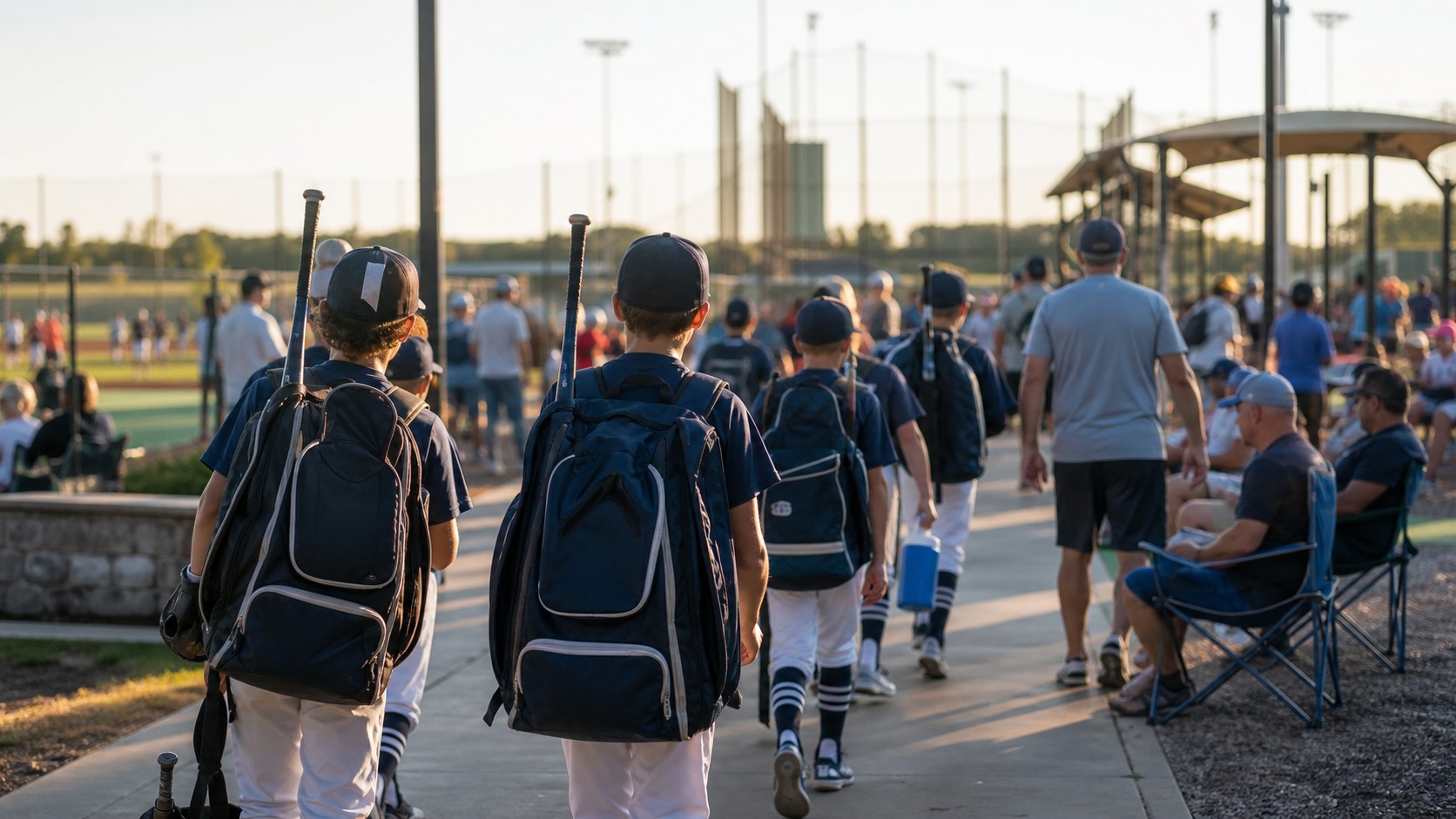
By middle school, players should begin managing equipment, warmup, hydration, and simple recovery habits. They can know the day’s throwing plan and report soreness accurately. Independence reduces the number of adult reminders and shows readiness for school programs with larger rosters.
Competition often becomes more selective. Athletes may encounter cuts, fixed positions, and teammates from multiple prior leagues. A player needs tools and adaptability, but also the ability to join a new culture, learn terminology, and accept an initial role.
Academics should already have a system. Missing work, poor sleep, and chaotic scheduling affect baseball performance before eligibility becomes an official problem. A weekly routine that includes study, training, meals, and rest is a development skill.
Families can begin researching high school programs without campaigning for a roster. Attend games, learn tryout dates, understand levels, and notice the style of play. The athlete gains a realistic picture of the next environment while keeping attention on current improvement.
Prepare for High School Tryouts Without Performing a Reinvention
Tryout preparation should build the ability to show normal skill under limited opportunities. Throwing volume and sprinting need a gradual ramp. Arriving cold after a long break increases injury risk and makes ordinary timing look unprepared. The final week is for sharpening, not constructing an athlete.
Coaches evaluate tools, but they also notice routine reliability. Does the fielder move feet and finish the throw? Does the hitter control the strike zone? Does the player know where to be, communicate, and recover after a mistake? A spectacular rep cannot erase repeated disengagement.
Players should identify a primary position while offering useful secondary roles. High school rosters are built around team needs, and versatility can create an opening. Claiming every position without credible experience looks less prepared than naming two and explaining where else the athlete has trained.
Understand Freshman, Junior Varsity, and Varsity Roles
Program levels are development environments as well as status labels. A younger player may gain more innings and plate appearances on freshman or junior varsity than on the varsity bench. Those repetitions can accelerate readiness, provided coaching and competition are strong.
Varsity selection depends on more than age. School size, roster depth, local association rules, maturity, positional need, and exceptional tools all matter. A freshman who can contribute may earn a place; another may develop better through a lower level. Comparison should focus on the player’s opportunity to improve and help the team.
Roles can change within a season. Injuries, performance, defensive needs, and growth create openings. Bench players should prepare for pinch running, defense, bullpen work, or a specific matchup. Coaches should provide a path rather than using “wait your turn†as the entire explanation.
Athletes also learn that team success may require narrow roles. The long-term challenge is to execute the current assignment while continuing broader development outside game pressure. A backup catcher can improve hitting and another position without neglecting catching readiness.
Coordinate School, Travel, Showcases, and Workload
High school players may face overlapping teams and exposure events. Every high-intensity throw counts, whether it occurs in a school game, bullpen, private lesson, showcase, or travel tournament. One shared log helps athletes, families, and coaches see the full load.
Showcases become useful when the player has something relevant to demonstrate and a realistic audience. Attending too early or too often can replace training with testing. Verified measurements and competitive at-bats may provide information, but no event repairs an undeveloped skill.
The school season should have clear priority agreements. Conflicting coaches can place the athlete between adults and increase workload. Families should communicate schedules before conflicts occur and avoid secret pitching appearances that undermine health planning.
Make Academics Part of Baseball Preparation
Eligibility rules create a minimum, but college options depend on a stronger academic record. Course choices, grades, attendance, test planning where applicable, and communication with counselors should begin before recruiting urgency. Athletic development cannot recover opportunities closed by neglected schoolwork.
Time management improves performance. Players who know when assignments, practices, lifts, meals, and sleep occur arrive with more attention. The routine will not be perfect during travel or exam weeks, but planning reveals which extra events no longer fit.
Coaches value reliability because a roster cannot depend on a player who is repeatedly unavailable through preventable academic problems. Asking for help early is a form of maturity. School support and baseball ambition should reinforce rather than compete with each other.
Interests beyond baseball also protect perspective. Music, work, friendships, clubs, and family time give athletes identities that survive a slump or cut. That stability can make baseball decisions calmer and more honest.
Approach Recruiting as Fit, Not Rescue
By the later high school years, some players will explore college baseball. The process should begin with honest level evaluation, academic interests, finances, geography, and the type of roster opportunity desired. A famous program with no realistic playing path may fit worse than a less visible school offering strong academics and development.
Players should research current recruiting rules and communicate through appropriate channels. Video, verified data, schedules, and concise academic information can help coaches evaluate. Mass messaging without a level-based list wastes energy and makes genuine conversations harder to maintain.
No service can guarantee a scholarship or roster spot. Families should understand total college cost, the range of divisions and associations, and the possibility that baseball changes. The educational fit must remain valuable if injury or role ends the athletic plan.
Respond to Cuts and Setbacks With a New Problem to Solve
A cut is painful because it combines public comparison with lost plans. After emotion settles, the player can request appropriate feedback, identify controllable priorities, and find another place to play. One staff’s roster need is important information, not a universal verdict.
Injury, limited playing time, or a poor season can also redirect the path. Qualified medical care, patient rehabilitation, and smaller competitive steps may be necessary. Rushing to restore status often delays real readiness.
Families help by listening before designing the comeback. The athlete may want a new team, a different role, or time away. Development belongs to the player increasingly with age, and ownership includes deciding how much baseball to pursue.
The path remains open through many routes: school teams, local leagues, clubs, camps, strength development, and independent practice. The next environment needs to offer meaningful repetitions and credible teaching, not merely replace the logo that rejected the player.
Graduate Toward Self-Directed Preparation
By high school, athletes should understand their warmup, current skill priorities, workload, recovery needs, and game plan. Coaches still provide expertise, but the player arrives with questions and can act without constant instruction. Independence is one of the clearest differences between youth participation and advanced development.
The complete path is not a race through prestigious stages. It is a sequence of challenges that become more complex as the player grows. Solve the present challenge, protect health and education, choose the next environment honestly, and keep responsibility moving toward the athlete. That process gives talent the best chance to remain useful when high school baseball demands more than early success.